Category
page 1Woodworking

wood
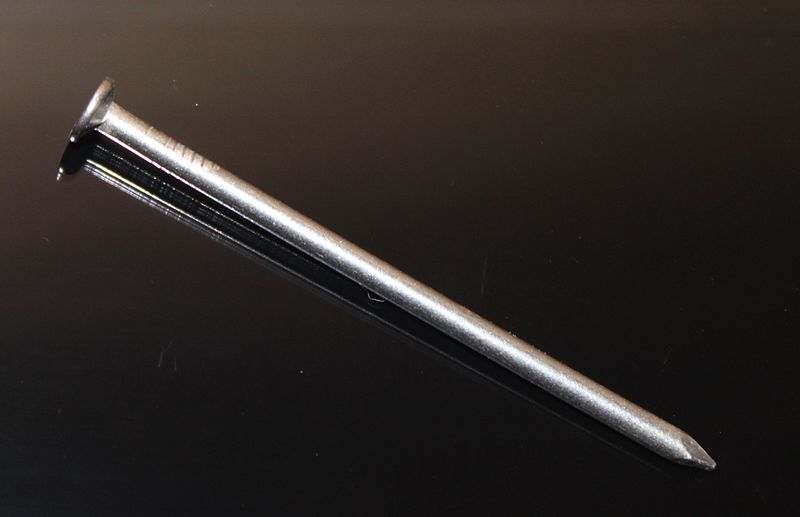
nail
sharp object of hard metal used as a fastener

screw
thumb|An assortment of screws, and a Quarter (United States coin)|US quarter for size comparison
thumb|upright|A wood screw: a) head; b) non-threaded shank; c) threaded shank; d) tip

lumber
thumb|upright=1.15|Wood cut from Victorian Eucalyptus regnans
thumb|upright=1.15|The harbor of Bellingham, Washington, United States, filled with logs, 1972

timber framing
building technique, construction method using heavy squared-off and carefully fitted and joined timbers
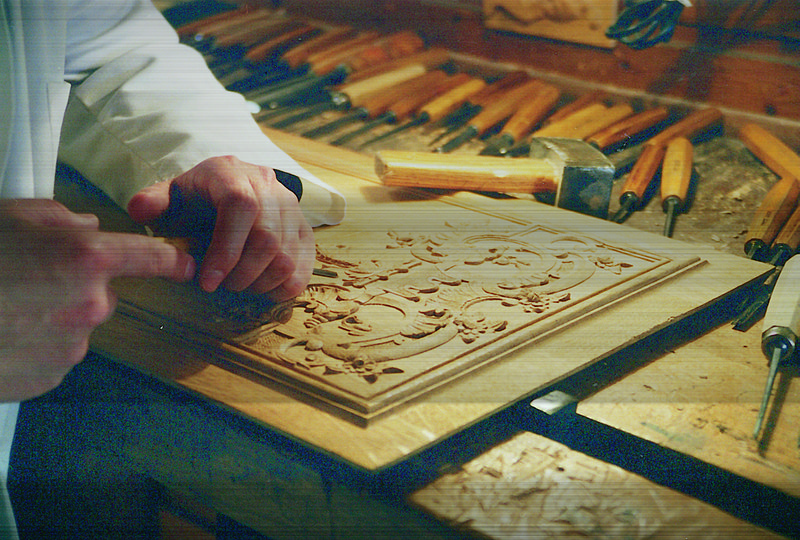
wood carving
form of working wood by means of a cutting tool

cabinet
300px|thumb|Cabinet; by Francesco Del Tuppo; ; oak and poplar veneered with various exotic hardwoods, with ebony moldings and plaques of marble, and various other materials; 59.1 × 96.8 × 35.9 cm; Metropolitan Museum of Art (New York City)
A cabinet is a case or cupboard with shelves or drawers for storing or displaying items. Some cabinets are stand alone while others are built in to a wall or are attached to it like a medicine cabinet. Cabinets are typically made of wood (solid or with veneers or artificial surfaces), coated steel (common for medicine cabinets), or synthetic materials. Comme
.jpg)
sawdust
thumb|Sawdust made with hand saw
thumb|:ja:オガ炭|Ogatan, Japanese [[charcoal briquettes made from sawdust]]
thumb|Sawdust vendors in Kashgar markets

carpentry
thumb|Carpentry includes such specialties as cooper (profession)|barrelmaker, [[cabinetmaker, framer, luthier, and ship's carpenter]]
thumb|Exhibit of traditional European carpenter's tools in Italy
thumb|Carpenters in an Indian village working with hand tools

tree house
platform or building constructed around, next to or among the trunk or branches of one or more mature trees while above ground level

abrasive
An abrasive is a material, often a mineral, that is used to shape or finish a workpiece through rubbing which leads to part of the workpiece being worn away by friction. While finishing a material often means polishing it to gain a smooth, reflective surface, the process can also involve roughening as in satin, matte or beaded finishes. In short, the ceramics which are used to cut, grind and polish other softer materials are known as abrasives.

machine tool
machine for shaping or machining metal, has means for constraining the workpiece and provides a guided tool movement

woodworking
thumb|upright=1.35|Wooden house with wooden furniture, spinning wheel, loom and various tools
right|thumb|Artists can use woodworking to create delicate sculptures.
Woodworking is the skill of making items from wood, and includes cabinetry, furniture making, wood carving, joinery, carpentry, and woodturning.

parquetry
thumb|right|Intricate parquet flooring in entry hall
thumb|right|Parquet flooring, 18th century

drilling
thumb|Titanium drilling

nest box
man-made enclosure for animals to nest in
staple
connecting element for fixing flat items (paper, fabric, foil etc.) to each other or to another item

dowel
thumb|Wooden dowel pins

inlay
280px|thumb|Example of Boulle work inlay using [[tortoiseshell in mottled red, brass and pewter]]
280px|thumb|Boulle work showing the use of [[pewter (center) and the 'depth' given by tortoiseshell in the background. Brass inlay is on the right and left.]]
Inlay covers a range of techniques in sculpture and the decorative arts for inserting pieces of contrasting, often colored materials into depressions in a base object to form ornament or pictures that normally are flush with the matrix. A great range of materials have been used both for the base or matrix and for the inlays inserted into it
moulding
strip of material used to cover transitions between surfaces or for decoration

grindstone
upright|thumb|The Knife-grinder by Goya shows a man using a portable grindstone.
thumb|Two lumberjacks using a hand-powered grindstone to sharpen an axe during World War I
A grindstone, also known as grinding stone, is a sharpening stone used for grinding or sharpening ferrous tools, used since ancient times. Tools are sharpened by the stone's abrasive qualities that remove material from the tool through friction in order to create a fine edge. Similar to sandpaper, each stone has a different grit that will result in sharper or duller tools. In Australia, Aboriginal peoples created grindi
log cabin
simple dwelling constructed of logs

chamfer
thumb|upright|A chamfer with a "lark's tongue" finish

luthier
thumb|A luthier tunes the bridge of a violin.
A luthier ( ; ) is a craftsperson who builds or repairs string instruments.

pyrography
thumb|327x327px|The King Wolf, pyrography on olive wood by Roberto Frangioni Piroritrattista Framàr
Pyrography or pyrogravure is the free handed art of decorating wood or other materials with burn marks resulting from the controlled application of a heated object such as a poker. It is also known as pokerwork or wood burning.

baseboard
thumb|right|alt=Wall.svg|Diagram of a wall
In architecture, a baseboard (also called skirting board, skirting, wainscoting, mopboard, trim, floor molding, or base molding) is usually wooden, MDF or vinyl board covering the lowest part of an interior wall. Its purpose is to cover the joint between the wall surface and the floor. It covers the uneven edge of flooring next to the wall, protects the wall from kicks, abrasion, and furniture, and can serve as a decorative molding.

Entandrophragma cylindricum
Entandrophragma cylindricum is a tree of the genus Entandrophragma of the family Meliaceae. It is commonly known as sapele or sapelli ( ) or sapele mahogany, as well as aboudikro, assi, and muyovu.

hardwood
250px|right|thumb|Beech is a popular hardwood
Wooden toys of Hrvatsko Zagorje
traditional wooden toys made in the region of Hrvatsko Zagorje in Croatia

marquetry
thumb|Casket, early 18th century, attributed to André-Charles Boulle, oak carcass veneered with [[tortoiseshell, gilt copper, pewter and ebony, in the Art Institute of Chicago]]

ajour
thumb|Openwork basket, English Bow porcelain, c. 1754–1755
right|thumb|alt=A gold bracelet with a pattern and writing created by making holes in the bracelet|Ancient Roman gold bracelet from the Hoxne Hoard. JULIANE is spelled out in [[opus interrasile openwork.]]
thumb|Intricate jalis from the [[Sidi Saiyyed mosque in Ahmedabad, India. From the inside]]
dovetail joint
joinery technique
water content
quantity of water contained in a material

woodturning
thumb|upright=1.5|Detail of woodturning in work
thumb|right|A turned wood bowl with natural edges
alt=Bowl Turning|thumb|222x222px|Bowl turning
tongue and groove
method of fitting similar objects together, edge to edge

softwood
thumb|Scots pine, a typical and well-known softwood
Softwood is wood from gymnosperm trees such as conifers. The term is opposed to hardwood, which is the wood from angiosperm trees. The main differences between hardwoods and softwoods is that the softwoods completely lack vessels (pores). The main softwood species (pines, spruces, larches, false tsugas) also have resin canals (or ducts) in their structure.

ogee
thumb|right|Two ogee curve examples with their extended S shapes, concave over convex (cyma recta), and convex over concave (cyma reversa), representing the cross section (geometry)|cross-sections of two types of decorative moldings used in building
An ogee ( ) is an object, element, or curve—often seen in architecture and building trades—that has a serpentine or extended S shape (sigmoid). Ogees consist of a double curve, the combination of two curves that, as a result of a point of inflection from concave to convex or vice versa, have ends of the overall curve that point in opposite directio
framing
in construction, is the fitting together of pieces to give a structure support and shape

chambranle
thumb|upright|Chambranle (Moravec (Žďár nad Sázavou District)|Moravec, [[Czech Republic)]]
sill plate
bottom horizontal member of a wall or building to which vertical members are attached

Khatam
thumb|upright=1|Detail of an Iranian jewel box decorated by khatam
Khātam () is an ancient Persian technique of inlaying. It is a version of marquetry where art forms are made by decorating the surface of wooden articles with delicate pieces of wood, bone and metal precisely-cut intricate geometric patterns. Khatam-kari (خاتمکاری) or khatam-bandi (خاتمبندی) refers to the art of crafting a khatam. Common materials used in the construction of inlaid articles are gold, silver, brass, aluminum and twisted wire.
machine taper
system for securing cutting tools or toolholders in the spindle of a machine tool or power tool

yakisugi
thumb|Traditional houses in Naoshima, Kagawa clad with yakisugi panels
.png)
bevel
right|200px
thumb|200px|Side views of a bevel (above) and a chamfer (below)
A bevelled edge (UK) or beveled edge (US) is an edge of a structure that is not perpendicular to the faces of the piece. The words bevel and chamfer overlap in usage; in general usage, they are often interchanged, while in technical usage, they may be differentiated as shown in the image on the right. A bevel is typically used to soften the edge of a piece for the sake of safety, wear resistance, aesthetics; or to facilitate mating with another piece.
cabinetmaker
An ébéniste () is a cabinet-maker, particularly one who works in ebony. The term is a loanword from French and translates to "ebonist".

rabbet
thumb|300px|right|A rabbet

backsaw
thumb|300px|right|Three backsaws: dōzuki (top), Gent's saw and Tenon saw
woodworking workbench
type of workbench used in woodworking
Janka hardness test
test to measure the resistance of a sample of wood to denting and wear
Windsor chair
type of chair with a solid wood seat and turned legs
miter joint
woodworking joint
wood drying
also known as seasoning, which is the reduction of the moisture content of wood prior to its use

joinery
thumb|A carpenter uses a chain mortiser to cut a large mortise
thumb|A worker uses a large circular saw to cut joints
branding iron
tool used to burn a mark on livestock, tools, or manufactured goods to indicate ownership
wall plate
load-bearing member in timber construction
Speeds and feeds
two separate velocities in machine tool practice, cutting speed and feed rate

batten
thumb|Board and batten siding on a chapel named the Wooden Church (Biserica de lemn) in Zvoriștea, Romania
thumb|Roofing battens or laths are the light colored strips on the Hillsgrove Covered Bridge, Pennsylvania, U.S.A.

wood grain
alignment and texture of the fibres in wood

hewing
thumb|upright|A German carpenter (Zimmerer) hewing a log into a beam. Note the blue chalk line snapped on the log to which the hewer works.
thumb| In some medieval Scandinavian buildings a special method of hewing which produces a herringbone pattern on the timbers has been used (Swedish: Slinthuggning, Norwegian: Sprettejling). This is a modern reconstruction in Stråsjö Chapel in Hälsingland, Sweden.
thumb|Stråsjö Chapel
Woodstave
strips of wood used to make barrels and other circular wooden objects