Category
page 1World Heritage Sites in Turkey

Istanbul
Istanbul is the largest city in Turkey, constituting the country's economic, cultural, and historical center. With a population of over 15 million, it is home to 18% of the population of Turkey. Istanbul is among the largest cities in Europe and in the world by population. It is a city on two continents; about two-thirds of its population live in Europe and the rest in Asia. Istanbul straddles the Bosphorus – one of the world's busiest waterways – in northwestern Turkey, between the Sea of Marmara and the Black Sea. Its area of is coterminous with Istanbul Province.

Hagia Sophia
mosque, museum, and former church in Istanbul, Turkey
Bursa
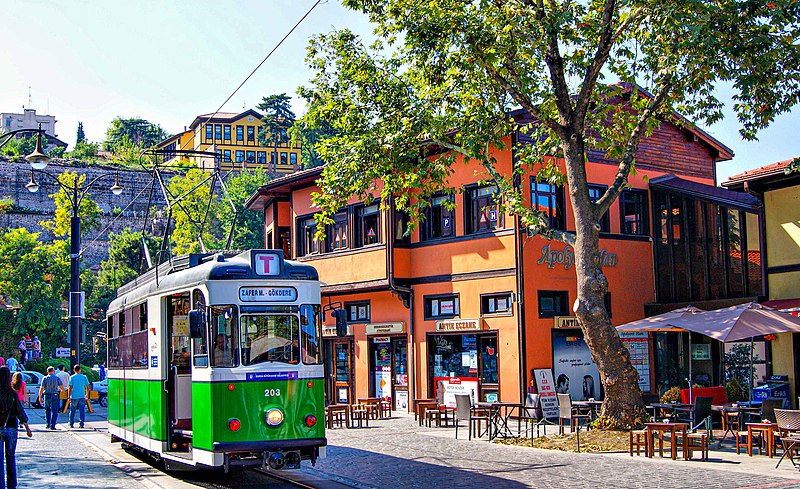
Bursa is a city in northwestern Turkey and the administrative center of Bursa Province. It is the fourth-most populous city in Turkey and second-most populous in the Marmara Region after Istanbul. According to 2025 end of year estimate, the province has a population of 3,263,011 while Bursa city has a population of around 2.5 million. Bursa is one of the centers of Turkey's automotive production, becoming an industrial center of the country. The city provides various places of interest.

Troy
Troy (; /; ) or Ilion (; ) was an ancient city located in present-day Çanakkale, Turkey. It is best known as the setting for the Greek myth of the Trojan War. The archaeological site is open to the public as a tourist destination, and was added to the UNESCO World Heritage list in 1998.

Cappadocia
Cappadocia (; , from ) is a historical region in Central Anatolia region, Turkey. It is largely in the provinces of Nevşehir, Kayseri, Aksaray, Kırşehir, Sivas and Niğde. Today, the touristic Cappadocia Region is located in Nevşehir province.

Diyarbakır
Diyarbakır is the largest Kurdish-majority city in Turkey. It is the administrative center of Diyarbakır Province. It is considered one of the oldest continually inhabited cities in the world, continually inhabited since c. 8000 BCE.

Ephesus
Ephesus ( ; ; ; may ultimately derive from ) was an ancient Greek city on the coast of Ionia, in present-day Selçuk in İzmir Province, Turkey. It was built in the 10th century BC on the site of Apasa, a city-state that was also the capital of Arzawa, by Attic and Ionian Greek colonists. During the Classical Greek era, it was one of twelve cities that were members of the Ionian League. The city came under the control of the Roman Republic in 129 BC.

Sultan Ahmed Mosque
historic mosque located in Istanbul, Turkey, also known as Blue Mosque
Göbekli Tepe
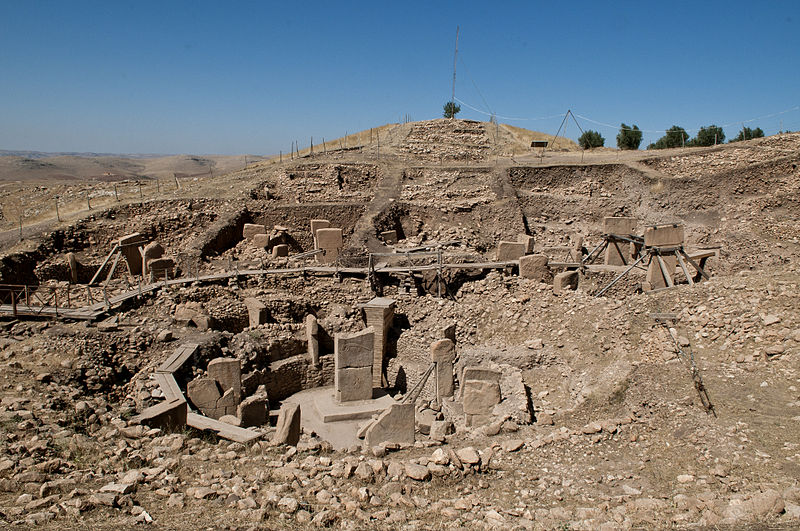
neolithic archaeological site in Turkey

Topkapı Palace
palace museum in Istanbul, Turkey
%20-%20Turkey%20-%2010%20(5747249729).jpg)
Pergamon
Pergamon or Pergamum ( or ; ), also referred to by its modern Greek form Pergamos (), was a rich and powerful ancient Greek city in Aeolis. It is located from the modern coastline of the Aegean Sea on a promontory on the north side of the river Caicus (modern-day Bakırçay) and northwest of the modern city of Bergama, Turkey.

Hattusa
Hattusa, also Hattuşa, Ḫattuša, Hattusas, or Hattusha, was the capital of the Hittite Empire in the late Bronze Age during two distinct periods. Its ruins lie near modern Boğazkale, Turkey (originally Boğazköy) within the great loop of the Kızılırmak River (Hittite: Marashantiya; Greek: Halys).

Çatalhöyük
Çatalhöyük (English: Chatalhoyuk; , ; ; also Çatal Höyük and Çatal Hüyük; from Turkish çatal "fork" + höyük "tumulus") is a tell (a mounded accretion resulting from long-term human settlement) of a very large Neolithic and Chalcolithic proto-city settlement in southern Anatolia, which existed from approximately 7500 BC to 5600 BC and flourished around 7000 BC. Çatalhöyük overlooks the Konya Plain, southeast of the present-day city of Konya (ancient Iconium) in Turkey, approximately from the twin-coned volcano of Mount Hasan.

Selimiye Mosque
mosque in Edirne, northwestern Turkey

Pamukkale
thumb|Panoramic view of travertine terraces at Pamukkale
thumb|Pamukkale sinter terraces

Safranbolu
Safranbolu is a town in Karabük Province in the Black Sea region of Turkey. It is the seat of Safranbolu District. Its population is 52,999 (2022). It is about 9 km north of the city of Karabük, north of Ankara and about 100 km south of the Black Sea coast. The town's historic names in Greek were Theodoroupolis (Θεοδωρούπολις, i.e. city of Theodorus or female Theodora), Dadybra (Δάδυβρα) and later Saphrampolis (Σαφράμπολις). Its former names in Turkish were Zalifre and Taraklıborlu. It was part of Kastamonu Province until 1923 and Zonguldak Province between 1923 and 1995. The town li

Mount Nemrut
mountain and UNESCO World Heritage Site in Turkey

Ani
Ani (; ; ) is a ruined medieval Armenian city now situated in Turkey's province of Kars, next to the closed border with Armenia.

Sardis
Sardis ( ) or Sardes ( ; ; ; ) was an ancient city best known as the capital of the Lydian Empire. After the fall of the Lydian Empire, it became the capital of the Persian satrapy of Lydia and later a major center of Hellenistic and Byzantine culture. Now an active archaeological site, it is located in modern day Turkey, in Manisa Province, near the town of Sart. Sardis was also mentioned as the campsite of Brutus and Cassius in William Shakespeare's play, Julius Caesar (1599).

Hierapolis
Hierapolis (; , lit. "Holy City") was a Hellenistic Greek city built on the site of a Phrygian cult center of the Anatolian mother goddess Cybele, in Phrygia in southwestern Anatolia, Turkey. It was famous for its hot springs, its high quality wool fabrics and dyes, and as the birthplace of the Stoic philosopher Epictetus. Its extensive remains are adjacent to modern Pamukkale in Turkey.
list of World Heritage Sites in Turkey
Wikimedia list article
%20and%20later%20converted%20into%20a%20Christian%20basilica%2C%20Aphrodisias%2C%20Caria%2C%20Turkey%20(20300922019).jpg)
Aphrodisias
thumb|300px|Ancient cities of Caria|alt=Map of ancient cities of Caria
.jpg)
Xanthos
Xanthos or Xanthus, also referred to by scholars as Arna, its Lycian name, (, Lycian: 𐊀𐊕𐊑𐊏𐊀 Arñna, , Latin: Xanthus) was an ancient city near the present-day village of Kınık, in Antalya Province, Turkey. The ruins are located on a hill on the left bank of the River Xanthos. The number and quality of the surviving tombs at Xanthos are a notable feature of the site, which, together with nearby Letoon, was declared to be a UNESCO World Heritage Site in 1988.
Divriği Great Mosque and Hospital
mosque in Turkey

Gordion
thumb|upright=1.5|The 8th century BCE burial tumuli, Tumulus MM (left) and Tumulus P (right) at Gordion, Turkey
Walls of Constantinople
city walls of Constantinople (modern Istanbul, Turkey)

Letoon
Letoon or Letoum (, ) in the Fethiye district of Muğla Province, Turkey, was a sanctuary of Leto located south of the ancient city of Xanthos, to which it was closely associated, and along the Xanthos River. It was one of the most important religious centres in the region though never a fully-occupied settlement.
Little Hagia Sophia
former Greek Eastern Orthodox church in Istanbul converted to a mosque
Göreme National Park
national park in Turkey
Sümela Monastery
Greek Orthodox monastery and Tentative UNESCO World Heritage Site in Turkey
Hevsel Gardens
world Heritage Site in Turkey

Arslantepe
thumb|A Hittite lion from the Neo-Hittite era (1180-700 BC) at the entrance to the ruins of Arslantepe.
thumb|A Hittite relief of a libation to Tiwaz and Arma from the ruins of Arslantepe at the [[Museum of Anatolian Civilizations in Ankara.]]
Arslantepe, also known as Melid, was an ancient city on the Tohma River, a tributary of the upper Euphrates rising in the Taurus Mountains. It has been identified with the modern archaeological site of Arslantepe near Malatya, Turkey.
tourism in Turkey
overview of tourism in Turkey
Diyarbakır Fortress
fortress in the city of Diyarbakır, Turkey
Bursa Green Mosque
mosque in Bursa, northwestern Turkey
Historic Areas of Istanbul
World Heritage Site in Turkey

Cumalıkızık
Cumalıkızık is a neighbourhood in the municipality and district of Yıldırım, Bursa Province in Turkey. Its population is 707 (2022). It is 10 kilometers east of the city of Bursa, at the foot of Mount Uludağ. The village is now included within the border of the Yıldırım district as a neighbourhood.
Birgi
Birgi is a neighbourhood in the municipality and district of Ödemiş, İzmir Province, Turkey. Its population is 1,832 (2022). Before the 2013 reorganisation, it was a town (belde). Its current name is a turkified version of its medieval Greek name, Pyrgion (Greek: Πυργίον, meaning "Little Tower").
Bintepe
lydian burial site

Zeyrek
thumb|Aqueduct of Valens in Zeyrek
right|thumb|Zeyrek old wooden houses on Ibadethane Sk.
Zeyrek is a neighbourhood in the municipality and district of Fatih, Istanbul Province, Turkey. Its population is 12,863 (2022). It is a picturesque but poor neighbourhood. It takes its name from the huge and prominent Zeyrek Mosque which started life as a Byzantine church and sits on a plateau, overlooking the Golden Horn.
Bayezid I Mosque
mosque in Bursa, northwestern Turkey
Wooden Hypostyle Mosques of Medieval Anatolia
World Heritage site in Turkey

Churches of Göreme
archaeological sites in Turkey
Bursa Clock Tower
clock tower in Bursa, northwestern Turkey
Rock-cut architecture of Cappadocia
Archaeological site in Cappadocia, Turkey