Category
page 6Year of birth unknown

Taharqa
Taharqa, also spelled Taharka or Taharqo, ; ; Manetho's , ; Strabo's , ), was a pharaoh of the Twenty-fifth Dynasty of Egypt and qore (king) of the Kingdom of Kush (present day Sudan) from 690 to 664 BC. He was one of the Black Pharaohs – also called Nubian or Kushite Pharaohs – who ruled over Egypt for nearly a century.

Seljuk
Ruler of Seljuk Turks

Hoshea
Hoshea (; ''A'úsiʾ [a-ú-si-ʾ'']; ) was the nineteenth and last king of the northern Kingdom of Israel (or a puppet king) and son of Elah (not the Israelite king Elah). William F. Albright dated his reign to , while Edwin R. Thiele offered the dates 732–723 BCE.

Polycrates
Polycrates (; ), son of Aeaces, was the tyrant of Samos from the 540s BC to 522 BC. He had a reputation as both a fierce warrior and an enlightened tyrant.
Ibrahim Khan Lodi
Sultan of the Delhi Sultanate from 1517 to 1526

Cleon
Cleon (; Kleon ; died 422 BC) was an Athenian politician and general (strategos) during the Peloponnesian War. The son of Cleaenetus, a wealthy tanner, Cleon was among the first prominent Athenian politicians of the 5th century BC to obtain power from outside the established elite.

Postumus
Marcus Cassianius Latinius Postumus ( 259–269) was a Roman commander of Batavian origin, who ruled as emperor of the splinter state of the Roman Empire known to modern historians as the Gallic Empire. The Roman army in Gaul threw off its allegiance to emperor Gallienus around the year 260, and Postumus assumed the title and powers of Emperor in the provinces of Gaul, Germania, Britannia, and Hispania. He ruled for the better part of ten years before he was murdered by his own troops.

Samo
Samo ( – ) was the founder and sole ruler of the first recorded unified tribal polity of Slavs, later known as ''Samo's realm'', ruling from 623 until his death in 658. According to Fredegar—the earliest source about Samo and the one from which all later ones derive—he was a Frankish merchant from Sens.
Fritigern
Fritigern (fl. 370s) was a Thervingian Gothic chieftain whose decisive victory at Adrianople during the Gothic War (376–382) led to favourable terms for the Goths when peace was made with Gratian and Theodosius I in 382.

Gamaliel
Gamaliel the Elder (; also spelled Gamliel; Rabban Gamliʾēl haz-Zāqēn; Gamaliēl ho Presbýteros), or Rabban Gamaliel I, was a leading authority in the Sanhedrin in the early first century CE. He was the son of Simeon ben Hillel and grandson of the great Jewish teacher Hillel the Elder. He fathered Simeon ben Gamliel, who was named for Gamaliel's father, and a daughter, who married a priest named Simon ben Nathanael.

Psamtik II
3rd Egyptian pharaoh of the 26th dynasty

Aenesidemus
Aenesidemus ( or Αἰνεσίδημος) was a 1st-century BC Greek Pyrrhonist philosopher from Knossos who revived the doctrines of Pyrrho and introduced ten skeptical "modes" (tropai) for the suspension of judgment. He broke with the Academic Skepticism that was predominant in his time, synthesizing the teachings of Heraclitus and Timon of Phlius with philosophical skepticism. Although his primary work, the Pyrrhonian Discourses, has been lost, an outline of the work survives from the later Byzantine Empire, and the description of the modes has been preserved by a few ancient sources.
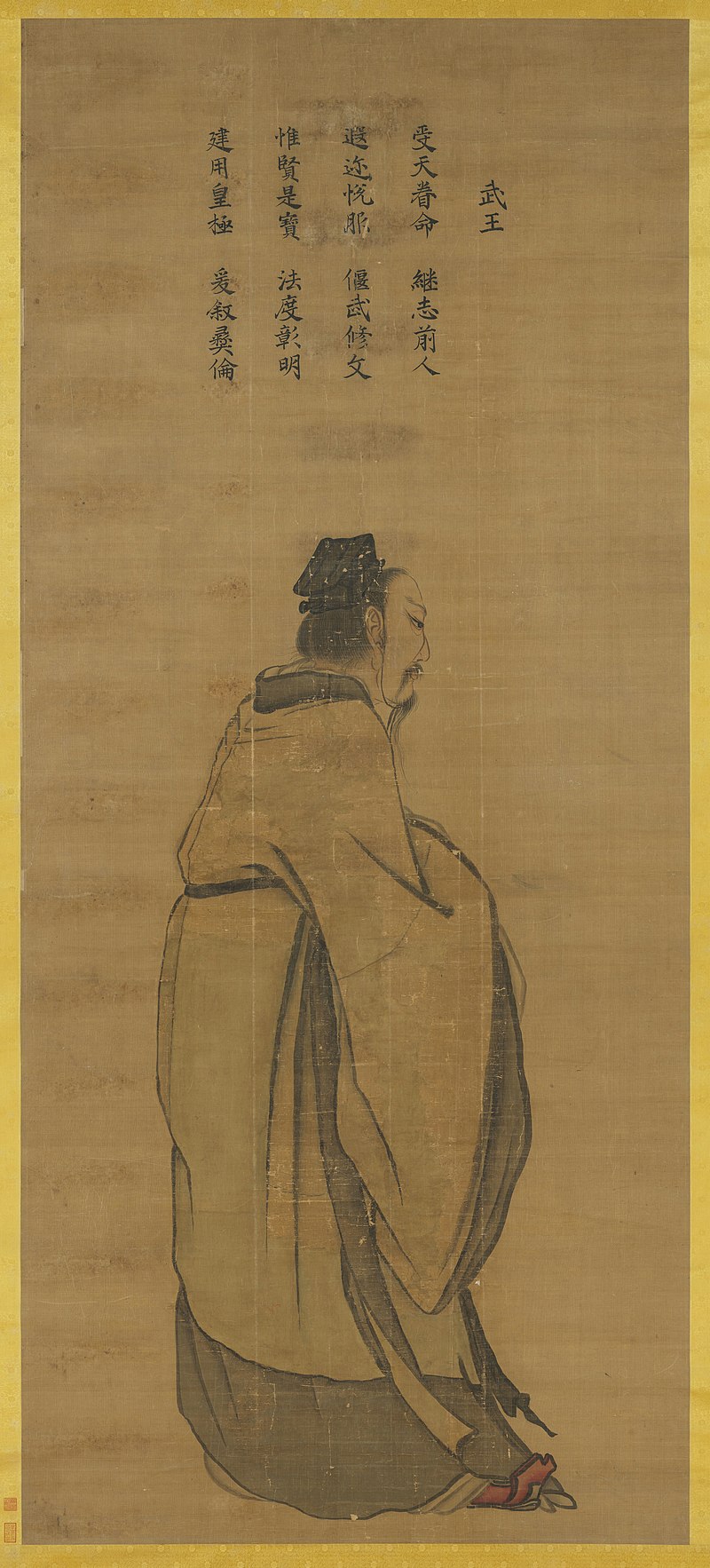
King Wu of Zhou
founder of China's Zhou dynasty

Vetranio
Vetranio (died ) was briefly an imperial usurper and emperor in the Roman Empire in 350, during which time he controlled Illyricum between the rival emperors Magnus Magnentius and Constantius II, eventually capitulating to the latter.

Shalmaneser I
Assyrian king

Apries
Apries () is the name by which Herodotus and Diodorus designate Wahibre Haaibre, a pharaoh of Egypt (), the fourth king (counting from Psamtik I) of the Twenty-sixth dynasty of Egypt. He was equated with the Ouaphris () of Manetho, who correctly records that he reigned for 19 years. Apries is also called Hophra in Jeremiah 44:30 (; ).

Ibycus
Ibycus (; ; ) was an Ancient Greek lyric poet, a citizen of Rhegium in Magna Graecia, probably active at Samos during the reign of the tyrant Polycrates and numbered by the scholars of Hellenistic Alexandria in the canonical list of nine lyric poets. He was mainly remembered in antiquity for pederastic verses, but he also composed lyrical narratives on mythological themes in the manner of Stesichorus. His work survives today only as quotations by ancient scholars or recorded on fragments of papyrus recovered from archaeological sites in Egypt, yet his extant verses include what are considered

Yazdegerd II
The 16th Sassanid Emperor (438–457)

Euclid of Megara
Greek philosopher (c. 435 – c. 365 BC)
Lulach
Lulach mac Gille Coemgáin (Modern Gaelic: Lughlagh mac Gille Chomghain, known in English simply as Lulach, and nicknamed Tairbith, "the Unfortunate" and Fatuus, "the Simple-minded" or "the Foolish"; – 17 March 1058) was King of Alba (Scotland) between 15 August 1057 and 17 March 1058.

Penitent Thief
Christian saint; thief pardoned by Jesus on the cross in Luke 23:39-43

Jehoram
King of Ancient Israel

Ramesses VIII
Egyptian pharaoh of the 20th dynasty

Zeuxis
5th-century BCE Greek painter

Ahmad ibn Muhammad ibn Kathīr al-Farghānī
Abū al-ʿAbbās Aḥmad ibn Muḥammad ibn Kathīr al-Farghānī () also known as Alfraganus in the West (870), was an astronomer in the Abbasid court in Baghdad, and one of the most famous astronomers in the 9th century. Al-Farghani composed several works on astronomy and astronomical equipment that were widely distributed in Arabic and Latin and were influential to many scientists. His best known work, Kitāb fī Jawāmiʿ ʿIlm al-Nujūmi (whose name translates to Elements of astronomy on the celestial motions), was an extensive summary of Ptolemy's Almagest containing revised and more accurate experiment
Saint Ursula
Frankish saint
Ictinus
Ictinus (; , Iktinos) was an architect active in the mid 5th century BC. Ancient sources identify Ictinus and Callicrates as co-architects of the Parthenon. He co-wrote a book on the project – which is now lost – in collaboration with Carpion.

Ibrahim ibn al-Walid
Umayyad caliph in 744

Kenneth II of Scotland
10th century King of Alba (Scotland)
Arnobius
Arnobius (died c. 330) was an early Christian apologist of Berber origin during the reign of Diocletian (284–305).
Wat Tyler
14th-century English rebel

Stobaeus
right|thumb|Page one of the Florilegium of Stobaeus, from the 1536 edition by Vettore Trincavelli.
Joannes Stobaeus (; ; 5th-century AD), from Stobi in Macedonia, was the compiler of a valuable series of extracts from Greek authors. The work was originally divided into two volumes containing two books each. The two volumes became separated in the manuscript tradition, and the first volume became known as the Extracts (also Eclogues) and the second volume became known as the Anthology (also Florilegium). Modern editions now refer to both volumes as the Anthology. The Anthology contains extracts
Eusebius of Nicomedia
Arian bishop who baptized Constantine

Heliodorus of Emesa
3rd/4th century Greco-Roman writer

Hormizd IV
The 23th Sassanid Emperor (579–590)

Omurtag of Bulgaria
Bulgarian ruler

Corinna
thumb|alt=Reproduction of a painting of a woman with a lyre and a crown of leaves|Corinna of Tanagra, , by Frederic Leighton
Huascar
Huáscar () (, ) also Guazcar (before 15271532) was Sapa Inca of the Inca Empire from 1527 to 1532. He succeeded his father, Huayna Capac and his brother Ninan Cuyochi, both of whom died of smallpox during the same year while campaigning near Quito. From 1529 to 1532, Huáscar fought the Inca civil war against his half-brother Atahualpa, who prevailed and captured Huáscar. Shortly thereafter, Atahualpa was captured by the Spanish conquistador Francisco Pizarro and had Huáscar killed.
Eugenius
Eugenius (died 6 September 394) was a Western Roman emperor from 392 to 394, unrecognized by the Eastern Roman emperor Theodosius I. While Christian himself, Eugenius capitalized on the discontent in the West caused by Theodosius' religious policies targeting pagans. He renovated the pagan Temple of Venus and Roma and restored the Altar of Victory after continued petitions from the Roman Senate. Eugenius replaced Theodosius' administrators with men loyal to him. This included pagans, reviving the pagan cause. His army fought the army of Theodosius at the Battle of the Frigidus, where he was ca
Ephorus
Ephorus of Cyme (; , Ephoros ho Kymaios; 330 BC) was an ancient Greek historian known for his universal history, now lost.

Gaius Musonius Rufus
1st century AD Roman Stoic philosopher

Manco Capac
1st ruler of the Kingdom of Cuzco (Inca Emperor)

Tancred, King of Sicily
Norman king of Sicily (1138-1194)

Marcus Minucius Felix
Latin-language writer

Al-Hakam I
Emir of Córdoba from 796 to 822

Widukind
Widukind, also known as Wittekind and Wittikund, was a leader of the Saxons and the chief opponent of the Frankish king Charlemagne during the Saxon Wars from 777 to 785. Charlemagne ultimately prevailed, organized Saxony as a Frankish province, massacred thousands of Saxon nobles, and ordered conversions of the pagan Saxons to Christianity. In later times, Widukind became a symbol of Saxon independence and a figure of legend. He is also venerated as a Blessed in the Catholic Church.

Kilij Arslan I
Seljuk sultan (1079–1107)

Cerdic of Wessex
1st King of Wessex from 519 to 534
Miloš Obilić
Serbian knight

man in the Iron Mask
17th century prisoner, among the most famous in French history

Vitiges
thumb|right|Campaign map of the first phase of the Gothic war, 535–540
Vitiges (also known as Vitigis, Vitigo, Witigis, Witiges, Wittigis or Wittigeis, and in Old Norse as Vigo) (died 542) was king of Ostrogothic Italy from 536 to 540. Known as a veteran of King Theodoric’s campaigns, he was a seasoned commander and therefore after the fall of the Amal dynasty he succeeded to the throne of Italy just after the Roman capture of Naples. This was because Belisarius had quickly captured Sicily the previous year and was in southern Italy at the head of the forces of Justinian I, the Eastern Roman E

Theodahad
Theodahad, also known as Thiudahad (; 480 – December 536), initially ruled the Ostrogothic Kingdom jointly with his cousin Amalasuintha. She elevated him to co-monarch in late 534, following the death of her son, King Athalaric, likely seeking male support to legitimize her regency. However, seeking sole power, Theodahad betrayed Amalasuintha; he had her imprisoned and subsequently murdered around April 30, 535. His tenure as sole ruler proved short and tumultuous, ending with his deposition and death in December 536 while fleeing the forces of his successor, Witiges.

Setnakhte
Userkhaure-setepenre Setnakhte (also called Setnakht or Sethnakht) was the first pharaoh (1189 BC–1186 BC) of the Twentieth Dynasty of the New Kingdom of Egypt and the father of Ramesses III.

Indulf
Ildulb mac Causantín, anglicised as Indulf or Indulph, nicknamed An Ionsaighthigh, "the Aggressor" ( – 962) was king of Alba from 954 to 962. He was the son of Constantine II; his mother may have been a daughter of Earl Eadulf I of Bernicia, who was an exile in Scotland.
Amalaric
Amalaric (; Spanish and Portuguese: Amalarico; 502–531) was king of the Visigoths from 522 until his assassination. He was a son of king Alaric II and his first wife Theodegotha, daughter of Theodoric the Great.

Shahrbaraz
Shahrbaraz (also spelled Shahrvaraz or Shahrwaraz; New Persian: ) was shah (king) of the Sasanian Empire from 27 April 630 to 9 June 630. He usurped the throne from Ardashir III, and was killed by Iranian nobles after forty days. Before usurping the Sasanian throne he was a spahbed (general) under Khosrow II (590–628). He is furthermore noted for his important role during the climactic Byzantine–Sasanian War of 602–628, and the events that followed afterwards.

Hipponax
thumb|200px|Hipponax from Guillaume Rouillé's Promptuarii Iconum Insigniorum (1553)
Hipponax (; ; gen. Ἱππώνακτος; ), of Ephesus and later Clazomenae, was an Ancient Greek iambic poet who composed verses depicting the vulgar side of life in Ionian society. He was celebrated by ancient authors for his malicious wit, especially for his attacks on some contemporary sculptors, Bupalus and Athenis. Hipponax was reputed to be physically deformed, which might have been inspired by the nature of his poetry.

Pope Theophilus of Alexandria
Patriarch of Alexandria from 384 to 412

Demetrius II Nicator
Seleucid king from 145 to 138 BC

Abd al-Rahman al-Ghafiqi
Muslim general