Category
page 1Younger Dryas

Capreolus
thumb|Young roe deer
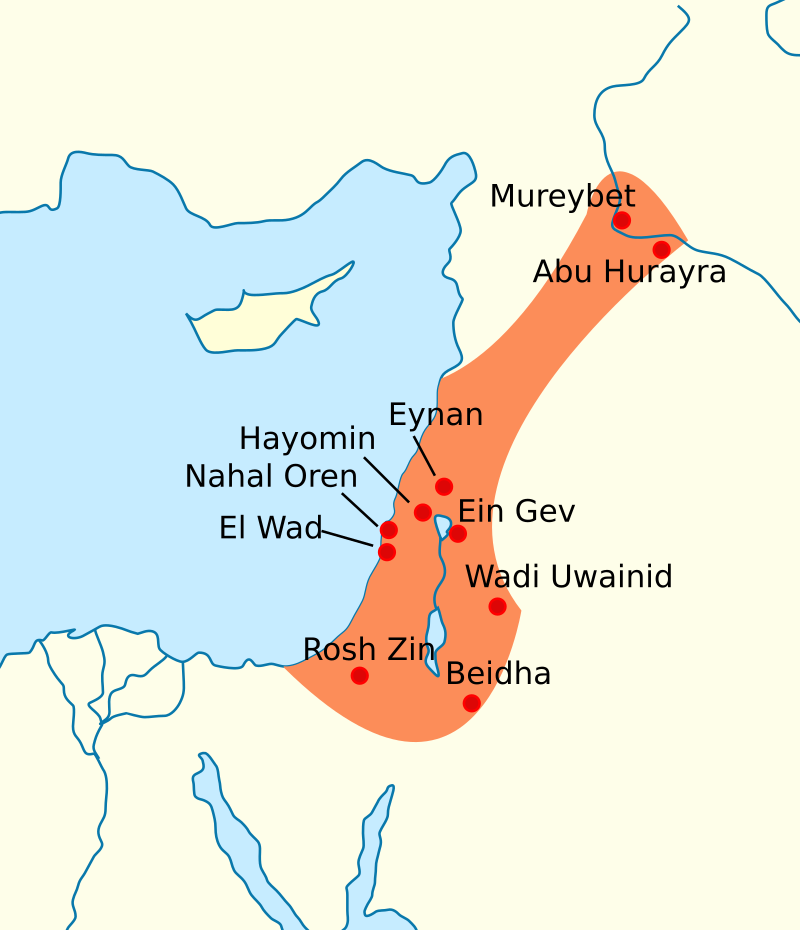
Natufian culture
archaeological culture of the Levant, dating to around 15,000 to 11,500 years ago

Clovis culture
prehistoric culture in the Americas c. 13,000 – 11,000 BP
Younger Dryas
return to glacial conditions after the last glacial maximum, which temporarily reversed the gradual climatic warming
Lake Agassiz
glacial lake in North America
Ahrensburg culture
Upper Paleolithic nomadic hunter culture

Greenlandian
In the geologic time scale, the Greenlandian is the earliest age or lowest stage of the Holocene Epoch or Series, part of the Quaternary. Beginning in 11,650 BP (9701 BCE or 300 HE) and ending with the 8.2-kiloyear event (c. 8200–8300 BP, 6200–6300 BCE, 3600–3700 HE), it is the earliest of three sub-divisions of the Holocene. It was officially ratified by the International Commission on Stratigraphy in June 2018 with the later Northgrippian and Meghalayan Ages/Stages. The lower boundary of the Greenlandian Age is the GSSP sample from the North Greenland Ice Core Project in ce
Tell es-Sultan
archaeological site in the West Bank
Weichselian glaciation
glacial period
Pre-Pottery Neolithic
Early Neolithic period of history
Franchthi Cave
cave in Peloponnese, Greece

Megalonyx
Megalonyx (Greek, "great-claw") is an extinct genus of ground sloths of the family Megalonychidae, native to North America. It evolved during the Pliocene Epoch and became extinct at the end of the Late Pleistocene, living from ~5 million to ~13,000 years ago. The type species, M. jeffersonii (also called '''Jefferson's ground sloth'''), the youngest and largest known species, measured about in length and weighed up to nearly .
Creswellian culture
archaeological culture
African humid period
Holocene climate period during which Africa was wetter than today
Younger Dryas impact hypothesis
hypothesis on what initiated the Younger Dryas geological period
Lvinaya Past
volcano in the southern part of Iturup in the Kuril Islands, claimed by Japan and administered by Russia
William H. Keating
American geologist (1799–1840)
glacial relict
population of a cold-adapted species remaining after its glacier habitat has receded