Category
page 1Zhou dynasty
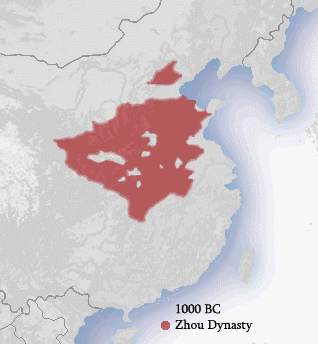
Zhou dynasty
dynasty of Ancient Chinese kings (王) lasting from c. 1046 to 256 BC
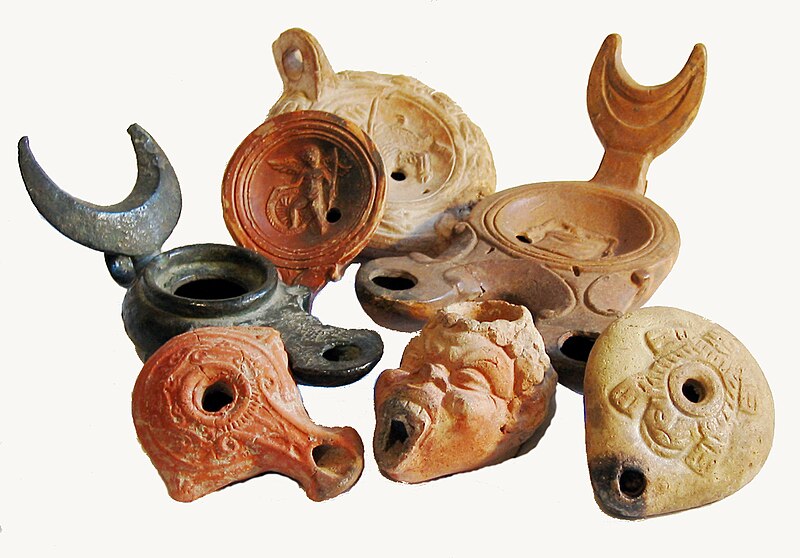
oil lamp
object used to produce light continuously for a period of time using an oil-based fuel source

Western Zhou
Chinese dynasty (c.1046-c,771 BCE)
Lu
vassal state during the Zhou Dynasty of ancient China
Eastern Zhou
second half of the Chinese Zhou dynasty (770 BCE–256 BCE)

censer
thumb|Catholic thurible, or chain censer, designed for swinging
thumb|Censer from Tibet, late 19th century, silver

dougong
thumb|Dougong inside the East Hall timber hall of Foguang Temple, built in 857 during the [[Tang dynasty]]
thumb|Dougong brackets on an Eastern Han dynasty|Eastern Han (25–220 CE) era architectural model of a watchtower
thumb|A stone-carved relief above a cave entrance of the Yungang Grottoes ([[Shanxi province) showing an imitation of dougong brackets, Northern Wei dynasty (386–535 CE)]]
thumb|Stone pillars made in imitation of wooden dougong and "人-shaped gong" (Chinese: 人字栱) at cave entrance of Tianlongshan Grottoes, Northern Qi.
Dougong (Chinese: 斗拱; pinyin: dǒugǒng; lit. 'cap [and] block'
Nanman
The Man, commonly known as the Nanman or Southern Man (, lit. Southern Barbarians), were ancient indigenous peoples who lived in inland South and Southwest China, mainly around the Yangtze River valley. In ancient Chinese sources, the term Nanman was used to collectively describe multiple ethnic groups, probably the predecessors of the modern Miao, Zhuang, and Dai peoples, and non-Chinese Sino-Tibetan groups such as the Jingpo and Yi peoples. It was an umbrella term that included any groups south of the expanding Huaxia civilization, and there was never a single polity that united these people
Cai
former vassal Chinese state
%20%E4%BA%BA%E5%A4%B4%E5%BD%A2%E9%8A%8E%EF%BC%88qi%C3%B3ng%EF%BC%89%E9%9D%92%E9%93%9C%E6%88%9F%2C%20%E7%81%B5%E5%8F%B0%E5%8E%BF%E7%99%BD%E8%8D%89%E5%9D%A1%E5%87%BA%E5%9C%9F%2C%20%E8%A5%BF%E5%91%A8.jpg)
Xirong
Xirong () or Rong were various people who lived primarily in and around the western extremities of ancient China (in modern Gansu and Qinghai). They were known as early as the Shang dynasty (1765–1122 BCE), as one of the Four Barbarians that frequently (and often violently) interacted with the sinitic Huaxia civilization. They typically resided to the west of Guanzhong Plains from the Zhou dynasty (1046–221 BCE) onwards. They were mentioned in some ancient Chinese texts as perhaps genetically and linguistically related to the people of the Chinese civilization.
Chen
Zhou dynasty Chinese state (c. 1045–479 BC)
ancient Chinese state
historical states prior to unification by Qin Dynasty in 221 BCE
Zhongshan
former country

Beidi
The Di or Beidi (Northern Di) were various ethnic groups who lived north of the Chinese (Huaxia) realms during the Zhou dynasty. Although initially described as nomadic, they seem to have practiced a mixed pastoral, agricultural, and hunting economy and were distinguished from the nomads of the Eurasian steppe who lived to their north. Chinese historical accounts describe the Di inhabiting the upper Ordos Loop and gradually migrating eastward to northern Shanxi and northern Hebei, where they eventually created their own states like Zhongshan and Dai. Other groups of Di seem to have lived inter
Six Arts
Education in Confucian philosophy
Haojing
Hao or Haojing, also called Zongzhou, was one of the two settlements comprising the capital of the Western Zhou dynasty ( BCE), the other being Feng or Fengjing (). They stood on opposite banks of the Feng River (), Feng on the west bank and Hao on the east, and were together known as Fenghao. Archaeological discoveries indicate that the ruins of Haojing lie next to the Feng River around the north end of Doumen Subdistrict () in present-day Xi'an, Shaanxi Province.
%20and%20%22%E5%BC%93%22%20(meaning%20bow).jpg)
Dongyi
The Dongyi or Eastern Yi () was a collective term for ancient peoples found in Chinese records. The definition of Dongyi varied across the ages, but in most cases referred to inhabitants of eastern China, then later, the Korean peninsula and Japanese Archipelago. Dongyi refers to different group of people in different periods. As such, the name "Yí" () was something of a catch-all and was applied to different groups over time.
According to the earliest Chinese record, the Zuo Zhuan, the Shang dynasty was attacked by King Wu of Zhou while attacking the Dongyi and collapsed afterward.
Xia–Shang–Zhou Chronology Project
a multi-disciplinary project commissioned by the People's Republic of China in 1996

Fengjian
', literally "demarcation and establishment" but often (controversially) described as Chinese feudalism', was a governance system and political thought in Ancient China and Imperial China, whose social structure formed a decentralized system of confederation-like government. The ruling class consisted of the Son of Heaven (king or emperor) and aristocracy, and the lower class consisted of commoners categorized into four occupations (or "four categories of the people", namely scholar-officials, peasants, laborers and merchants). Elite bonds through affinal relations and submission to the overlo
knife money
historical money of China
Partition of Jin
division of the State of Jin into the three states
Teng
Ancient small Chinese state (1046–414 BC)
School of Diplomacy
classical Chinese legalist school of thought

Deng
ancient Chinese state
Quanrong
thumb|upright=1.5|Anthropomorphic axe, bronze, excavated in the tomb of Heibo (潶伯), a military noble in charge of protecting the northern frontier, at Commons:Category:Baicaopo|Baicaopo, [[Lingtai County, Western Zhou period (1045–771 BCE). Gansu Museum. This is considered as a possible depiction of a Xianyun (who may be identical with the Quanrong) or Guifang.]]
The Quanrong () or Dog Rong were an ethnic group, classified by the ancient Chinese as "Qiang", active in the northwestern part of China during and after the Zhou dynasty (1046–221 BCE). Their language or languages are considered to h
Situ (office)
Imperial Chinese ministerial rank
Lai
ancient Dongyi state
Western Guo
Vassal state in China during the Zhou dynasty
Grand Preceptor
in Imperial China (beginning in the Shang Dynasty), head of the Three Masters, responsible for assisting the emperor; may involve in the governance of the country
Tale of King Mu, Son of Heaven
ancient Chinese fantasy narrative about the travels of King Mu of Zhou meeting the Queen Mother of the West on Mt. Kunlun, followed by a narrative about the funeral of his consort Cheng Ji
Rebellion of the Three Guards
11th-century BC conflict
Liang
state during the Spring and Autumn period
Ying
ancient Chinese city
Dai
former state, conquered by Zhao in 475 BC
Shen Guo
Chinese feudal state during Zhou dynasty (841–688 BCE)
Lü
Predynastic Zhou
11th century BC precursor to the Zhou Dynasty
Yiqu
Yiqu (; Old Chinese (444 BCE): > Eastern Han Chinese: *, or ), was an ancient Chinese state which existed in the Hetao region and what is now Ningxia, eastern Gansu and northern Shaanxi during the Zhou dynasty, and was a centuries-long western rival of the state of Qin. It was inhabited by a semi-sinicized people called the Rong of Yiqu (), who were regarded as a branch of western Rong people by contemporary writers, whom modern scholars have attempted to identify as one of the ancestors of the minority people in Northwest China.
spade money
historical coinage of China
Tan
ancient state located in present-day Shandong Province, China
Xing
ancient Chinese state (11th century–632 BCE)
Quan
ancient Chinese state
Shěn
Xi
Chinese vassal state
Xǔ
Zhou dynasty Chinese state (c. 1064 BC–375 BC)

Tanheli site
Tanheli () is an archaeological site in Ningxiang, Hunan, one of major national historical and cultural sites in Hunan.
Zeng
Zhou dynasty Chinese state
Xu
ancient Chinese state until conquered by the State of Wu in 512 BC
Pi
ancient Chinese state
Siwa culture
archaeological culture
Liao
Zhou Dynasty vassal state
Wangcheng
Chinese city (1021 BCE - 25 CE)
Ruo
small vassal state during the Chinese Zhou Dynasty
King of Wu
Wikimedia disambiguation page
Gumie
Gumie () was a small state during the Zhou dynasty and Spring and Autumn period (722–479 BCE) running from southwest of Yue, in China's modern day southwestern Zhejiang province, around the cities of Jinhua and Quzhou, to Yushan in northern Jiangxi Province. It is believed to be a remnant polity of the Dongyi people who populated much of Eastern China. It was conquered by King Goujian of Yue during the height of Yue expansionism, after which the area fell under Chu control after the fall of Yue to Chu. Eventually, the area was conquered by Qin after the conquest of Chu by Qin. Its ruling clan
Zhou–Chu War
war in ancient China
Zhongli
ancient Chinese state
Han
Western Zhou state
Usurpation of Qi by Tian
deposition of Jiang clan as rulers of state of Qi
Bi (state)