File:Myris_fragr_Fr_080112-3294_ltn.jpg · Wikimedia Commons · See Wikimedia Commons
botany
Sign in to saveAlso known as plant science, plant sciences, plant biology, phytology, phytobiology, botanical science
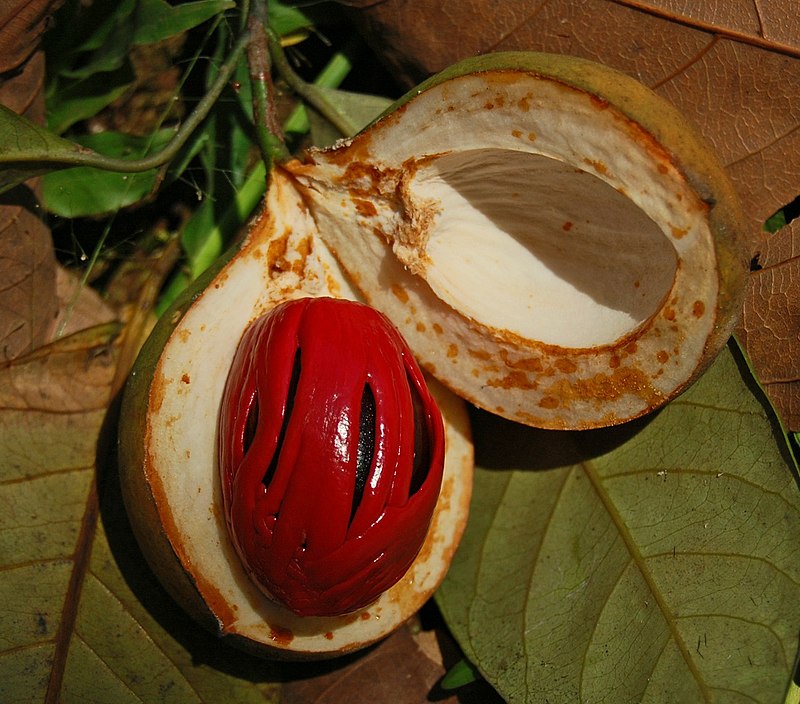
thumb|upright=1.25|alt=Image of ripe nutmeg fruit split open to show red aril|The fruit of Myristica fragrans, a species native to [[Indonesia, is the source of two valuable spices, the red aril (mace) enclosing the dark brown nutmeg.]]
OverviewAI-generated
Botany is an academic discipline and branch of science that serves as a subclass of biology. It is the study of plants and includes subfields such as plant morphology, plant reproduction, plant physiology, and plant genetics. The field is practiced by botanists and botanical collectors.
The subject is described by sources including the New International Encyclopedia, the Jewish Encyclopedia, and the Explanatory Dictionary of the Living Great Russian Language. It is referenced by 10,427 other encyclopedia articles and has a PubMed count of 97,767. The topic is maintained by WikiProject Plants, WikiProject Biology, and WikiProject Environment.
Synthesized by Vinony from 21 facts across 3 sources: Wikidata, PubMed, Vinony graph. Generated from structured data (not the Wikipedia text) and checked against those facts — may still contain errors.
Research
97,767 papers- Forensic botany: who?, how?, where?, when?ReviewScience & justice : journal of the Forensic Science Society · 2023Kasprzyk IDOI: 10.1016/j.scijus.2023.01.002
- Botany without bias.Nature plants · 2020DOI: 10.1038/s41477-020-00777-x
- Twenty-first century botany.Nature plants · 2017DOI: 10.1038/s41477-017-0018-4
- The End of Botany.Trends in plant science · 2020Crisci JV, Katinas L, Apodaca MJ et al.DOI: 10.1016/j.tplants.2020.09.012
- Search strategies.Nature plants · 2021DOI: 10.1038/s41477-021-00937-7
- Editorial: Introducing Commentaries to Annals of Botany.Annals of botany · 2019Heslop-Harrison PDOI: 10.1093/aob/mcz090
- Botany and medicine.Rhode Island medical journal · 1990Aronson SM
- Decolonizing Botany: Indonesia, UNESCO, and the Making of a Global Science.Journal of the history of biology · 2023Goss ADOI: 10.1007/s10739-023-09734-8
via PubMed
~61 min read
Encyclopedic overview
27 sectionsContents
- Etymology
- History
- Early botany
- Early modern botany
- Late modern botany
- Branches of botany
- Scope and importance
- Human nutrition
- Plant biochemistry
- Medicine and materials
- Plant ecology
- Plants, climate and environmental change
- Genetics
- Molecular genetics
- Epigenetics
- Plant evolution
- Plant physiology
- Plant hormones
- Plant anatomy and morphology
- Systematic botany
- Symbols
- See also
- Notes
- References
- Citations
- Sources
- External links
thumb|upright=1.25|alt=Image of ripe nutmeg fruit split open to show red aril|The fruit of Myristica fragrans, a species native to [[Indonesia, is the source of two valuable spices, the red aril (mace) enclosing the dark brown nutmeg.]]
Botany, also called phytology or plant science, is the branch of natural science and biology that studies plants, especially their anatomy, taxonomy, and ecology. A botanist or plant scientist is a scientist who specialises in this field. "Plant" and "botany" may be defined more narrowly to include only land plants and their study, which is also known as phytology. Phytologists or botanists (in the strict sense) study approximately 410,000 species of land plants, including some 391,000 species of vascular plants (of which approximately 369,000 are flowering plants) and approximately 20,000 bryophytes.
Excerpted from Wikipedia’s “botany” article, available under the CC BY-SA 4.0 licence.
Gallery (539)
Available in 185 languages
- Español
- Français
- Deutsch
- 中文
- 日本語
- Русский
- Português
- Italiano
- العربية
- हिन्दी
- Abkhazian
- Afrikaans
- Albanian
- Albanian
- Amharic
- Aragonese
- Armenian
- Arpitan
Show 166 more
- Assamese
- Asturian
- Azerbaijani
- Bahasa Indonesia
- Bangla
- Bashkir
- Basque
- bat_smg
- Bavarian
- be_x_old
- Belarusian
- Betawi
- Bhojpuri
- Bikol
- Bislama
- blk
- Bosnian
- Breton
- btm
- Bulgarian
- Burmese
- Catalan
- Cebuano
- Central Kurdish
- Chechen
- Chuvash
- Cornish
- Corsican
- Crimean Tatar
- Croatian
- Czech
- Danish
- Divehi
- Egyptian Arabic
- Esperanto
- Estonian
- Extremaduran
- Fiji Hindi
- Fijian
- Filipino
- Finnish
- Friulian
- Galician
- gcr
- Georgian
- Greek
- Guarani
- Haitian Creole
- Hausa
- Hawaiian
- Hebrew
- Hungarian
- hyw
- Icelandic
- Ido
- Iloko
- Ingush
- Interlingua
- Interlingue
- Irish
- Jamaican Creole English
- Javanese
- Kabyle
- Kannada
- Kanuri
- Kara-Kalpak
- Kashmiri
- Kazakh
- Kinyarwanda
- Kurdish
- Kyrgyz
- Ladino
- Latin
- Latvian
- Lezghian
- Limburgish
- Lingua Franca Nova
- Lithuanian
- Lojban
- Lombard
- Low German
- Luxembourgish
- Macedonian
- Madurese
- Maithili
- Malagasy
- Malay
- Malayalam
- Maltese
- Manx
- map_bms
- Marathi
- Mari
- Mingrelian
- Mongolian
- N’Ko
- nah
- Nederlands
- Nepali
- Newari
- Norwegian
- Norwegian Nynorsk
- Novial
- nrm
- Occitan
- Odia
- Oromo
- Ossetic
- Palatine German
- Pampanga
- Pashto
- Piedmontese
- Polski
- Punjabi
- Quechua
- rki
- Romanian
- Rusyn
- Sanskrit
- Sardinian
- Scots
- Scottish Gaelic
- Serbian
- Serbian (Latin)
- Sicilian
- simple
- Sindhi
- Sinhala
- Slovak
- Slovenian
- Standard Moroccan Tamazight
- Sundanese
- Svenska
- Swahili
- Tachelhit
- Tajik
- Tamil
- Tatar
- Telugu
- Tibetan
- Tiếng Việt
- Toki Pona
- Türkçe
- Turkmen
- Udmurt
- Ukrainian
- Urdu
- Uzbek
- Venetian
- Veps
- Volapük
- Walloon
- Waray
- Welsh
- Western Frisian
- Western Mari
- Western Panjabi
- Wu Chinese
- Yakut
- Yiddish
- Zaza
- zh_min_nan
- zh_yue
- فارسی
- ไทย
- 한국어
via Wikidata sitelinks · CC0