
File:CapeHorn.jpg · Wikimedia Commons · See Wikimedia Commons
Cape Horn
Sign in to saveheadland of the Tierra del Fuego archipelago located in Chile
Cape Horn is a rocky headland at the southern tip of South America, located on an island in Chile's Tierra del Fuego archipelago. It has historically been an important geographic marker for ships traveling between the Atlantic and Pacific Oceans, though most modern vessels now use alternative routes like the Panama Canal.
AI-generated from the Wikipedia summary — may contain errors.
Described at
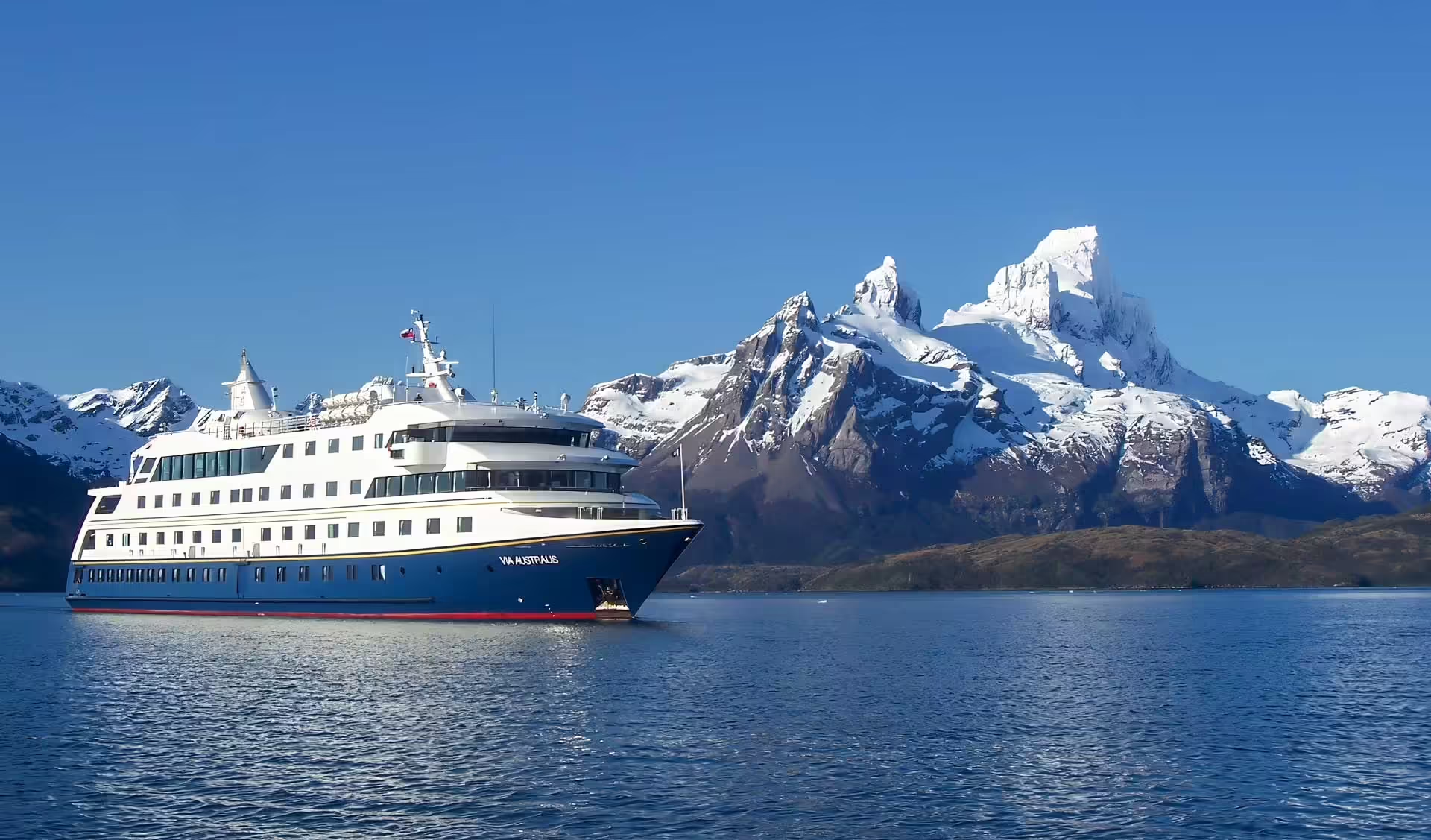
Túto obávanú skalu (ktorá bola v roku 1616 pomenovaná podľa rodiska jedného z objaviteľov, hrdého holandského rybárskeho prístavu Hoorn) už z diaľky predchádza strašná povesť. Skôr než sa k nej priblížime, môže nás vystrašiť štatistika: za necelých 200 rokov stroskotalo v okolí Hornovho mysu približne 800 lodí, čo je pravdepodobne až okolo 20 000 obetí, keďže neexistujú presné záznamy. Na mieste nám tuhne krv v žilách už len pri samotnej scenérii. Sivé more, tmavé útesy, divoké narážanie vĺn, zlá viditeľnosť, dážď, silný vietor a zima. A vzadu v mysli nám bude driemať neodbytný pocit, že útrapy sa ešte len začali, že každý ďalší lejak môže byť ešte horší ako ten predchádzajúci. Takéto drsné podmienky môžu nejedného nevzdelaného človeka priviesť do rozpakov: prečo sa sem teda vydalo toľko nešťastníkov, keď pôvab tejto oblasti je prinajmenšom otázny? Odpoveď je jednoduchá: priviedla ich sem práca. Predtým, ako sa Ohňová zem stala obľúbeným cieľom hŕstky námorných dobrodruhov, sa sem totiž ľudia plavili len so sebazaprením, pretože si jednoducho museli zarobiť na živobytie, a práve tadiaľto viedla jedna z hlavných obchodných ciest tej doby. Bolo to v čase, keď sa z New Yorku do Kalifornie plavili takzvaní ” forty-niners” (alebo ” štyridsaťdeviatnici”, podľa roku 1849), ktorí podľahli zlatej horúčke. Alebo keď sa v 19. storočí prístav Valparaiso etabloval ako obchodná križovatka medzi Tichým oceánom a Atlantikom a jeho záliv bol neustále plný ľahkých plachetníc pripravených na cestu cez “krutý mys” na západné pobrežie alebo do Európy. Cesta z New Yorku do San Francisca vtedy trvala menej ako štyri mesiace – alebo ešte o niečo kratšie, ak ste mali šťastie a plavili ste sa po oceáne na niečom takom rýchlom ako slávny Flying Cloud) , ktorý v roku 1853 prekonal túto trasu za rekordných osemdesiatdeväť dní. O tento výkon sa čiastočne zaslúžila úžasne talentovaná americká navigátorka Eleanor Creesyová , ktorá je dobrou pripomienkou toho, že napriek rozšíreným mýtom nie je pravda, že mať na palube ženu prináša smolu a že moreplavba bola vždy mužskou záležitosťou. Môžete sa staviť, že nejeden námorník pri plavbe okolo mysu Horn preklínal neúprosnú geografiu: prečo musí Amerika siahať o dobrých desať stupňov zemepisnej šírky nižšie ako Afrika? Plavba okolo mysu Dobrej nádeje (ktorý sa pôvodne volal “mys Búrka”) tiež často nebola žiadna zábava, ale čo mys Horn, kvôli ktorému sa lode museli vydať takmer dva a pol tisíc kilometrov južnejšie, do tesnej blízkosti antarktických ľadovcov? Tam ich čakali o pätnásť stupňov nižšie teploty a veľa nepríjemností. Tí, ktorí chceli pokračovať touto cestou, museli prežiť prudké víchrice, ktoré sa valili z Ánd, skrotiť zákerné vetry “revúcich štyridsiatok” a postúpiť do “zúriacich päťdesiatok”. Tu sa tlakové níže rútia jedna za druhou a vodný živel sa prebúdza v celej svojej obludnosti, pretože mu už nestojí v ceste žiadna prekážka. Vlny rozpútané silným západným vetrom divoko krúžia okolo Zeme a pri tom naberajú na sile. Potom sa pred Hornovým mysom situácia ešte zhorší: voda sa z hlbín vyvalí na kontinentálny šelf, čím sa vlny ešte viac zdvihnú a more sa stane ešte chaotickejším. Nehovoriac o tom, ako tu vietor zosilnie, keď sa ženie do Drakeovho prielivu a ženie sa medzi americké a antarktické pahorky. Otvorenie Panamského prielivu v roku 1914 ušetrilo cestujúcim medzi Atlantickým a Tichým oceánom mnoho kilometrov a problémov (napríklad cesta z New Yorku do San Francisca je kratšia o trinásťtisíc kilometrov) a námorná cesta okolo Ohňovej zeme stratila na význame. Koniec koncov, mys Horn dostal, čo si zaslúžil: nemal zľutovanie s ľuďmi a teraz stratil väčšinu svojej klientely. Jeho schopnosť vyvolávať problémy však zostáva nezmenená. Šetrí si ju pre novodobých dobrodruhov, ktorí sú stále fascinovaní jeho legendou… Nemá však rád, keď si z neho robia srandu dnešní “zberači dobrodružstiev”, ktorí sa s rôznymi bláznivými plavidlami nechajú vysadiť v bezprostrednej blízkosti mysu, “prejdú” ho za dve hodiny
Excerpt from a page describing this subject · 20,215 chars · not written by Vinony
Wikidata facts
- Instance of
- cape
- Named after
- Hoorn
- Country
- Chile
- Located in
- Antártica Chilena Province
- Continent
- Americas
- Body of water
- Drake Passage
- Image
- 00 4479 Cape Horn.jpg
Show 6 more facts
- Commons category
- Cape Horn
- topic's main category
- Category:Cape Horn
- Commons gallery
- Cape Horn
- different from
- Horn
- located in/on physical feature
- Hornos Island
- described at URL
- www.placemania.sk/svetova-zaujimavost/mys-horn
via Wikidata · CC0
~31 min read
Encyclopedic overview
Cape Horn (Spanish: Cabo de Hornos, pronounced [ˈkaβo ðe ˈoɾnos]) is the southernmost headland of the Tierra del Fuego archipelago of southern Chile, and is located on the small Hornos Island. Although not the most southerly point of South America (which is Águila Islet), Cape Horn marks the northern boundary of the Drake Passage and marks where the Atlantic and Pacific Oceans meet.
Cape Horn was identified by mariners and first rounded in 1616 by the Dutchmen Willem Schouten and Jacob Le Maire, who named it Kaap Hoorn (pronunciation) after the city of Hoorn in the Netherlands. For decades, Cape Horn was a major milestone on the clipper route, by which sailing ships carried trade around the world. The waters around Cape Horn are particularly hazardous, owing to strong winds, large waves, strong currents and icebergs.
Excerpted from Wikipedia’s “Cape Horn” article, available under the CC BY-SA 4.0 licence.
Gallery (10)
On the map
4 mapped locations
Available in 81 languages
- Español
- Français
- Deutsch
- 中文
- 日本語
- Русский
- Português
- Italiano
- العربية
- हिन्दी
- Afrikaans
- Albanian
- Armenian
- Asturian
- Azerbaijani
- Bahasa Indonesia
- Basque
- be_x_old
Show 62 more
- Belarusian
- Bosnian
- Breton
- Bulgarian
- Catalan
- Cebuano
- Central Kurdish
- Croatian
- Czech
- Danish
- Egyptian Arabic
- Esperanto
- Estonian
- Finnish
- Galician
- Georgian
- Greek
- Hebrew
- Hungarian
- Icelandic
- Ido
- Irish
- Kabardian
- Kazakh
- Latin
- Latvian
- Lithuanian
- Luxembourgish
- Macedonian
- Malay
- Nederlands
- Northern Frisian
- Norwegian
- Norwegian Nynorsk
- Occitan
- Polski
- Quechua
- Romanian
- Scots
- Serbian
- Serbian (Latin)
- Shona
- simple
- Slovak
- Slovenian
- Svenska
- Swahili
- Tamil
- Tatar
- Tiếng Việt
- Türkçe
- Ukrainian
- Urdu
- Uzbek
- Waray
- Welsh
- Western Frisian
- Wu Chinese
- zh_classical
- فارسی
- ไทย
- 한국어
via Wikidata sitelinks · CC0