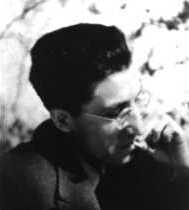
File:Cesare_pavese.jpg · Wikimedia Commons · See Wikimedia Commons
Cesare Pavese
Sign in to saveItalian writer, literary critic, and translator (1908–1950)
OverviewAI-generated
Cesare Pavese was an Italian linguist, writer, translator, and literary editor. Born in Santo Stefano Belbo in 1908, he studied at the University of Turin and Liceo Classico Massimo D'Azeglio. His professional work encompassed prose, poetry, literary criticism, and translation, primarily in the Italian language. He was also fluent in English. Among his notable works are *The Moon and the Bonfires* and *La letteratura americana e altri saggi*.
Pavese received the Strega Prize for his writing. He resided in Santo Stefano Belbo, Turin, Brancaleone, and Rome throughout his life. An atheist, he suffered from depression. He died by suicide in Turin in 1950 due to a drug overdose. He is buried in Santo Stefano Belbo, his place of birth.
Synthesized by Vinony from 29 facts across 3 sources: Wikidata, Open Library, TMDb. Generated from structured data (not the Wikipedia text) and checked against those facts — may still contain errors.
Person · Open Library
- Works
- 51
Top works
- La letteratura americana e altri saggi
- La luna e i falò
- La Bella Estate (Tascabili - Scrittori) (Italian Edition)
- Dalla parte di Giasone
- Le spiaggia
via Open Library + Wikidata
Film & TV
Santo Stefano Belbo, Piedmont, Italy
Cesare Pavese (9 September 1908 – 27 August 1950) was an Italian poet, novelist, literary critic and translator. From Wikipedia, the free encyclopedia
via TMDB
Wikidata facts
- Instance of
- human
- Gender
- male
- Citizenship
- Kingdom of Italy
- Place of birth
- Santo Stefano Belbo
- Place of death
- Turin
- Occupation
- poet
- Languages spoken
- English language
- Religion
- atheism
- Award
- Strega Prize
- Notable work
- The Moon and the Bonfires
- Genre
- poetry
- Image
- Cesare pavese.jpg
- Residence
- Turin
Show 10 more facts
- date of birth
- 1908-09-09
- date of death
- 1950-08-27
- place of burial
- Santo Stefano Belbo
- manner of death
- Suicide
- Commons category
- Cesare Pavese
- cause of death
- drug overdose
- writing language
- Italian
- Commons Creator page
- Cesare Pavese
- name in native language
- Cesare Pavese
- medical condition
- depression
Sources (2)
via Wikidata · CC0
~8 min read
Encyclopedic overview
Cesare Pavese ( UK: /pæˈveɪzeɪ, -zi/ pav-AY-zay, -zee; Italian: [ˈtʃeːzare paˈveːze, ˈtʃɛː-, -eːse]; 9 September 1908 – 27 August 1950) was an Italian novelist, poet, short story writer, translator, literary critic, and essayist. He is often referred to as one of the most influential Italian writers of his time.
Pavese was reportedly apolitical in the 1930s, but he was moving in antifascist circles. He served a short sentence as a political prisoner. Though eligible for drafting into the Italian Armed Forces during World War II, he did not see any active service. He spent part of the war hospitalized due to asthma. Many of his friends in Turin joined the partisans, but Pavese took no part in the armed struggle in the vicinity of the city. After the war, Pavese joined the Italian Communist Party and worked on the party's newspaper, L'Unità. Toward the end of his life, he was suffering from depression and political disillusionment. He committed suicide by an overdose of barbiturates.
Excerpted from Wikipedia’s “Cesare Pavese” article, available under the CC BY-SA 4.0 licence.