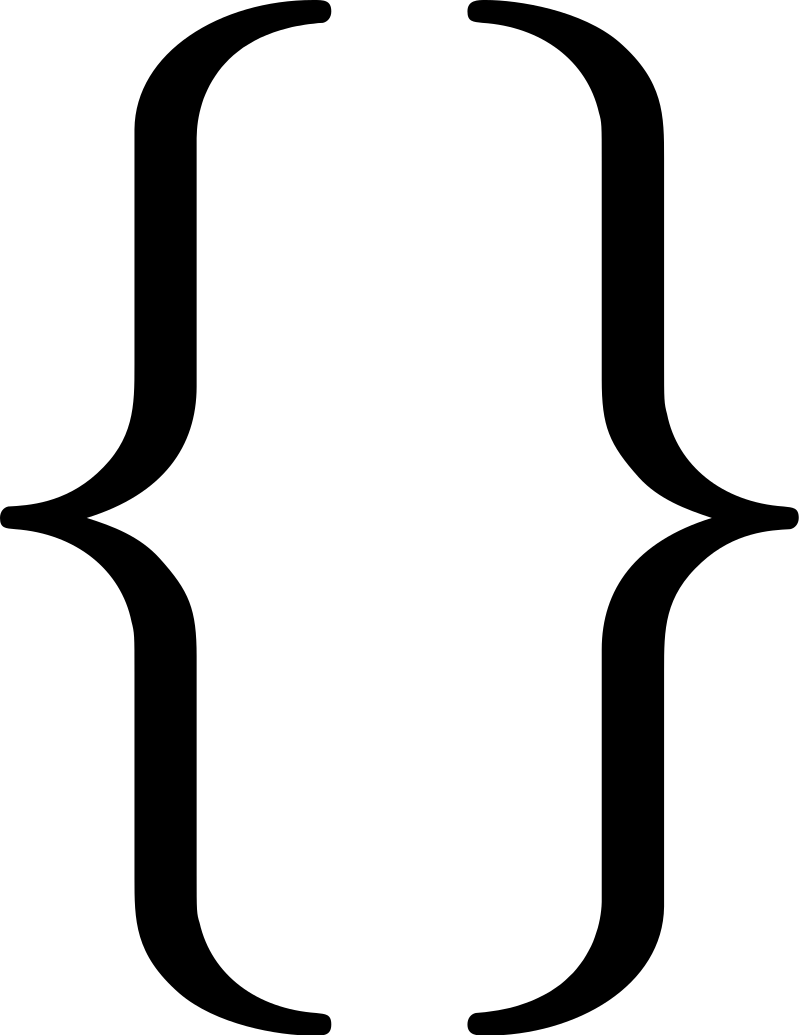
File:Nullset.svg · Wikimedia Commons · See Wikimedia Commons
An empty set is a collection that contains nothing at all — no items, no members, no elements inside it. It matters in mathematics because it serves as a foundation for building logical systems and helps mathematicians precisely define and reason about collections of things.
AI-generated from the Wikipedia summary — may contain errors.
Wikidata facts
- Instance of
- finite set
- Image
- Empty set symbol.svg
Show 8 more facts
- set cardinality
- zero
- different from
- null set
- TeX string
- \varnothing
- opposite of
- non-empty set
- Commons category
- Nested set V4
- on focus list of Wikimedia project
- Wikipedia:Vital articles/Level/4
- notation
- Q87524418
- maintained by WikiProject
- WikiProject Mathematics
Sources (1)
via Wikidata · CC0
~14 min read
Encyclopedic overview
The empty set is the set containing no elements. In mathematics, the empty set or void set is the unique set having no elements; its size or cardinality (count of elements in a set) is zero. Some axiomatic set theories ensure that the empty set exists by including an axiom of empty set, while in other theories, its existence can be deduced. Many possible properties of sets are vacuously true for the empty set.
Any set other than the empty set is called non-empty.
Excerpted from Wikipedia’s “empty set” article, available under the CC BY-SA 4.0 licence.
Gallery (2)
Available in 74 languages
- Español
- Français
- Deutsch
- 中文
- 日本語
- Русский
- Português
- Italiano
- العربية
- हिन्दी
- Albanian
- Armenian
- Asturian
- Azerbaijani
- Bahasa Indonesia
- Bashkir
- Basque
- be_x_old
Show 55 more
- Belarusian
- Bosnian
- Bulgarian
- Catalan
- Central Kurdish
- Chuvash
- Croatian
- Czech
- Danish
- Esperanto
- Estonian
- Finnish
- fiu_vro
- Galician
- Georgian
- Greek
- Hebrew
- Hungarian
- Icelandic
- Ido
- Kazakh
- Kurdish
- Latin
- Latvian
- Lithuanian
- Lombard
- Macedonian
- Malay
- Malayalam
- Mongolian
- Nederlands
- Norwegian
- Norwegian Nynorsk
- Polski
- Romanian
- Serbian
- Serbian (Latin)
- Sicilian
- Silesian
- simple
- Slovak
- Slovenian
- Svenska
- Tamil
- Tatar
- Tiếng Việt
- Türkçe
- Ukrainian
- West Flemish
- Wu Chinese
- zh_classical
- zh_yue
- فارسی
- ไทย
- 한국어
via Wikidata sitelinks · CC0