
File:Harry_Belafonte_1970_(cropped).tif · Wikimedia Commons · See Wikimedia Commons
Harry Belafonte
Sign in to saveAlso known as Harold George Belafonte Jr., Belafonte, Harold George Bellanfanti Jr., Harry Bellanfanti Jr., Harold George Belafonte, Raymond Bell, King of Calypso
American singer, actor and civil rights activist (1927–2023)
OverviewAI-generated
Harry Belafonte, also known by the pseudonym Raymond Bell, was a singer, actor, and activist. His professional career began in 1949 and concluded in 2023. He was born on March 1, 1927, and died on April 25, 2023, at the age of 96. Belafonte had four children.
His contributions to the arts and culture have been recognized through several major honors. He is included in the collections of the Rock And Roll Hall Of Fame, the Hollywood Walk Of Fame, and the Kennedy Center Honors.
Synthesized by Vinony from 13 facts across 3 sources: Wikidata, Firecrawl, Vinony collections. Generated from structured data (not the Wikipedia text) and checked against those facts — may still contain errors.
Film & TV
New York City, New York, USA
Harry Belafonte (born Harold George Bellanfanti Jr.; March 1, 1927 – April 25, 2023) was an American singer, actor and activist, who popularized calypso music with international audiences in the 1950s. Belafonte is one of the few performers to have received an Emmy, Grammy, Oscar, and Tony (EGOT), although he won the Oscar in a non-competitive category. He earned his career breakthrough with the…
Known for
- Dangerous Citizen: The Life and Times of Abraham Polonsky — self2026
- CIRILO, A Legacy Untold2025
- The Greatest Night in Pop — Self (archive footage)2024
- Following Harry — Self (archive footage)2024
- Jim Henson Idea Man — Self (archive footage)2024
- Hollywood Black — Self (archive footage)2024
- Sunday Best: The Untold Story of Ed Sullivan — Self2023
- Max Roach: The Drum Also Waltzes — Self2023
- Harry Belafonte: Between Calypso and Justice — Self - Subject (archive footage)2022
- Sidney — Self2022
via TMDB
Described at
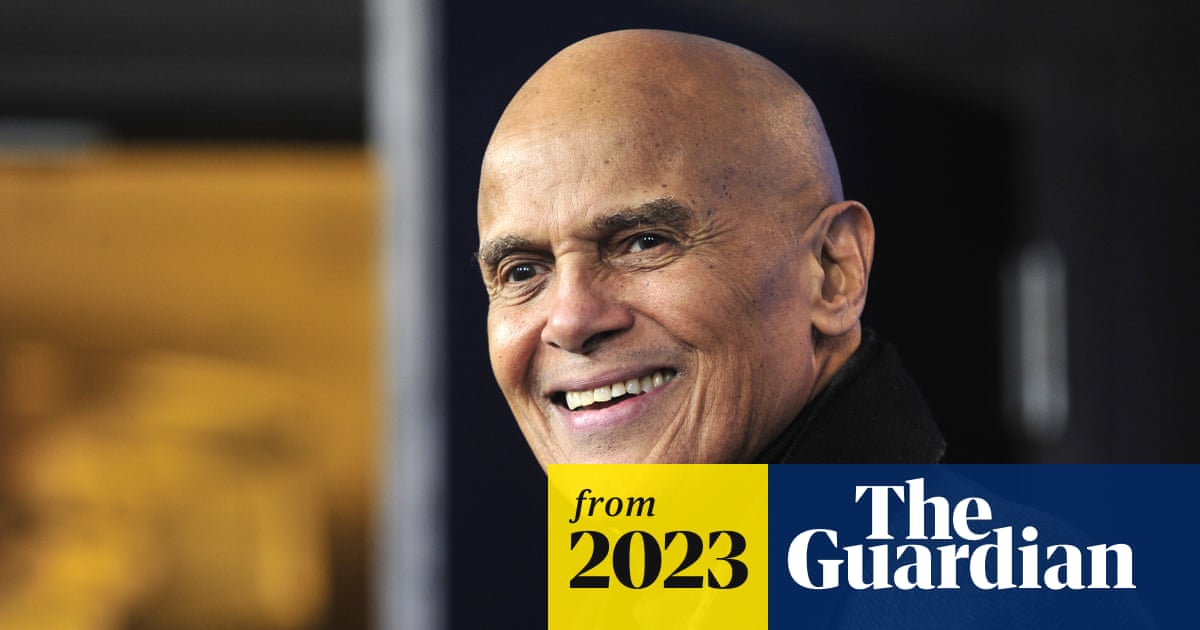
Harry Belafonte, singer, actor and tireless activist, dies aged 96 | Music | The Guardian
Chart-topping calypso singer who supported US civil rights movement and African initiatives dies of congestive heart failure
theguardian.com →Harry Belafonte , the singer, actor and civil rights activist who broke down racial barriers, has died aged 96. As well as performing global hits such as Day-O (The Banana Boat Song), winning a Tony award for acting and appearing in numerous feature films, Belafonte spent his life fighting for a variety of causes. He bankrolled numerous 1960s initiatives to bring civil rights to Black Americans; campaigned against poverty, apartheid and Aids in Africa; and supported leftwing political figures such as Cuba’s Fidel Castro and Venezuela’s Hugo Chavez. The cause of death was congestive heart failure, his spokesman told the New York Times . Figures including Joe Biden, the rapper Ice Cube and Mia Farrow paid tribute to Belafonte. The US president said Belafonte was a “groundbreaking American who used his talent and voice to help redeem the soul of our nation”. “Harry Belafonte’s accomplishments are legendary and his legacy of outspoken advocacy, compassion, and respect for dignity will endure forever,” Biden said on Twitter . The US news anchor Christiane Amanpour tweeted that he “inspired generations around the whole world in the struggle for non-violent resistance justice and change. We need his example now more than ever.” Bernice King, daughter of Dr Martin Luther King, shared a picture of Belafonte at her father’s funeral and said that he “showed up for my family in very compassionate ways. In fact, he paid for the babysitter for me and my siblings.” The Beninese-French musician Angélique Kidjo called Belafonte “the brightest star in every sense of that word. Your passion, love, knowledge and respect for Africa was unlimited.” Belafonte was born in 1927 in working-class Harlem, New York, and spent eight years of his childhood in his impoverished parents’ native Jamaica. He returned to New York for high school but struggled with dyslexia and dropped out in his early teens. He took odd jobs working in markets and the city’s garment district, and then signed up to the US navy aged 17 in March 1944, working as a munitions loader at a base in New Jersey. After the war ended, he worked as a janitor’s assistant, but aspired to become an actor after watching plays at New York’s American Negro Theatre (along with fellow aspiring actor Sidney Poitier ). He took acting classes – where his classmates included Marlon Brando and Walter Matthau – paid for by singing folk, pop and jazz numbers at New York club gigs, where he was backed by groups whose members included Miles Davis and Charlie Parker. He released his debut album in 1954, a collection of traditional folk songs. His second album, Belafonte, was the first No 1 in the new US Billboard album chart in March 1956, but its success was outdone by his third album the following year, Calypso, featuring songs from his Jamaican heritage. It brought the feelgood calypso style to many Americans for the first time, and became the first album to sell more than a million copies in the US. The lead track was Day-O (The Banana Boat Song), a signature song for Belafonte – it spent 18 weeks in the UK singles chart, including three weeks at No 2. His version of Mary’s Boy Child was a UK chart-topper later that year, while Island in the Sun reached No 3. He released 30 studio albums, plus collaborative albums with Nana Mouskouri, Lena Horne and Miriam Makeba. The latter release won him one of his two Grammy awards; he was later awarded a lifetime achievement Grammy and the Academy’s president’s merit award. Bob Dylan’s first recording – playing harmonica – was on Belafonte’s 1962 album, Midnight Special. The previous year, Belafonte had been hired by Frank Sinatra to perform at John F Kennedy’s presidential inauguration. Belafonte maintained an acting career alongside music, winning a Tony award in 1954 for his appearance in the musical revue show, John Murray Anderson’s Almanac, and appearing in several films, most notably as one of the leads in Island in the Sun, along with James Mason, J
Excerpt from a page describing this subject · 15,837 chars · not written by Vinony
Wikidata facts
- Instance of
- human
- Given name
- George
- Gender
- male
- Citizenship
- Jamaica
- Place of birth
- New York City
- Place of death
- Upper West Side
- Occupation
- film actor
- Position held
- UNICEF Goodwill Ambassador
- Educated at
- The New School
- Employer
- UNICEF
- Political party
- Democratic Party (United States)
- Languages spoken
- English language
- Native language
- English language
- Award
- Theatre World Award
- Student of
- Erwin Piscator
- Field of work
- popular music
- Genre
- world music
- Instrument
- voice
- Record label
- RCA Victor
- Conflict
- World War II
- Military branch
- United States Navy
- Military rank
- seaman
- Image
- Harry Belafonte 2011 Shankbone.JPG
- Height
- 1.82
Show 25 more facts
- Number of children
- 4
- Work location
- United States
- Residence
- Upper West Side
- Voice type
- baritone
- birth name
- Harold George Bellanfanti
- Commons category
- Harry Belafonte
- date of birth
- 1927-03-01
- Commons gallery
- Harry Belafonte
- name in native language
- Harry Belafonte
- start of work period
- 1949-00-00
- copyright representative
- American Society of Composers, Authors and Publishers
- social media followers
- 33061
- writing language
- English language
- ethnic group
- African Americans
- P10632
- Harry Belafonte
- date of death
- 2023-04-25
- end of work period
- 2023-00-00
- cause of death
- heart failure
- manner of death
- natural causes
- nickname
- King of Calypso
- short name
- Harry Belafonte
- significant person
- Paul Robeson
- pseudonym
- Raymond Bell
Sources (15)
via Wikidata · CC0
~40 min read
Encyclopedic overview
Harry Belafonte (/ˌbɛləˈfɒnti/ BEL-ə-FON-tee; born Harold George Bellanfanti Jr.; March 1, 1927 – April 25, 2023) was an American singer, actor, and civil rights activist who popularized calypso music with international audiences in the 1950s and 1960s. Belafonte's career breakthrough album Calypso (1956) was the first million-selling LP by a single artist.
Belafonte was best known for his recordings of "Day-O (The Banana Boat Song)", "Jump in the Line (Shake, Senora)", "Jamaica Farewell", and "Mary's Boy Child". He recorded and performed in many genres, including blues, folk, gospel, show tunes, and American standards. He also starred in films such as Carmen Jones (1954), Island in the Sun (1957), Odds Against Tomorrow (1959), Buck and the Preacher (1972), and Uptown Saturday Night (1974). He made his final feature film appearance in Spike Lee's BlacKkKlansman (2018).
Excerpted from Wikipedia’s “Harry Belafonte” article, available under the CC BY-SA 4.0 licence.
Gallery (13)
Available in 67 languages
- Español
- Français
- Deutsch
- 中文
- 日本語
- Русский
- Português
- Italiano
- العربية
- Afrikaans
- Aragonese
- Armenian
- Asturian
- azb
- Azerbaijani
- Bahasa Indonesia
- Basque
- Belarusian
Show 48 more
- Bulgarian
- Catalan
- Central Kurdish
- Croatian
- Czech
- Danish
- Egyptian Arabic
- Esperanto
- Estonian
- Faroese
- Finnish
- Galician
- Greek
- Hausa
- Hebrew
- Hungarian
- Icelandic
- Ido
- Interlingua
- Irish
- Latvian
- Luxembourgish
- Macedonian
- Malayalam
- Maltese
- Nederlands
- Norwegian
- Norwegian Nynorsk
- Occitan
- Polski
- Quechua
- Romanian
- Serbian
- Serbian (Latin)
- simple
- Slovak
- Svenska
- Türkçe
- Ukrainian
- Uzbek
- Volapük
- Waray
- Welsh
- Western Frisian
- Wu Chinese
- Yoruba
- فارسی
- 한국어
via Wikidata sitelinks · CC0