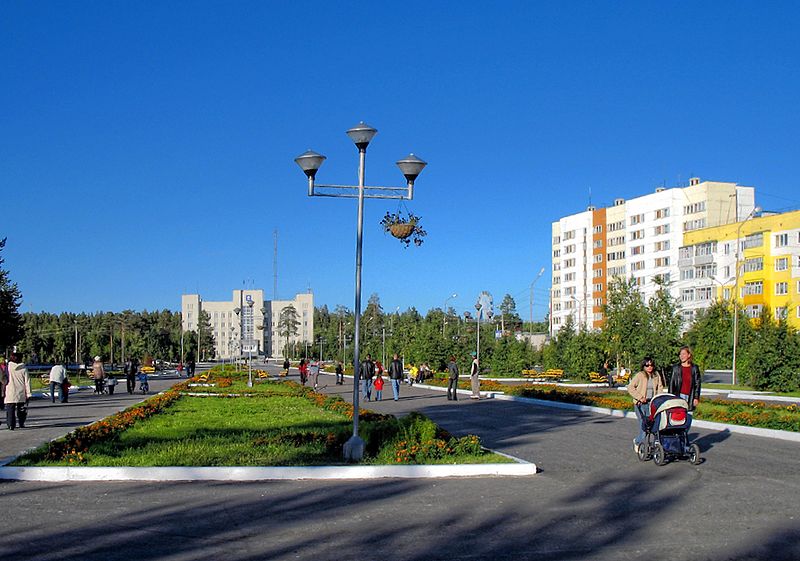
File:City_center_of_Noyabrsk.jpg · Wikimedia Commons · See Wikimedia Commons
Noyabrsk
Sign in to saveNoyabrsk (; Tundra Nenets: Нюдя Пэвдей марˮ, romanized: Njudja Pəvdej marꜧ; Forest Nenets: Нюча пэ”дя”й марˮ, romanized: Njuča pəꜧdjaꜧj marꜧ) is the second largest city in Yamalo-Nenets Autonomous Okrug, Russia, located in the middle of the West Siberian oil fields, on the Tyumen–Novy Urengoy railway about north of Surgut. Population:
Noyabrsk is the second-largest city in Russia's Yamalo-Nenets Autonomous Okrug, located in western Siberia in the heart of major oil fields. The city's significance stems from its strategic position in Russia's oil industry and its role as a hub along the Tyumen–Novy Urengoy railway.
AI-generated from the Wikipedia summary — may contain errors.
Key facts
- Russian inhabited locality.en_name
- Noyabrsk
- Russian inhabited locality.ru_name
- Ноябрьск
- Russian inhabited locality.image_skyline
- City center of Noyabrsk.jpg
- Russian inhabited locality.image_caption
- Noyabrsk city center
- Russian inhabited locality.map_label_position
- top
- Russian inhabited locality.image_coa
- Coat of Arms of Noyabrsk (Yamal Nenetsia).png
- Russian inhabited locality.image_flag
- Flag of Noyabrsk (Yamal Nenetsia).svg
- Russian inhabited locality.holiday
- First Sunday of September
- Russian inhabited locality.federal_subject
- Yamalo-Nenets Autonomous Okrug
- Russian inhabited locality.adm_city_jur
- city of okrug significance of Noyabrsk
- Russian inhabited locality.adm_ctr_of
- city of okrug significance of Noyabrsk
- Russian inhabited locality.inhabloc_cat
- City
- Russian inhabited locality.urban_okrug_jur
- Noyabrsk Urban Okrug
- Russian inhabited locality.mun_admctr_of
- Noyabrsk Urban Okrug
- Russian inhabited locality.leader_title
- Head
- Russian inhabited locality.leader_name
- Alexey Romanov
- Russian inhabited locality.representative_body
- City Duma
- Russian inhabited locality.pop_2010census
- 110,620
via Wikipedia infobox
Wikidata facts
- Instance of
- big city
- Country
- Soviet Union
- Population
- 102938
- Area
- 38.84
- Elevation
- 115
- Time zone
- UTC+05:00
- Official website
- www.admnoyabrsk.ru
- Image
- City center of Noyabrsk.jpg
- Dialing code
- 3496
Show 6 more facts
- Commons category
- Noyabrsk
- topic's main category
- Category:Noyabrsk
- inception
- 1976-01-01
- postal code
- 629800–629811
- twinned administrative body
- Korosten
- native label
- Ноя́брьск
via Wikidata · CC0
~9 min read
Encyclopedic overview
14 sectionsContents
- History
- Administrative and municipal status
- Demographics
- Economy
- Transportation
- Media and communication
- Education
- Recreation, sports, sights
- Crime
- Twin towns and sister cities
- References
- Citations
- General and cited
- External links
Noyabrsk (; Tundra Nenets: Нюдя Пэвдей марˮ, romanized: Njudja Pəvdej marꜧ; Forest Nenets: Нюча пэ”дя”й марˮ, romanized: Njuča pəꜧdjaꜧj marꜧ) is the second largest city in Yamalo-Nenets Autonomous Okrug, Russia, located in the middle of the West Siberian oil fields, on the Tyumen–Novy Urengoy railway about north of Surgut. Population:
==History== The city history dates back to 1975 when a landing party arriving by helicopter disembarked on the ice of the Itu-Yakha River to start developing Kholmogorskoye oil field. In November 1976, the first party of railway builders arrived at the site of the future city and camped out by Lake Khanto with the task of creating a settlement. On October 26, 1977, the settlement of Noyabrsk, which grew around the railway station of Noyabrskaya, was officially registered. It was decided to choose the name of "Noyabrsk" instead of the other proposal, "Khanto", to perpetuate the memory of the first arrival in November 1976, as the Russian word for November is "" (noyabr). The settlement was granted work settlement status on November 12, 1979 and that of a town on April 28, 1982.
Excerpted from Wikipedia’s “Noyabrsk” article, available under the CC BY-SA 4.0 licence.
Gallery (3)
On the map
2 mapped locations