File:Hubbert_Upper-Bound_Peak_1956.png · Wikimedia Commons · See Wikimedia Commons
peak oil
Sign in to saveAlso known as peak of oil, oil peak
point in time when the maximum rate of global oil extraction is reached
Wikidata facts
- Part of
- Hubbert peak theory
- Image
- Hubbert peak oil plot.svg
Show 6 more facts
- Commons category
- Peak oil
- topic's main category
- Category:Peak oil
- facet of
- oil depletion
- on focus list of Wikimedia project
- WikiProject Climate change
- discoverer or inventor
- M. King Hubbert
- topic has template
- Template:Peak oil
Sources (2)
via Wikidata · CC0
~40 min read
Encyclopedic overview
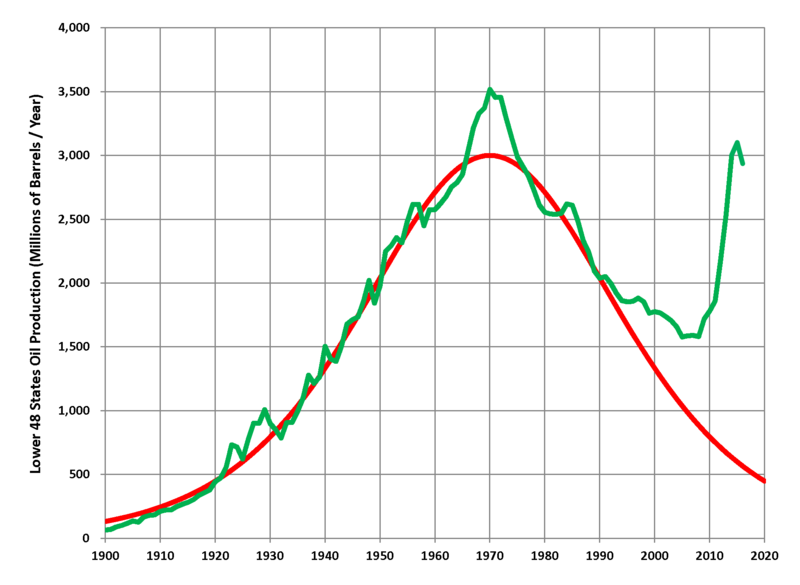
Hubbert's upper-bound U.S. peak oil prediction (1956) in red, and actual lower 48 U.S. states production through to 2016 in green A 1956 world oil production model proposed by M. King Hubbert, showing historical data and future production – it had a peak of 12.5 billion barrels per year in about the year 2000. As of 2022, world oil production was about 29.5 billion barrels per year (80.8 Mbbl/day), with an oil glut between 2014 and 2018.
Peak oil, or peak extraction of oil, is the point when global petroleum demand reaches its maximum rate. Predictions range from 2025 to after 2050. The main concern is the carbon dioxide emissions from transportation, which relies heavily on gasoline, diesel and kerosene. Adoption of electric vehicles, biofuels, or more efficient transport (like trains and waterways) could help reduce oil demand.
Excerpted from Wikipedia’s “peak oil” article, available under the CC BY-SA 4.0 licence.