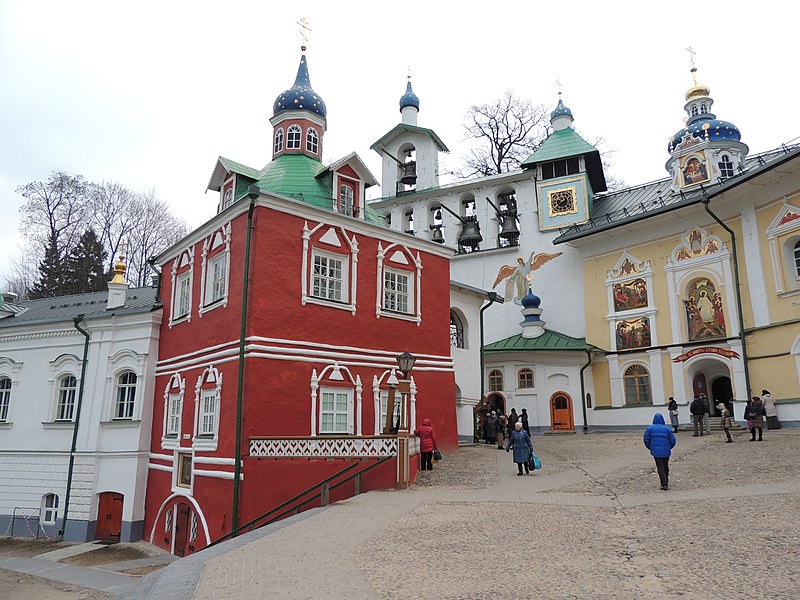
File:Pscovo-Pechorskii_Monastery_1473_-_panoramio_(3).jpg · Wikimedia Commons · See Wikimedia Commons
Pechory
Sign in to savePechory (; Estonian and Seto: '''') is a town and the administrative centre of Pechorsky District in the Pskov Oblast, Russia. Its population in the 2010 Census was 11,195, having fallen from 13,056 recorded in the 2002 Census and 11,935 in the 1989 Census.
Pechory is a town in western Russia that serves as the administrative center for Pechorsky District in Pskov Oblast. The town has experienced population decline over the past two decades, dropping from nearly 13,000 residents in 2002 to around 11,200 by 2010.
AI-generated from the Wikipedia summary — may contain errors.
Key facts
- Russian inhabited locality.en_name
- Pechory
- Russian inhabited locality.ru_name
- Печоры
- Russian inhabited locality.other_name
- Petseri
- Russian inhabited locality.other_lang
- Estonian
- Russian inhabited locality.image_skyline
- Pscovo-Pechorskii Monastery 1473 - panoramio (3).jpg
- Russian inhabited locality.image_caption
- Pechory Monastery
- Russian inhabited locality.map_label_position
- bottom
- Russian inhabited locality.image_coa
- Coat of Arms of Pechory (Pskov oblast).png
- Russian inhabited locality.coa_caption
- Coat of arms of Pechory Urban Settlement
- Russian inhabited locality.federal_subject
- Pskov Oblast
- Russian inhabited locality.adm_district_jur
- Pechorsky District
- Russian inhabited locality.adm_ctr_of
- Pechorsky District
- Russian inhabited locality.inhabloc_cat
- Town
- Russian inhabited locality.mun_district_jur
- Pechorsky Municipal District
- Russian inhabited locality.urban_settlement_jur
- Pechory Urban Settlement
- Russian inhabited locality.mun_admctr_of1
- Pechorsky Municipal District
- Russian inhabited locality.mun_admctr_of2
- Pechory Urban Settlement
- Russian inhabited locality.pop_2010census
- 11195
via Wikipedia infobox
Wikidata facts
- Instance of
- border city
- Country
- Tsardom of Russia
- Population
- 10247
- Area
- 21
- Elevation
- 85
- Time zone
- UTC+03:00
- Capital of
- Setomaa
- Official website
- www.pechory.ru
- Image
- Pechory 1.jpg
- Dialing code
- 81148
Show 7 more facts
- inception
- 1473-00-00
- Commons category
- Pechory
- postal code
- 181502
- category of associated people
- Category:People from Pechory
- time of earliest written record
- 1392-00-00
- P6482
- Pechory
- different from
- Pechora
via Wikidata · CC0
~8 min read
Encyclopedic overview
8 sectionsContents
- History
- Administrative and municipal status
- Religion
- Culture
- Notable people
- References
- Sources
- External links
Pechory (; Estonian and Seto: '') is a town and the administrative centre of Pechorsky District in the Pskov Oblast, Russia. Its population in the 2010 Census was 11,195, having fallen from 13,056 recorded in the 2002 Census and 11,935 in the 1989 Census.
==History== Pechory was founded as a posad in the 16th century near the Pskov-Caves Monastery established in 1473 by the Orthodox priest Jonah, who fled Dorpat (now Tartu) for the Pskov Republic. Its name, Pechory, or earlier Pechery derives from the word (пещеры), Russian for caves.'' The site soon developed into an important trading post and border stronghold. During the campaign of introduced by Ivan the Terrible, Pechory remained within , or regular municipal lands subject to the rule of the government. It was besieged numerous times by Russia's enemies: Stephen Báthory's forces sacked the settlement during the Siege of Pskov in 1581–1582, and the Swedes or Polish stormed Pechory in 1592, 1611, 1615, and 1630, and from 1655 to 1657. The fortification of Pechory was besieged by Swedes in the course of the Great Northern War in 1701 and 1703. In 1701, after an unsuccessful Swedish assault led by Shlippenbach, Boris Sheremetev began his campaign of advancing into Swedish Estonia from Pechory. After the war the Russian border was shifted westwards so Pechory lost its military significance.
Excerpted from Wikipedia’s “Pechory” article, available under the CC BY-SA 4.0 licence.
Gallery (10)
On the map
2 mapped locations