Artwork
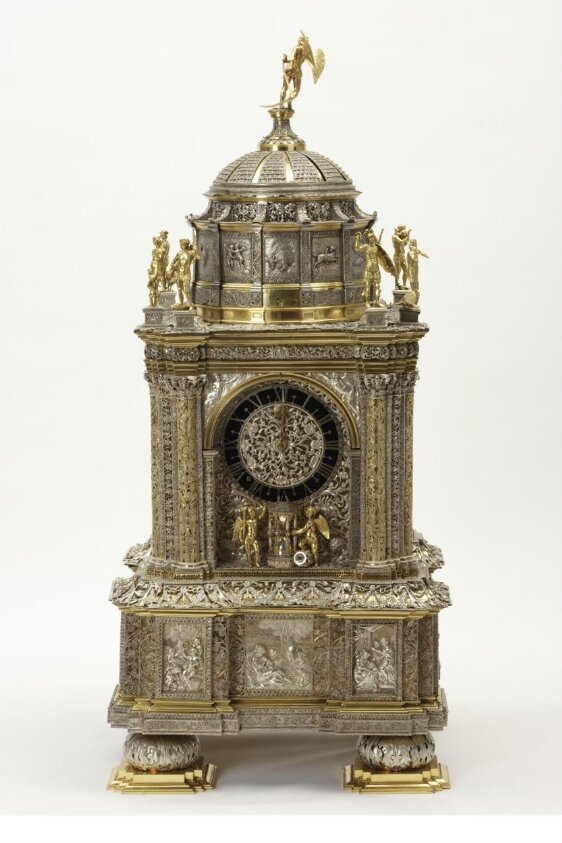
Clock — Breghtel, Hans Conraedt — ca. 1665-1670
Sign in to saveThe clock is in the form of a temple with a cupola surmounted by an allegorical figure representing Time. Beneath the pierced dome, twelve reliefs separated by pilasters represent the Signs of the Zodiac. The four sides are designed as triumphal arches flanked by Corinthian columns; the front and sides contain dials and the back has a door providing access to the movement. The spandrels to the arches are decorated in relief with mythological figures. Each corner is surmounted with standing figures of classical deities; Apollo; Venus and Cupid; Mercury, Janus, Saturn, Diana, Jupiter and Mars. The dial on the front of the clock has both an hour and a minute hand; the dials on the sides only show the hour. Under the front dial, an hour glass is decorated with enamelled foliage and supported by two gilded amorini in high relief, one carrying a sceptre; the other resting a knee on an upturned vase. Under the side dials and Breghtel's signature on the back are three enamels representing a young woman, turbanned man and older woman. The pedestal of the clock is embellished with a series of plaques representing the seasons in pastoral settings; the ages of man in domestic contexts and appropriate mythological scenes. The clock is mounted on four ball feet covered with acanthus foliage, each foot is on a shaped square moulded base. The surface of the case is decorated with applied pierced embossed and filigree silver, partly gilt, representing scrolling foliage, swags of flowers, cornucopia and classical heads. The gilding is used to punctuate the overall decoration. The statuettes of Time and the Classical Deities are gilded as is the plinth on which Time stands, the half columns flanking each side of the case and the shaped moulded bases under the feet.
Artwork · Victoria & Albert Museum
Clock- Artist
- Breghtel, Hans Conraedt
- Date
- ca. 1665-1670
- Medium
- Clock
View at Victoria & Albert Museum · Open Access