Artwork
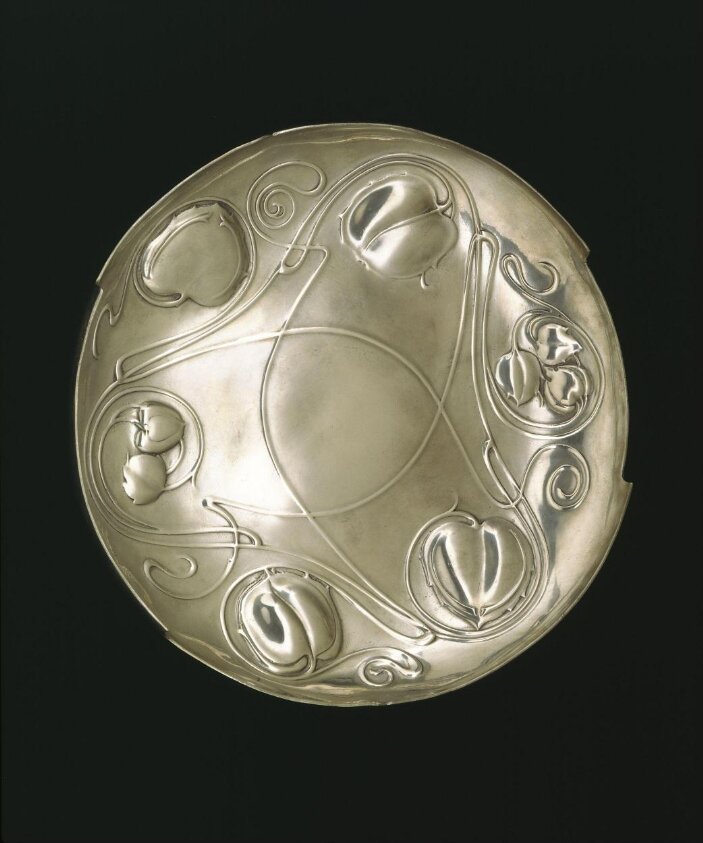
Dish — Knox, Archibald — ca. 1903
Sign in to save<b>Object Type</b><br>This dish made of pewter was probably designed by Archibald Knox and was manufactured by the Birmingham firm of W.H. Haseler for the Liberty 'Tudric' range.<br><br><b>Design & Designing</b><br>Knox's designs owe much to the immediate precedents offered by the British Arts and Crafts Movement and the work of C.R. Ashbee and his Guild of Handicraft, in particular. The characteristics shared by the designs produced by Knox and Ashbee include expanses of plain metal, concentrated fluid ornament and monochrome enamel work. Ashbee was to complain later that Liberty's plagiarised his ideas and principles but in this he was wrong. Liberty metalwork was altogether richer, more assured and self confident than the work of the Guild of Handicraft. Knox and his colleagues,both his fellow designers at the Silver Studio and Liberty management who gave their undoubted support, had moved the Arts and Crafts stylistic principles another stage forward. In so doing, they had created a distinctive British version of Art Nouveau.<br><br><b>Materials & Making</b><br>Because pewter objects are formed when the metal is in a molten state, cast in moulds, pewter lent itself readily to the sinuous, twisting forms of the Art Nouveau style.
Artwork · Victoria & Albert Museum
Dish- Artist
- Knox, Archibald
- Date
- ca. 1903
- Medium
- Dish
View at Victoria & Albert Museum · Open Access