Artwork
Bookcase — Chippendale, Haig and Co. — ca. 1775
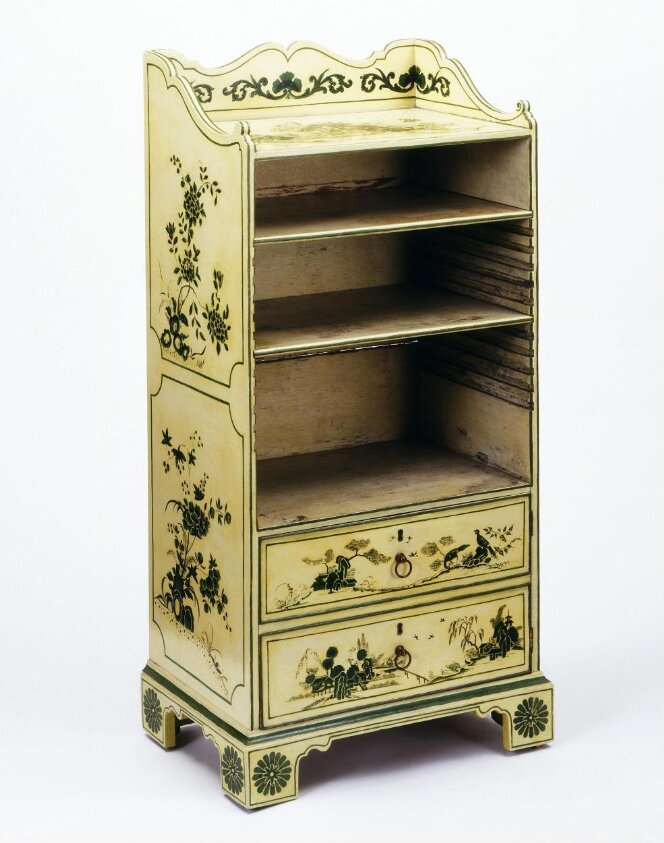
Sign in to saveThe bookcase is raised on a plinth 10 cm high (including the upper moulding), cut away to present bracket feet, the flat surfaces with green lining on a white ground, and each side of each foot painted with a floral in green. The flat sides of the cabinet are painted with two rectangular panels of lining with inset corners, each panel decorated with sprays of flowers and foliage. The top edge of each side is shaped, rising to the back panel which also presents a shaped top edge, the sides and back forming a raised gallery to the top (10 cm high at the highest point). The gallery is painted on the inside with green lining, and formal scrolls of foliage with shell-like motifs at the centre and the corners. The flat top shows a single panel of lining with inset corners, enclosing a more densely painted scene of Chinese landscape, including a building. All front edges of the sides, top and shelves show green lines. The door is disguised as two drawer fronts outlined with cock-beading painted green, each with single panel outlined, containing ornamental scenes and each set with a ring handle of lacquered brass and a false keyhole. In he upper keyhole is hidden a spring catch which operates at the top of the door. The base and plinth are of pine painted with red lead. The feet, which are bracketed even at the back of the piece, are set with recessed brass castors, 3 with circular plates, one with a square plate (probably replaced). The back of the cabinet is in oak with the grain running horizontally, painted inside and out with a thin coat of white paint over red lead. The two adjustable shelves and the two fixed shelves at the top and bottom of the open section are similarly painted oak but the leading edges show lippings of mahogany which would allow a better finish to the painting on the visible edges. The sides of the cabinet are of Cuban mahogany, as are the top of the back and the door.
Artwork · Victoria & Albert Museum
Bookcase- Artist
- Chippendale, Haig and Co.
- Date
- ca. 1775
- Medium
- Bookcase
View at Victoria & Albert Museum · Open Access