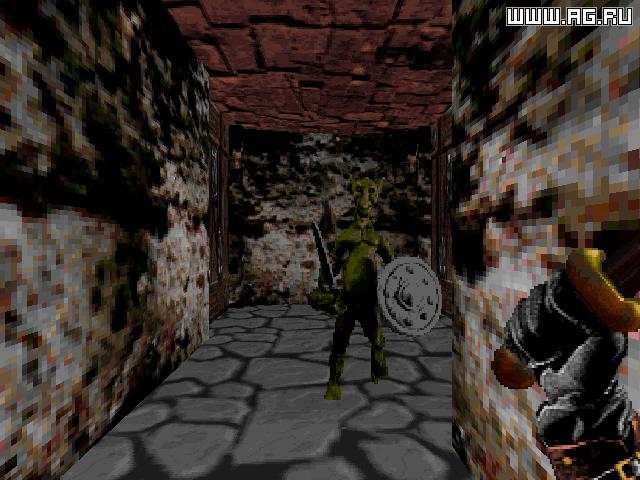
Witchaven · RAWG · Courtesy of RAWG
Witchaven
Sign in to saveAlso known as Witchaven: Dare to Enter
Witchaven (usually pronounced ) is a dark fantasy first-person shooter video game developed by Capstone Software and published by Intracorp Entertainment in 1995. Its sword-and-sorcery themed story tasks the knight Grondoval with a quest to seek out and destroy a lair of witches in their titular fortress, fighting hordes of hostile monsters along the way. Witchaven features action role-playing elements such as leveling, as well as an emphasis on melee combat. Its code was based upon an early version of the nascent Build engine. The game received overall mixed reviews, such as praise for its at
Game details · IGDB
Witchaven is a medieval fantasy first-person shooter video game with action role-playing game elements. Its sword and sorcery style story tasks the knight Grondoval with a quest to seek out and kill a powerful evil witch in her titular fortress.
- Released
- 1995
- Genres
- Shooter, Role-playing (RPG)
- Platforms
- PC (Microsoft Windows), DOS
- Game modes
- Single player, Multiplayer
- Engine
- Build
- Developer
- Capstone Software
- Publisher
- IntraCorp, U.S. Gold
Wikidata facts
- Instance of
- video game
- Country of origin
- United States
- Developer
- Capstone Software
- Platform
- Microsoft Windows
- Game mode
- single-player video game
- Game engine
- Build
- Distribution format
- digital distribution
Show 4 more facts
- publication date
- 1995-09-30
- input device
- computer keyboard
- language of work or name
- English language
- distributed by
- Steam
via Wikidata · CC0
~11 min read
Encyclopedic overview
8 sectionsContents
- Gameplay
- Plot
- Development
- Reception
- Legacy
- Notes
- References
- External links
Witchaven (usually pronounced ) is a dark fantasy first-person shooter video game developed by Capstone Software and published by Intracorp Entertainment in 1995. Its sword-and-sorcery themed story tasks the knight Grondoval with a quest to seek out and destroy a lair of witches in their titular fortress, fighting hordes of hostile monsters along the way. Witchaven features action role-playing elements such as leveling, as well as an emphasis on melee combat. Its code was based upon an early version of the nascent Build engine. The game received overall mixed reviews, such as praise for its atmosphere and gory combat, but criticism for some aspects of gameplay. It was followed by a sequel titled Witchaven II: Blood Vengeance in 1996.
==Gameplay== thumb|left|Gameplay screenshot of Witchaven, showing melee combat and the EXP panel. Although the game is considered a first-person shooter (FPS), the game has several role-playing video game (RPG) elements, including character progression by acquiring experience points (EXP) (gained by defeating enemies and finding gold) and level advancement with an increasing number of hit points, damage modifiers and weapons proficiency, and access to more powerful spells at higher levels. The game also has a focus on close-quarters combat, requiring more tactical thinking, unlike the standard run-and-gun gameplay of most first-person shooters at the time. As a result, Computer Gaming World classified it as an action role-playing game, albeit an unconventional one, while The CRPG Book Project maintained that it "is not a full-fledged RPG - it's a first-person shooter (or rather, hack & slasher) with RPG elements." The game is similar to many FPS games of its era in that the player must look for color-coded keys to open closed doors. There are also options to adjust the game's difficulty and gore levels.
Excerpted from Wikipedia’s “Witchaven” article, available under the CC BY-SA 4.0 licence.