Category
page 115th-century Catholicism

Council of Constance
synod
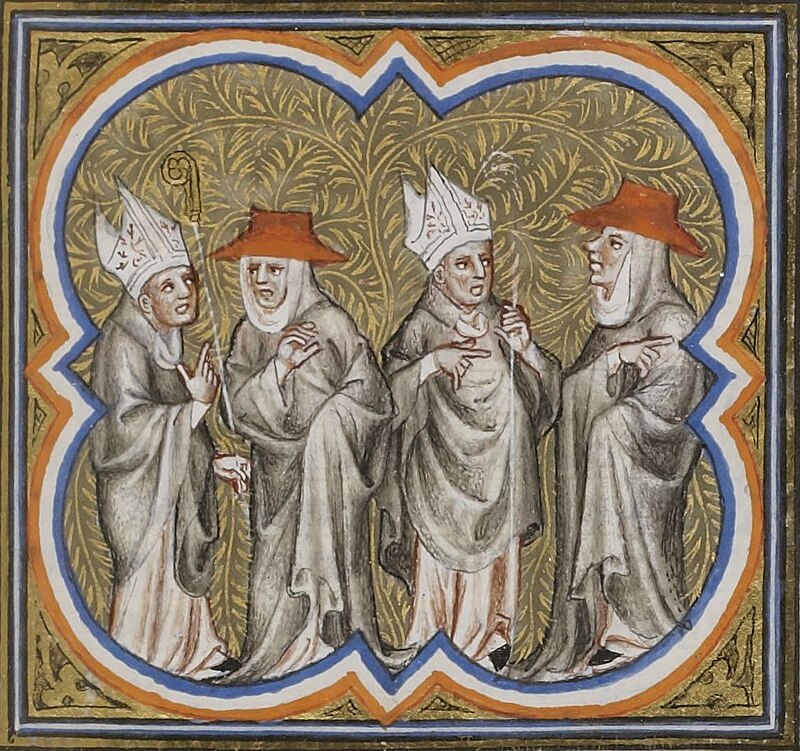
Western Schism
split within the Catholic Church from 1378 to 1417, in which bishops in Rome and Avignon both claimed to be the pope, joined by a third line of Pisan popes in 1409
Gallicanism
Gallicanism is the belief that popular secular authority—often represented by the monarch's or the state's authority—over the Catholic Church is comparable to that of the pope. Gallicanism may be contrasted with ultramontanism. Gallicanism shares some similarities with the ecclesiology of Anglicanism, but while it plays down the authority of the Pope in church, it generally does not deny that there are some authoritative elements to the papal office as ('first among equals'). Other terms for the same or similar doctrines include Erastianism, Regalism, Febronianism, and Josephinism.
Devotio Moderna
medieval movement for religious reform
Conciliarism
Conciliarism was a movement in the 14th-, 15th- and 16th-century Catholic Church which held that supreme authority in the Church resided with an ecumenical council, apart from, despite, or even if opposed by, the pope.
New Christian
community descended from Muslims and Jews
Bonfire of the Vanities
burning of objects
1492 papal conclave
conclave
Sicut dudum
papal bull promulgated by Pope Eugene IV
Old Christian
Social and legal category in early modern Iberia
1458 papal conclave
election of Pope Pius II
1431 papal conclave
election of Pope Eugene IV
list of cardinals created by Nicholas V
Wikimedia list article
1455 papal conclave
election of Pope Callixtus III
1464 papal conclave
election of Pope Paul II
1447 papal conclave
conclave
list of cardinals created by Pius II
Wikimedia list article
1406 papal conclave
election of Pope Gregory XII
list of cardinals created by Innocent VIII
Wikimedia list article
list of cardinals created by Sixtus IV
Wikimedia list article
1404 papal conclave
conclave
1484 papal conclave
election of Pope Innocent VIII
1471 papal conclave
conclave
list of cardinals created by Innocent VII
Wikimedia list article
list of cardinals created by Paul II
Wikimedia list article
Concordat of Vienna
treaty concluded on 17 February 1448 between the Holy Roman Empire and the Holy See
Renaissance Papacy
period of papal history
Benedict XIV
title used by two antipopes 1424 to 1437
Santa Casa da Misericórdia
charitable organization started in Portugal
Gregory II Bulgarian
Ukrainian Orthodox metropolitan bishop
Haec sancta
1415 document regarding papal supremacy
Weepers (Savonarolan movement)
thumb|Girolamo Savonarola
The Piagnoni were a group of Christians who followed the teachings of Girolamo Savonarola. The later Piagnoni remained in the Catholic Church and kept a mixture with the teachings of Catholic dogma and the teachings of Savonarola. The name Piagnoni (meaning "Weepers") was given because they wept for their sins and the sins of the world.
Aslak Bolt's cadastre
Norwegian cadastre
Frequens
Frequens (Frequent) is the name for the decree passed at the Council of Constance on October 9, 1417; it was supposed to ensure that the Pope convened councils regularly. With this decree, the council participants determined that church meetings should be held "forever". The title is the incipit of the decree, the first sentence of which runs, ("Frequent celebration of general councils is the best method of cultivating the field of the Lord").