Category
page 116th-century books
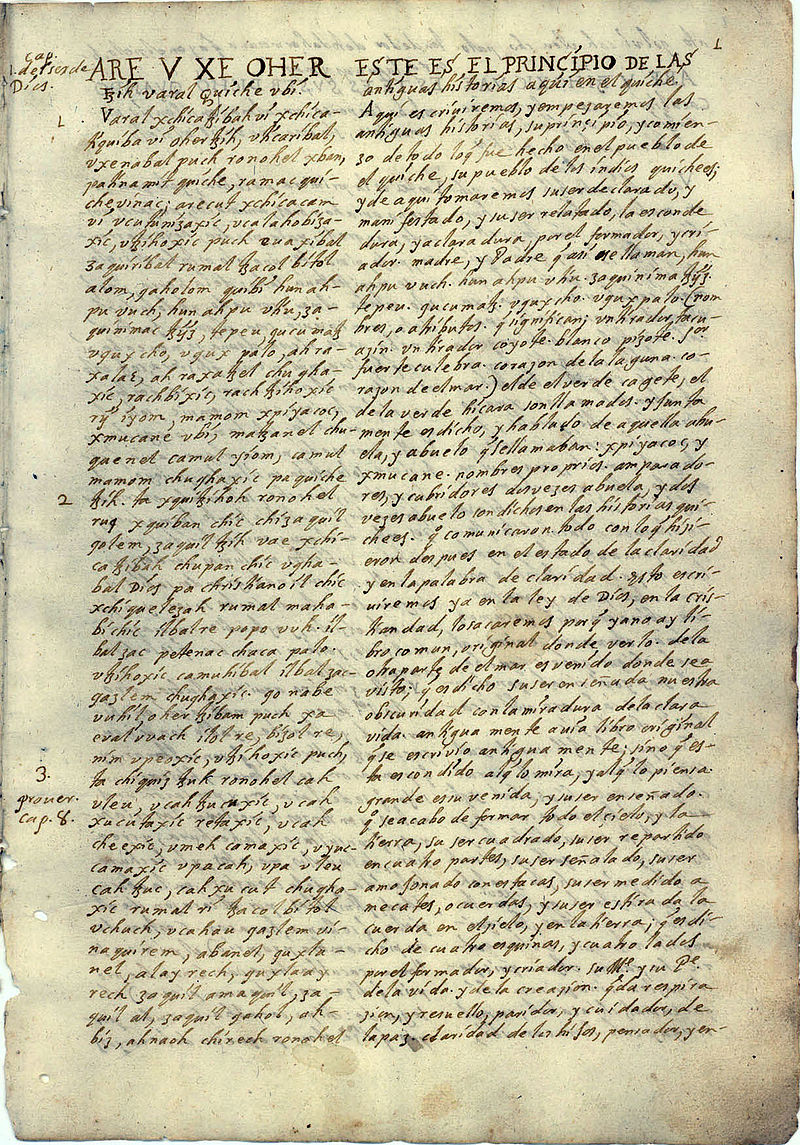
Popol Vuh
sacred text of the Maya
Codex Leicester
scientific manuscript by Leonardo da Vinci
%20-%20Portrait%20of%20Marguerite%20of%20Navarre%20-%20Google%20Art%20Project.jpg)
Heptaméron
thumb|250px|Portrait of Marguerite de Navarre|Marguerite, Queen of Navarre, attributed to [[Jean Clouet, .]]
250px|thumb|''The Gentleman's Spur catching in the Sheet. Illustration from an 1894 edition of The Tales of the Heptameron.
The Heptaméron is a collection of 72 short stories written in French by Marguerite de Navarre (1492–1549), published posthumously in 1558. It has the form of a frame narrative and was inspired by The Decameron of Giovanni Boccaccio. It was originally intended to contain one hundred stories covering ten days like The Decameron'', but at Marguerite’s death it was com

Domostroy
thumb|260px|A 17th-century merchant family, painting by Andrei Ryabushkin (1894)
thumb|A School in Muscovite Russia, painting by Boris Kustodiev (1908)
%20Metmuseum%20N-Y.jpg)
Hamzanama
thumb|"The Spy Zanbur Bringing Mahiyya to the City of Tawariq", from the Akbar Hamzanama

Commentariolus
The Commentariolus (Little Commentary) is Nicolaus Copernicus's brief outline of an early version of his revolutionary heliocentric theory of the universe. After further long development of his theory, Copernicus published the mature version in 1543 in his landmark work, De revolutionibus orbium coelestium (On the Revolutions of the Heavenly Spheres).
Codex Trivulzianus
book by Leonardo da Vinci

Ananga Ranga
literary work
Annals of the Cakchiquels
Chronicle of pre-Columbian Guatemala
Coverdale Bible
English translation of the Bible by Myles Coverdale, published in 1535; the first complete Modern English translation of the Christian Bible
Ramírez Codex
manuscript on Aztec history from the late XVIth century
Cancioneiro de Elvas
Renaissance songbook of Portuguese secular music from the 16th century
Sudovian Book
historical document
Chaitanya Bhagavata
hagiography of Chaitanya Mahaprabhu
Rauðskinna
Rauðskinna (English: Red Skin), also known as The Book of Power or as the bible of all wizards, is a legendary book about black magic. alleged to have been buried with Gottskálk the cruel, Gottskálk grimmi Nikulásson of Hólar, after he stole it from Chief and wizard Jon from Svalbard. It’s said his grandfather, Thorkell had written. The subject of the book, was to learn to master magic to such a degree as to control Satan. The book has been the subject of legend and folklore and desired by practitioners of galdr. One such legend is when the galdr master Loftur Þorsteinsson (Galdra-Loftur) trie
Bible of Francysk Skaryna
first printed East Slavic Bible (1517–1519)
Falnama
thumb|right|upright|Adam and Eve being cast out from the Garden of Eden in the Dispersed Falnama
thumb|right|upright|Coffin of Ali|Imam 'Ali from the Dispersed Falnama|alt=Refer to caption
The Persian word Falnama () covers two forms of bibliomancy (fortune-telling using a book) used historically in Iran, Turkey, and India. Quranic Falnamas were sections at the end of Quran manuscripts used for fortune-telling based on a grid. In the 16th century, Falnama manuscripts were introduced that used a different system; individuals performed purification rituals, opened a random page in the book and i
Liber Vagatorum
The Mulliner Book
Cancioneiro de Paris
renaissance songbook of Portuguese music
Tarikh-i Dost Sultan
book by Ötemish Hajji
Six Books of the Commonwealth
political philosophy book written by Jean Bodin

Codex Bodley
Mexican manuscript
Book of Soyga
16th-century Latin manuscript
A Scholar's Feast
literary work
Locationes mansorum desertorum
manuscript of Nicolaus Copernicus
Libro de los Epítomes
catalogue summarising part of Ferdinand Columbus's library
Freydal
thumb|A scene from the Kunsthistorisches Museum’s Freydal Illuminated manuscript: Freydal jousts with Veit von Wolkenstein (fol.133}
Freydal is an uncompleted illustrated prose narrative commissioned by the Holy Roman Emperor Maximilian I in the early 16th century. It was intended to be a romantic allegorical account of Maximilian's own participation in a series of jousting tournaments in the guise of the tale's eponymous hero, Freydal. In the story, Freydal takes part in the tournaments to prove that he is worthy to marry a princess, who is a fictionalised representation of Maximilian's late
Tongmong sŏnsŭp
textbook
Theuerdank
thumb|Titlepage of the 1553 edition
thumb|Woodcut illustration by [[Leonhard Beck]]
Theuerdank (Teuerdank, Tewerdanck, Teuerdannckh) is a poetic work the composition of which is attributed to the Holy Roman Emperor, Maximilian I (1486-1519). Written in German, it tells the fictionalised and romanticised story of Maximilian's journey to marry Mary of Burgundy in 1477. The published poem was accompanied by 118 woodcuts designed by the artists Leonhard Beck, Hans Burgkmair, Hans Schäufelein and others.
Its newly designed blackletter typeface was influential.