Category
page 11870s neologisms

blend word
In literature, a portmanteau, also known in linguistics and lexicography as a blend word, lexical blend, or simply a blend, is a word formed by combining the meanings and parts of the sounds of two or more words. English examples include smog, coined by blending smoke and fog, and motel, from motor (motorist) and hotel. The term "portmanteau", derived from the French , literally is a two-part piece of luggage that was first applied metaphorically in Lewis Carroll's Through the Looking-Glass (1871) to describe the combination of words.
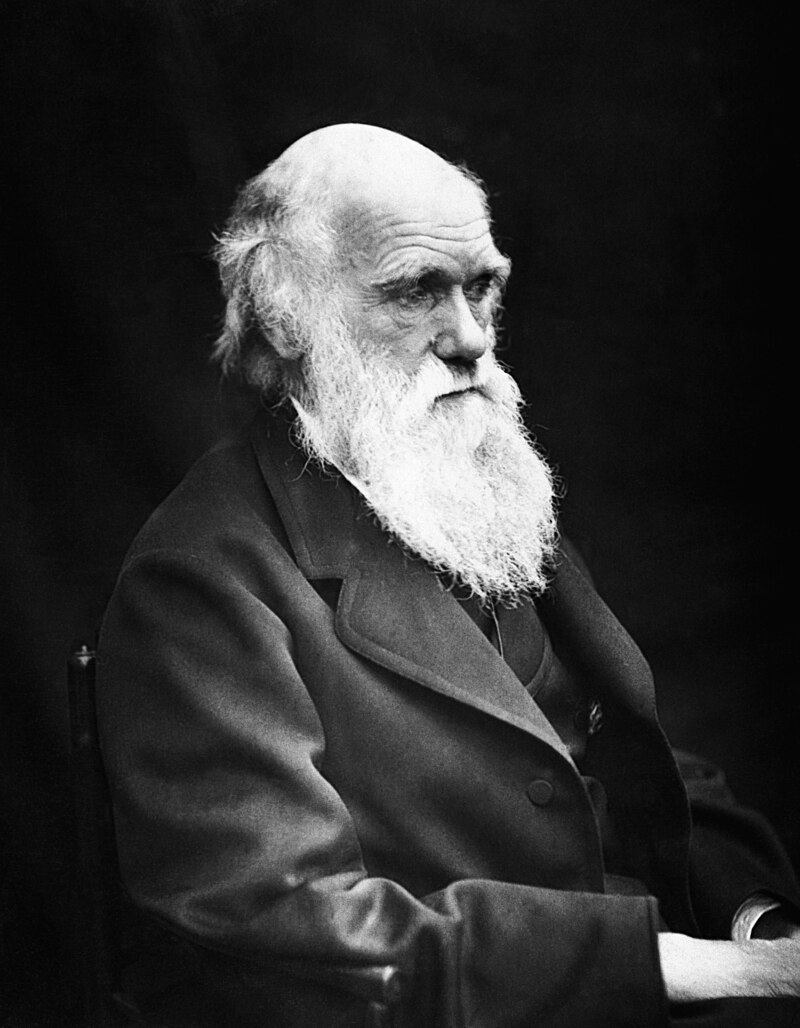
social Darwinism
biological concepts of natural selection & survival fitness re-imagined socio-politically

police brutality
use of excessive force by a police officer
Arbeit macht frei
slogan (“Work sets you free”) on the entrance of Auschwitz and other Nazi concentration camps

humanoid
thumb|The Dwarf (folklore)|dwarves of [[Germanic mythology are an example of humanoid beings.]]
A humanoid (; from English human and -oid "resembling") is a non-human entity with human form or characteristics. By the 20th century, the term came to describe fossils which were morphologically similar, but not identical, to those of the human skeleton.
Gilded Age
era in the history of the USA between the late 1860's and the 1890's
from each according to his ability, to each according to his need
slogan coined by Karl Marx, coined in Critique of the Gotha Program
%20climbs%20aboard%20one%20of%20the%20team's%20SEAL%20Delivery%20Vehicles%20(SDV)%20before%20launching%20from%20the%20back%20of%20the%20Los%20Angeles-class%20attack%20submarine%20USS%20Philadelph.jpg)
frogman
thumb|A SEAL Delivery Team member climbs aboard a delivery vehicle before launching from the back of the submarine USS Philadelphia (SSN-690)|USS Philadelphia.
ignoramus et ignorabimus
"we do not & will not know" — maxim refering to the limits of scientific knowledge
Mexican standoff
confrontation among two or more parties in which no participant can proceed or retreat without being exposed to danger
robber baron
American Gilded Age industrialists who allegedly used ruthless, cruel, or otherwise unethical means to aquire wealth

unbirthday
thumb|right|Humpty Dumpty wearing the cravat he received as an unbirthday present from the White King and Queen. From Through the Looking-Glass, illustration by [[John Tenniel.]]
An unbirthday (originally written un-birthday) is an event celebrated on all days of the year which are not a person's birthday. It is a neologism which first appeared in Lewis Carroll's 1871 novel Through the Looking-Glass. The concept gave rise to "The Unbirthday Song" in the 1951 animated feature film Alice in Wonderland.
uchronia
Uchronia is currently an English word-in-formation, a neologism, that is sometimes used in its original meaning as a straightforward synonym for alternate history, a genre of speculative fiction that reimagines historical events going in new, imaginary directions. However, it has also begun to refer to other related concepts.

Heterophyllous
thumb|The two distinct leaf types of Ranunculus aquatilis, the common water-crowfoot, at and under the water surface.
Heterophylly is where a plant has at least two different types of leaves. The differences may be in shape or size of the leaves. A particularly dramatic example of a heterophyllous plant is Ranunculus aquatilis. It, like many aquatic plants, develops two very distinctive leaf types in response to the top of the plant being exposed to air. Underwater the leaves are very divided into thin strands while at or above the water surface it produces a wide, only partly divided, leaf bl
Hexateuch
The Hexateuch ("six scrolls") is the first six books of the Hebrew Bible: the Torah (Pentateuch) and the book of Joshua.
bident
thumb|Pluto holding a bident in a woodcut from the Gods and Goddesses series of Hendrick Goltzius (1588–1589)
New South
American slogan
William Shakespeare's late romances
book by William Shakespeare
juramentado
Juramentado, in Philippine history, refers to a male Moro swordsman (from the Tausug people of the Sulu Archipelago) who attacked and killed occupying and invading police and soldiers, expecting to be killed himself. This was undertaken as a form of jihad or martyrdom. Unlike an amok, who commits acts of random violence against Muslims and non-Muslims alike, a juramentado was a dedicated, premeditated, and sometimes highly skilled warrior who prepared himself through a ritual of binding, shaving, and prayer in order to accomplish brazen attacks armed only with edged weapons.
There's a sucker born every minute
phrase associated with American showman P. T. Barnum