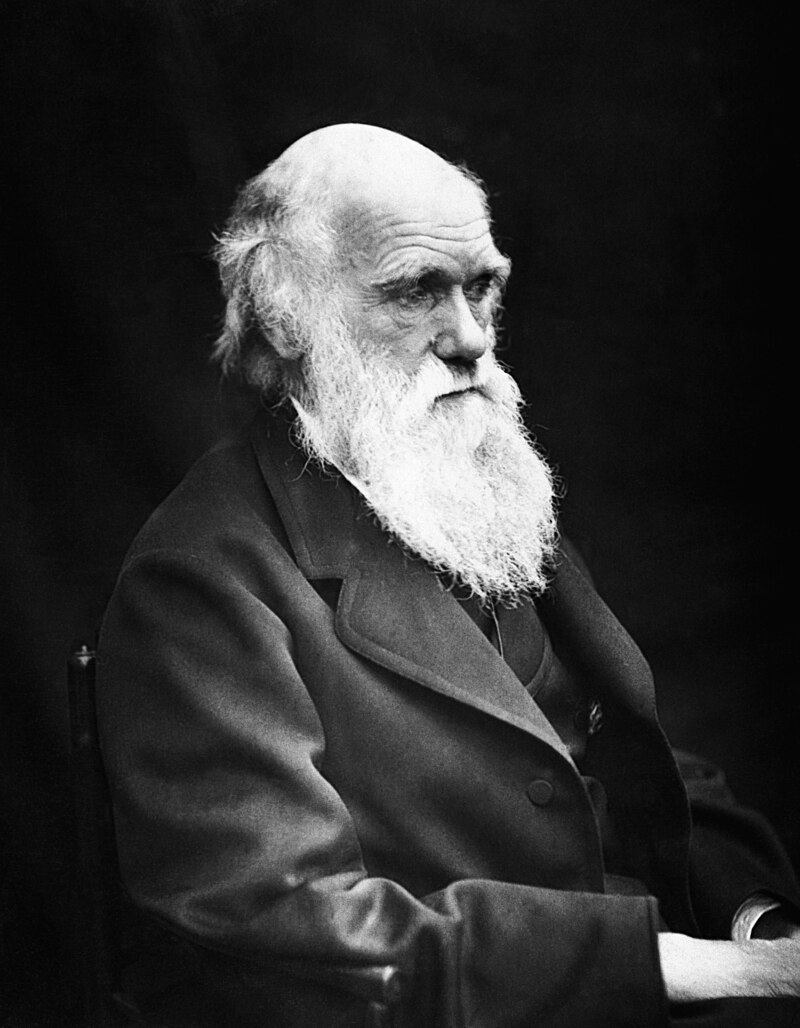
File:Charles_Darwin_01.jpg · Wikimedia Commons · See Wikimedia Commons
social Darwinism
Sign in to savebiological concepts of natural selection & survival fitness re-imagined socio-politically
Social Darwinism was a way of thinking that took Charles Darwin's biological ideas about natural selection and survival of the fittest and applied them to human society and politics, suggesting that competition between groups or individuals was natural and inevitable. It matters because it was used to justify inequality, colonialism, and discriminatory policies in the 19th and 20th centuries, even though most scientists today reject the idea that biological evolution provides a legitimate model for how human societies should be organized.
AI-generated from the Wikipedia summary — may contain errors.
Wikidata facts
- Instance of
- ideology
- Named after
- Darwinism
- Based on
- survival of the fittest
- Image
- Bilan fin de siècle.jpg
Show 2 more facts
- described by source
- Armenian Soviet Encyclopedia
via Wikidata · CC0
~40 min read
Encyclopedic overview
Charles Darwin, after whom social Darwinism is named Social Darwinism, also known as social Spencerism, is a body of pseudoscientific theories and societal practices that claim to apply biological concepts of natural selection and survival of the fittest to sociology, economics, and politics. Despite bearing Charles Darwin's name, it is chiefly associated with Herbert Spencer, the main developer and leading exponent of social Darwinist ideas. Social Darwinists believe that the strong should see their wealth and power increase, while the weak should see their wealth and power decrease. Social Darwinist definitions of the strong and the weak vary, and differ on the precise mechanisms that reward strength and punish weakness. Many such views stress competition between individuals in laissez-faire capitalism, while others, emphasizing struggle between national or racial groups, support eugenics, racism, imperialism and/or fascism. Today, scientists generally consider social Darwinism to be discredited as a theoretical framework, but it persists within popular culture.
Scholars debate the extent to which the various social Darwinist ideologies reflect Darwin's own views on human social and economic issues. References to social Darwinism since have usually been pejorative. Some groups, including creationists such as William Jennings Bryan, argued social Darwinism is a logical consequence of Darwinism. Academics such as Steven Pinker have argued this is a fallacy of appeal to nature. While some scholars recognize historical links between the popularisation of Darwin's theory and forms of social Darwinism, they generally maintain that social Darwinism is not a necessary consequence of the principles of biological evolution. Other historians of biology reject the link between Darwinism and social Darwinism on the grounds that Spencer's ideas about evolution deviated from and conflicted with Darwin's.
Excerpted from Wikipedia’s “social Darwinism” article, available under the CC BY-SA 4.0 licence.