Category
page 11999 neologisms
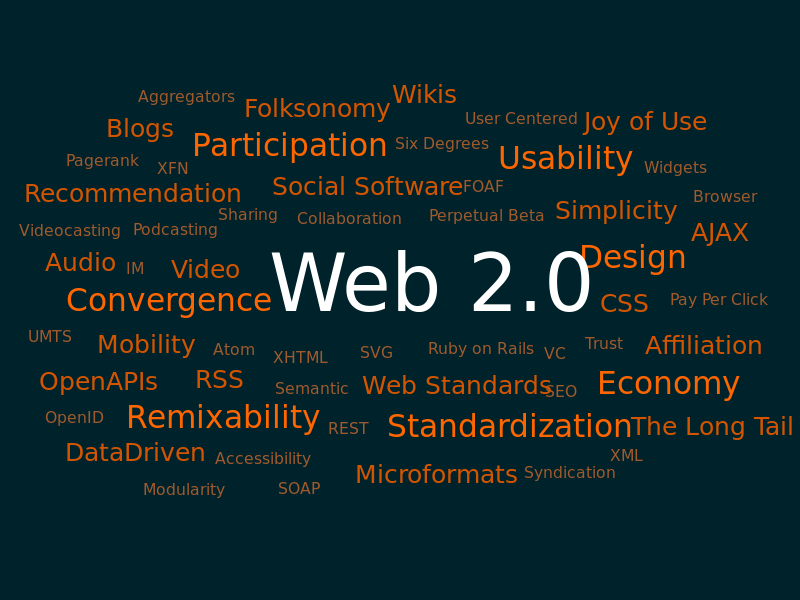
Web 2.0
World Wide Web sites that use technology beyond the static pages of earlier Web sites

Korean Wave
increase in global popularity of South Korean culture since the 1990s
.png)
favicon
thumb|280px|Wikipedia's favicon, shown in [[Firefox]]
A favicon (; short for favorite icon), also known as a shortcut icon, website icon, tab icon, URL icon, or bookmark icon, is a file containing one or more small icons associated with a particular website or web page. A web designer can create such an icon and upload it to a website (or web page) by several means, and graphical web browsers will then make use of it. Browsers that provide favicon support typically display a page's favicon in the browser's address bar (sometimes in the history as well) and next to the page's name in a list of
red pill and blue pill
dilemma between painful truth and blissful ignorance
bullet time
visual effect
chūnibyō
is a Japanese colloquial term typically used to describe adolescents with delusions of grandeur. These teenagers are thought to desperately want to stand out and convince themselves that they have hidden knowledge or secret powers. It is sometimes called "eighth-grader syndrome" in the United States, usually in the context of localizations of anime which feature the concept as a significant plot element.
Epistemic injustice
concept from social epistemology pertaining to ethics and theory of knowledge
third wave coffee
coffee making movement focused on quality
Generation Jones
cusper generation spanning late Baby Boomers and early Generation X (born 1954-1965)
global arrogance
colloquial term describing hegemony of the USA