Category
page 119th-century Indian philosophers
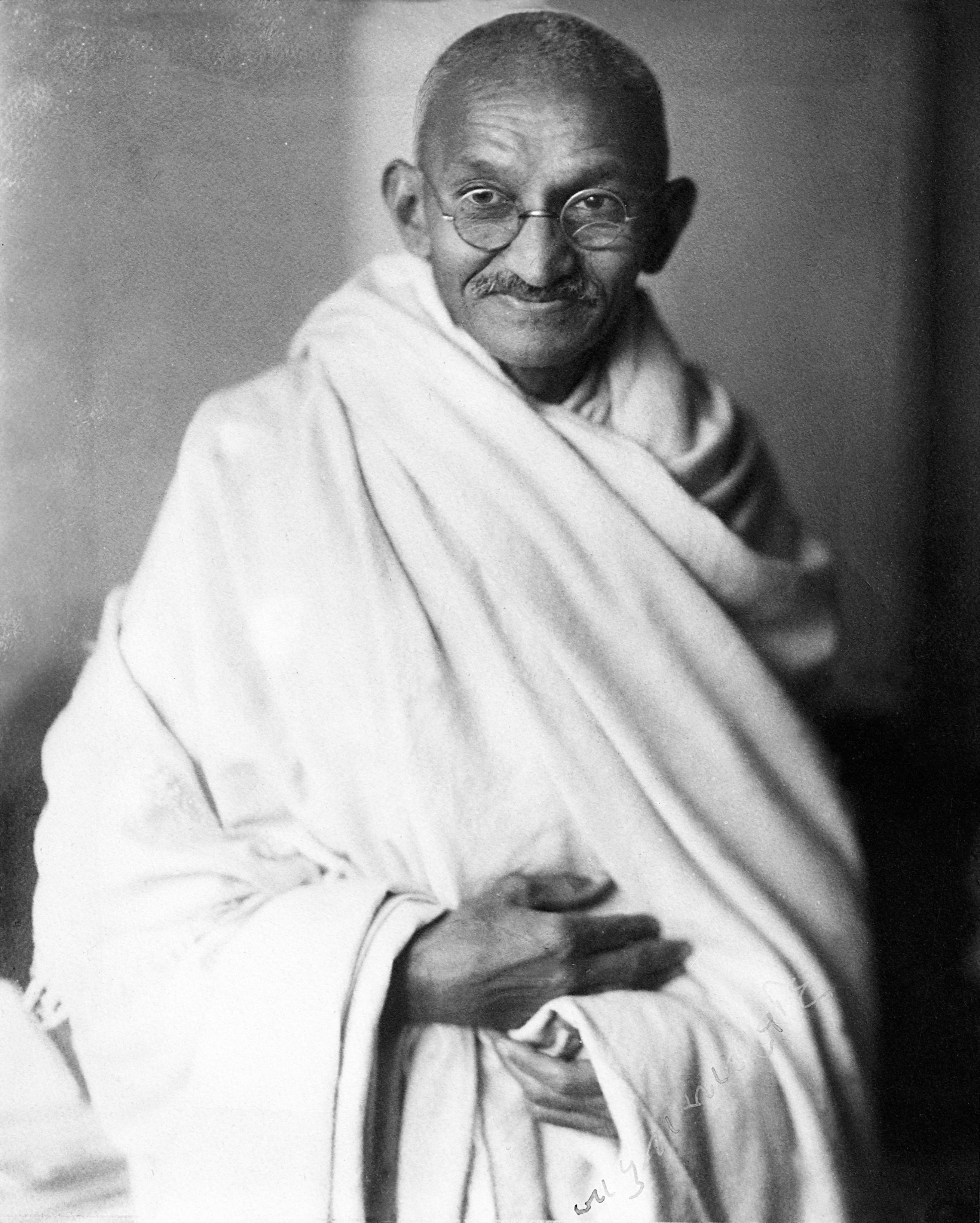
Mahatma Gandhi
Mohandas Karamchand Gandhi was an Indian lawyer, anti-colonial nationalist and political ethicist who employed nonviolent resistance to lead the successful campaign for India's independence from British rule, and to later inspire movements for civil rights and freedom across the world. The honorific Mahātmā, first applied to him in 1914 in South Africa, is now used throughout the world.

Rabindranath Tagore
Bengali poet, philosopher and polymath (1861–1941)

Aurobindo Ghosh
Indian Bengali philosopher, yogi, maharishi, poet and nationalist (1872–1950)

Ram Mohan Roy
Indian religious, social, and educational reformer, and humanitarian

Syed Ahmed Khan
Indian Muslim reformer and social activist (1817–1898)

Dayananda Saraswati
Indian social reformer (1824-1883)
Vinayak Damodar Savarkar
Indian politician (1883-1966)

Ishwar Chandra Vidyasagar
Philosopher, academic, writer, translator, entrepreneur, social reformer and philanthropist (1820-1891)
Debendranath Tagore
Indian philosopher (1817–1905)
Narayana Guru
Indian spiritual leader and social reformer (1856–1928)
Bhagwan Das
Indian Theosophist (1869-1958)
Keshub Chunder Sen
Indian academic (1838–1884)
Bhaktisiddhanta Saraswati
Gaudīya Vaisnava Hindu guru and instructor (1874–1937)
Shibli Nomani
Indian Islamic Scholar (1857–1914)
Shrimad Rajchandra
Jain poet, philosopher and scholar (1867-1901)
Dwijendranath Tagore
Indian poet, song composer, philosopher, mathematician, painter (1840–1926)

Swami Shraddhanand
Shraddhanand (Sanskrit: श्रद्धानन्द) (22 February 1856 – 23 December 1926), born Munshi Ram, was an Indian independence activist and Arya Samaj sannyasi who propagated the teachings of Dayananda Saraswati. This included the establishment of educational institutions, like the Gurukul Kangri University, and played a key role on the Sangathan (consolidation and organization) and the Shuddhi (purification), a Hindu reform movement in the 1920s.
Manilal Dwivedi
Indian Gujarati-language writer and philosopher (1858–1898)
Brajendra Nath Seal
Indian academic and scholar
Gauri Ma
Indian activist
Ziauddin Ahmad
Indian mathematician and philosopher (1873-1947)
Tajuddin Muhammad Badruddin
Indian Sufi Master (1861–1925)
Bhudev Mukhopadhyay
Indian philosopher
Rajnarayan Basu
Indian writer
Akshay Kumar Datta
Indian writer, essayist and journalist (1820-1886)
Q3631646
Saradananda (23 December 1865 – 19 August 1927), also known as Swami Saradananda, was born as Sarat Chandra Chakravarty in 1865, and was one of the direct monastic disciples of Ramakrishna. He was the first Secretary of the Ramakrishna Math and Ramakrishna Mission, a post which he held until his death in 1927. He established the Udbodhan house in the Bagbazar area of Calcutta, which was built primarily for the stay of Sri Sarada Devi in Calcutta, from where he used to publish the Bengali magazine Udbodhan. There he wrote Sri Sri Ramakrishna Lilaprasanga in Bengali, on the life of Ramakrishna,
Ganganath Jha
Indian philosopher (1872-1941)
Shibnath Shastri
Indian Academics, social reformer, philosopher, writer, translator, historian (1847–1919)
Dwarkanath Ganguly
social reformer (1844–1898)
Virchand Gandhi
Jain scholar who represented Jainism at the first World Parliament of Religions in 1893
Protap Chunder Mozoomdar
Philosopher, reformer (1840–1905)
Qadi Thanaullah Panipati
Sharia judge
Chandranath Basu
Bengali writer (1844-1910)
Muhammad Shams-ul-Haq Azimabadi
Islamic scholar

Dhanraj Giri
Hindu sage

Satish Chandra Vidyabhusan
Bengali scholar
Ram Singh
Indian activist, spiritual leader (1816–1885)
Sitanath Tattwabhushan
religious philosopher (1856–1945)