Category
page 119th-century volcanic events
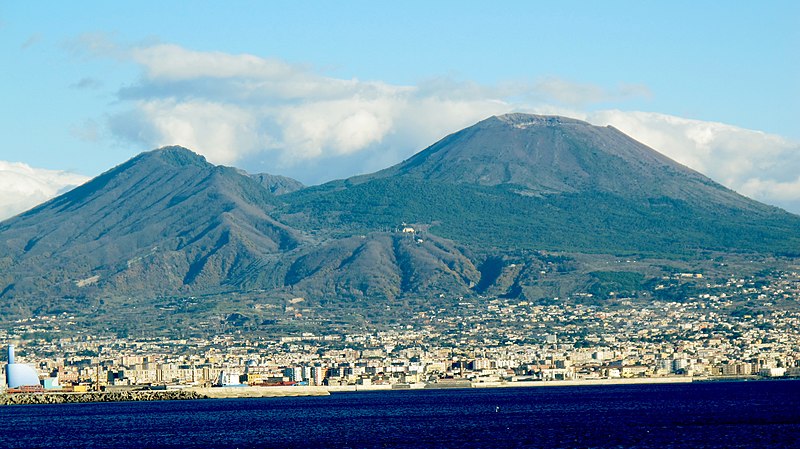
Mount Vesuvius
active stratovolcano in the Gulf of Naples, Italy

Krakatoa
Krakatoa (), also transcribed (), is a caldera in the Sunda Strait between the islands of Java and Sumatra in the Indonesian province of Lampung. The caldera is part of a volcanic island group (Krakatoa archipelago) comprising four islands. Two of them are known as Lang and Verlaten; another, Rakata, is the only remnant of an island, also called Krakatoa, mostly destroyed by an eruption in 1883 which created the caldera.
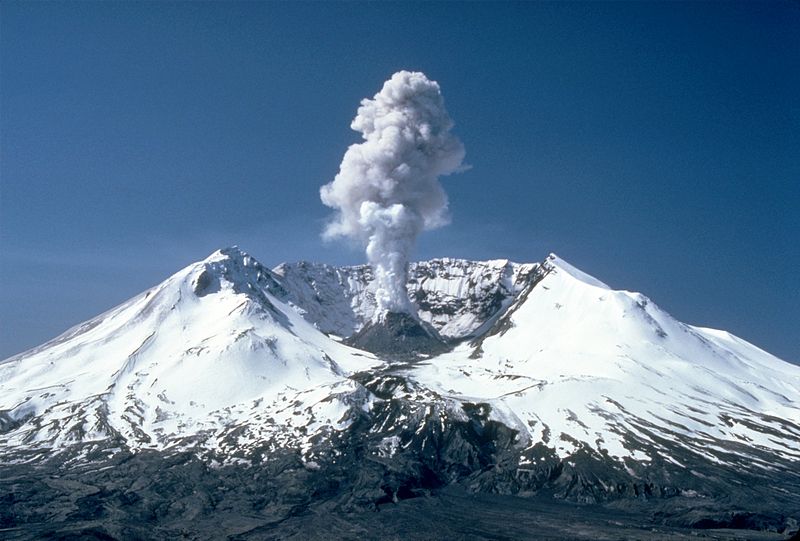
Q4675
volcano in Washington state

Merapi
active volcano in Central Java and Yogyakarta, Indonesia

Mayon Volcano
Mayon (; , ), also known as Mount Mayon and Mayon Volcano, is an active stratovolcano in the province of Albay in Bicol, Philippines. A popular tourist destination, it is renowned for its "perfect cone" owing to its symmetric conical shape, and is regarded as sacred in Philippine mythology.

Cotopaxi volcano
Cotopaxi ( , , ) is an active stratovolcano in the Andes Mountains, located in Cotopaxi National Park in Cotopaxi Province, about south of Quito, and northeast of the city of Latacunga, Ecuador. It is the second highest summit in Ecuador (after Chimborazo), reaching a height of . Cotopaxi is among the highest active volcanoes in the world.
%20Detail%20from%20map%20of%20Iceland%201585.jpg)
Hekla
Hekla (), or Hecla, is an active stratovolcano in the south of Iceland with a height of . Hekla is one of Iceland's most active volcanoes; over 20 eruptions have occurred in and around the volcano since the year 1210. During the Middle Ages, the Icelandic Norse called the volcano the "Gateway to Hell" and the idea spread over much of Europe.
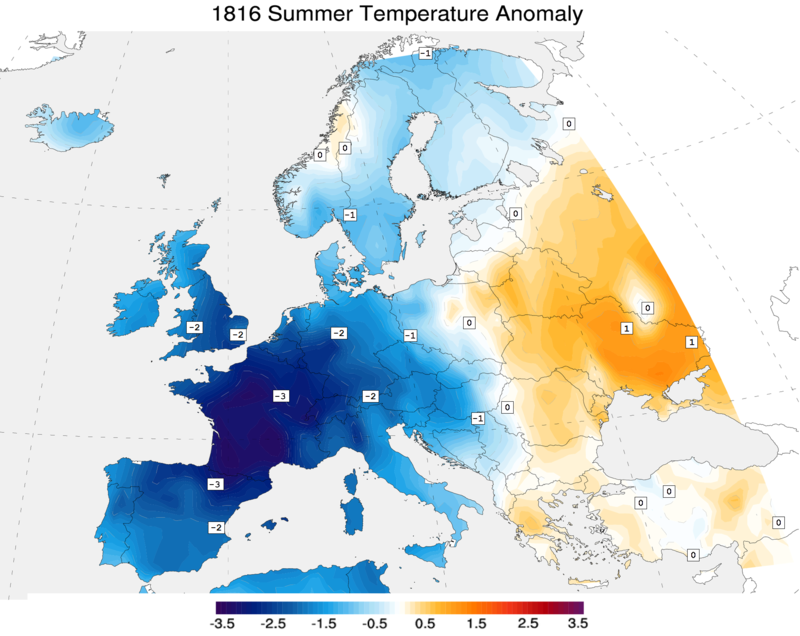
Year Without a Summer
1816, a volcanic winter event during the Little Ice Age

Nevado del Ruiz
volcanic mountain in Colombia
Shiveluch
Shiveluch (), also called Sheveluch, which originates from the name "suelich" which means "smoking mountain" in Itelmen, is the northernmost active volcano in Kamchatka Krai, Russia. It and Karymsky are Kamchatka's largest, most active and most continuously erupting volcanoes, as well as one of the most active on the planet. Shiveluch erupts around of magma per year, which causes frequent and large hot avalanches and lava dome formations at the summit. Volcanic ash emissions from this volcano often disrupt air traffic connecting the Asian and North American continents.

Askja
thumb|right|300px|Víti geothermal lake at Askja
thumb|right|300px|Askja and Víti (in the foreground)
La Soufrière
Volcano on the island of Saint Vincent in the Caribbean
Mount Bandai
mountain in Fukushima Prefecture, Japan

Gunung Galunggung
Mount Galunggung (Indonesian: Gunung Galunggung, formerly spelled Galoen-gong, ) is an active stratovolcano in West Java, Indonesia, around southeast of the West Java provincial capital, Bandung (or around to the northwest of the West Java town of Tasikmalaya). Mount Galunggung is part of the Sunda Arc extending through Sumatra, Java and the Lesser Sunda Islands, which has resulted from the subduction of the Australian Plate beneath the Eurasian Plate.
1883 eruption of Krakatoa
catastrophic volcanic eruption
Mount Tarawera
volcano in New Zealand
Cosigüina
Cosigüina (also spelt Cosegüina) is a stratovolcano located in the western part of Nicaragua. It forms a large peninsula extending into the Gulf of Fonseca. The summit is truncated by a large caldera, 2 x 2.4 km in diameter and 500 m deep, holding a substantial crater lake (Laguna Cosigüina). This cone has grown within an earlier caldera, forming a somma volcano. The earlier caldera rim is still exposed on the north side, but has been buried by the younger cone elsewhere.
1815 eruption of Mount Tambora
catastrophic volcanic eruption in present-day Indonesia
Mount Awu
mountain in Indonesia

Puracé
Puracé is an andesitic stratovolcano located in the Puracé National Natural Park in the Cauca Department, Colombia. It is part of the North Volcanic Zone of the Andean Volcanic Belt. The volcano is located at the intersection of the Coconucos and Morras Faults.
Colo
volcano in Indonesia
Dyngjufjöll
The Dyngjufjöll is a volcanic mountain range in the northeast of Iceland which belongs to the Askja volcanic system. It is part of the Vatnajökull National Park, and contains the Askja caldera.
1886 eruption of Mount Tarawera
1886 volcanic eruption in New Zealand
Urzelina
mountain in Portugal
1868 Hawaii earthquake
Largest recorded earthquake in Hawaiian history
1808/1809 mystery eruption
volcanic eruption in southwest Pacific
1888 eruption of Mount Bandai
1888 volcanic eruption in present-day Bandai, Fukushima Prefecture, Japan