Category
page 11st-century BC Romans
.jpg)
Virgil
Publius Vergilius Maro (; 15 October 70 BC21 September 19 BC), usually called Virgil or Vergil ( ) in English, was an ancient Roman poet of the Augustan period. He composed three of the most famous poems in Latin literature: the Eclogues (or Bucolics), the Georgics, and the epic Aeneid. Some minor poems, collected in the Appendix Vergiliana, were attributed to him in ancient times, but modern scholars regard these as spurious, with the possible exception of some short pieces.
Horace
Quintus Horatius Flaccus (; 8 December 65 BC – 27 November 8 BC), commonly known in the English-speaking world as Horace ( ), was the leading Roman lyric poet during the time of Augustus (also known as Octavian). The rhetorician Quintilian regarded his Odes as the only Latin lyrics worth reading: "He can be lofty sometimes, yet he is also full of charm and grace, versatile in his figures, and felicitously daring in his choice of words."
Titus Livius
Titus Livius (; 59 BC – AD 17), known in English as Livy ( ), was a Roman historian. He wrote a monumental history of Rome and the Roman people, titled , covering the period from the earliest legends of Rome before the traditional founding in 753 BC through the reign of Augustus in Livy's own lifetime. He was on good terms with members of the Julio-Claudian dynasty and was a friend of Augustus. Livy encouraged Augustus’s young grandnephew, the future emperor Claudius, to take up the writing of history.

Catullus
Gaius Valerius Catullus (; ), known as Catullus ( ), was a Latin neoteric poet of the late Roman Republic. His surviving works remain widely read due to their popularity as teaching tools and because of their personal or sexual themes.

Tiberius
Tiberius Julius Caesar Augustus ( ; 16 November 42 BC – 16 March AD 37) was Roman emperor from AD 14 until 37. He succeeded his stepfather Augustus, the first Roman emperor. Tiberius was born in Rome in 42 BC to politician Tiberius Claudius Nero and his wife, Livia Drusilla. In 38 BC, Livia divorced Nero and married Augustus. Following the untimely deaths of Augustus's two grandsons and adopted heirs, Gaius and Lucius Caesar, Tiberius was designated Augustus's successor. Prior to this, Tiberius had proved himself an able diplomat and one of the most successful Roman generals. His conquests of

Vitruvius
Vitruvius ( ; ; –70 BC – after ) was a Roman architect and engineer during the 1st century BC, known for his multi-volume work titled . As the only treatise on architecture to survive from antiquity, it has been regarded since the Renaissance as the first book on architectural theory, as well as a major source on the canon of classical architecture. It is not clear to what extent his contemporaries regarded his book as original or important.
%20(35867773310)%20edited.jpg)
Galba
Galba ( ; born Servius Sulpicius Galba; 24 December 3 BC – 15 January AD 69) was Roman emperor, ruling for 7 months from 8 June AD 68 to 15 January 69. He was the first emperor in the Year of the Four Emperors and assumed the throne following Emperor Nero's suicide.

Spartacus
Spartacus (; ) was a Thracian gladiator who was one of the escaped slave leaders in the Third Servile War, a major slave uprising against the Roman Republic.

Sallust
Gaius Sallustius Crispus, usually anglicised as Sallust (, ; ), was a historian and politician of the Roman Republic from a plebeian family. Probably born at Amiternum in the country of the Sabines, Sallust became a partisan of Julius Caesar (100 to 44 BC), circa 50s BC. He is the earliest known Latin-language Roman historian with surviving works to his name, of which Conspiracy of Catiline on the eponymous conspiracy, The Jugurthine War on the eponymous war, and the Histories (of which only fragments survive) remain extant. As a writer, Sallust was primarily influenced by the works of the 5th

Philo of Alexandria
Philo of Alexandria (; ; ; ), also called '''''', was a Hellenistic Jewish philosopher who lived in Alexandria, in the Roman province of Egypt.
Publilius Syrus
1st century BC Syrian-born Latin writer

Dionysius of Halicarnassus
1st-century BC Greek historian and teacher
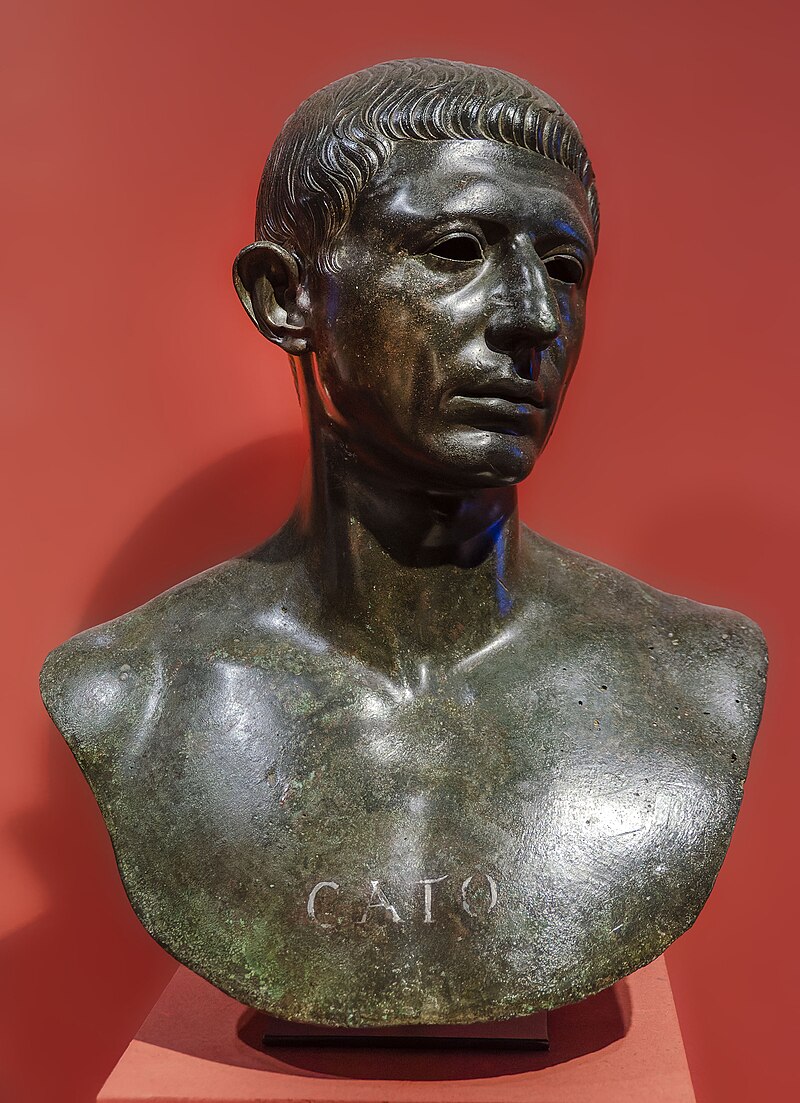
Cato the Younger
Roman statesman, general and writer (95–46 BC)

Cornelius Nepos
Roman historian and biographer (c.110 BC–c.25 BC)

Germanicus
Germanicus Julius Caesar (24 May 15 BC – 10 October AD 19) was a Roman general and politician most famously known for his campaigns against Arminius in Germania. The son of Nero Claudius Drusus and Antonia the Younger, Germanicus was born into an influential branch of the patrician gens Claudia. The agnomen Germanicus was added to his full name in 9 BC when it was posthumously awarded to his father in honor of his victories in Germania. In AD 4 he was adopted by his paternal uncle Tiberius, himself the stepson and heir of Germanicus' great-uncle Augustus; ten years later, Tiberius succeeded Au

Seneca the Elder
Roman scholar, writer and historian (54 BC-c.39 AD)

Livia
Livia Drusilla (30 January 59 BC
AD 29) was Roman empress from 27 BC to AD 14 as the wife of Augustus, the first Roman emperor. She was known as Julia Augusta after her formal adoption into the Julia gens in AD 14.
%20-%20Palazzo%20Nuovo%20-%20Musei%20Capitolini%20-%20Rome%202016.jpg)
Catiline
Lucius Sergius Catilina ( – January 62 BC), known in English as Catiline (), was a Roman politician and soldier best known for instigating the Catilinarian conspiracy, a failed attempt to seize control of the Roman state in 63 BC. Born to an ancient patrician family, he joined Sulla during Sulla's civil war and profited from Sulla's purges of his political enemies, becoming a wealthy man. In the early 60s BC, he served as praetor and then as governor of Africa (67–66 BC). Upon his return to Rome, he attempted to stand for the consulship but was rebuffed; he then was beset w

Nero Claudius Drusus
Roman general and statesman (38–9 BC)

Gaius Cassius Longinus
ancient Roman politician, known for his role in the assassination of Julius Caesar

Gaius Julius Hyginus
Roman freedman and writer (c. 64 BC – AD 17)
Gaius Caesar
eldest son of Marcus Vipsanius Agrippa and Julia the Elder, Emperor Augustus' only daughter, also adopted by Augustus as his own child

Julia the Elder
daughter of Emperor Augustus (39 BC – AD 14)
Decimus Junius Brutus Albinus
Roman general, politician, and assassin of Julius Caesar (81–43 BC)
Quintus Sertorius
Roman rebel leader (Sertorian War)

Musa of Parthia
Italian consort of Phraates IV

Lucius Accius
Roman poet and literary scholar (170–c.86 BC)

Titus Labienus
lieutenant of Julius Caesar in Gaul

Antonia Minor
youngest daughter of Octavia Minor and Mark Antony

Sextus Pompey
Roman politician and general (c. 67–35 BC)

Lucius Caesar
grandson of emperor Augustus (17 BC - AD 2)

Publius Sulpicius Quirinius
thumb|upright=1.4|Mary, mother of Jesus|Mary and Joseph register for the census before Governor Quirinius. Byzantine mosaic at the [[Chora Church, Constantinople 1315–1320.]]
Publius Sulpicius Quirinius (c. 51 BC – AD 21), also translated as Cyrenius, was a Roman aristocrat. After the banishment of the ethnarch Herod Archelaus from the tetrarchy of Judea in AD 6, Quirinius was appointed legate governor of Syria, to which the province of Judaea had been added for census purposes.

Aurelia
mother of Julius Caesar

Titus Pomponius Atticus
Roman banker, writer and philosopher (c.110 BC – 32 BC)

Gaius Julius Caesar
Roman senator and father of Julius Caesar (c.140 BC - 85 BC)
Atia
mother of Roman emperor Augustus
Gaius Octavius
father of emperor Augustus. Roman general, praetor in 61 BC, praefectus propraetor in Macedonia in 60-59 BC
Crixus
Crixus (died 72 BC) was a Gallic gladiator and military leader in the Third Servile War between the Roman Republic and rebel slaves. Born in Gaul, he was enslaved by the Romans under unknown circumstances and trained as a gladiator in Capua. His name means "one with curly hair" in Gaulish.

Quintus Tullius Cicero
brother of Marcus Tullius Cicero

Fulvia
Fulvia (; ) was an aristocratic Roman woman who lived during the late Roman Republic. Fulvia's birth into an important political dynasty facilitated her relationships and, later on, marriages to Publius Clodius Pulcher, Gaius Scribonius Curio, and Mark Antony. All of these men would go on to lead increasingly promising political careers as populares, tribunes, and supporters of Julius Caesar.
Antonia Major
eldest daughter of Octavia Minor and Mark Antony

Livilla
Claudia Livia (Classical Latin: CLAVDIA•LIVIA; – AD 31) was the only daughter of Nero Claudius Drusus and Antonia Minor and sister to Roman Emperor Claudius and general Germanicus, and thus paternal aunt of emperor Caligula and maternal great-aunt of emperor Nero, as well as the niece and daughter-in-law of Tiberius. She was named after her grandmother, Augustus' wife Livia Drusilla, and commonly known by her family nickname Livilla ("little Livia"). She was born after Germanicus and before Claudius.

Drusus Julius Caesar
son of Emperor Tiberius
Julia
daughter of Julius Caesar and Cornelia

Marcellus
nephew and son-in-law of Roman emperor Augustus

Gaius Cornelius Gallus
1st century BC Roman poet, orator and politician

Publius Clodius Pulcher
Roman politician and street agitator (93–52 BC)

Vipsania Agrippina
first wife of Emperor Tiberius
Calpurnia
widow of Julius Caesar
Sulpicia
Sulpicia is believed to be the author, in the first century BCE, of six short poems (some 40 lines in all) written in Latin which were published as part of the corpus of Albius Tibullus's poetry (poems 3.13–18). She is one of the few female poets of ancient Rome whose work survives.

Scribonia
Roman noblewoman, second wife of Augustus and mother of Julia the Elder
Quintus Caecilius Metellus Numidicus
Ancient Roman statesman and general
Servilia
mistress of Julius Caesar and mother of his killer Marcus Brutus
Pompeia
wife of Julius Caesar
Tiberius Claudius Nero
father of Roman emperor Tiberius
Verres
1st-century BC Roman magistrate, notorious for his misgovernment of Sicily
Agrippa Postumus
Youngest son of Marcus Agrippa and Julia the Elder (12 BC – AD 14)
Quintus Lutatius Catulus
Roman politician and general (149–87 BC)
Marcus Livius Drusus
Roman politician and reformer (c. 124 – 91 BC)
Varro Atacinus
Roman writer and poet