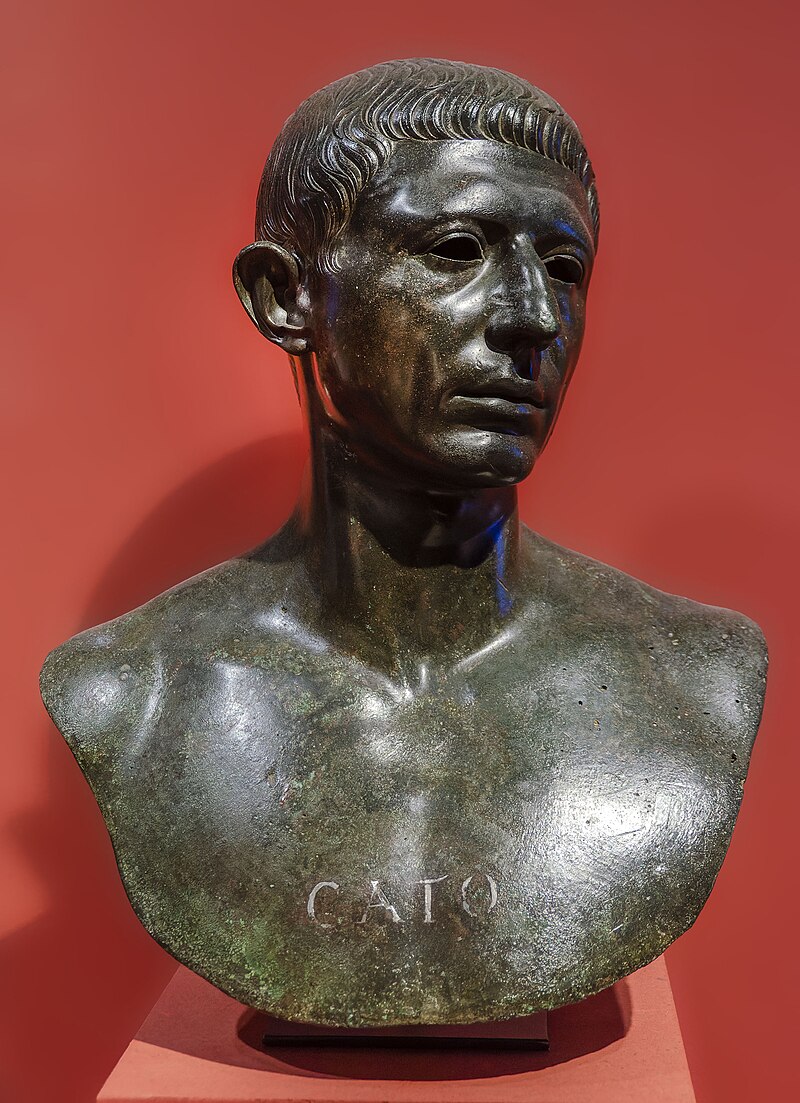
File:Catón_(52340687524).jpg · Wikimedia Commons · See Wikimedia Commons
Cato the Younger
Sign in to saveAlso known as Marcus Porcius Cato, Marcus Porcius Cato Uticensis, Cato Uticensis, Cato of Utica, Cato Minor, Marcus Portius Cato
Roman statesman, general and writer (95–46 BC)
Cato the Younger was a prominent Roman politician and military leader who lived during the final decades of the Roman Republic, known for his strong moral principles and political opposition to Julius Caesar. He remains historically significant as a symbol of republican virtue and resistance to authoritarian power, making him an important figure in understanding Rome's transition from republic to empire.
AI-generated from the Wikipedia summary — may contain errors.
Wikidata facts
- Instance of
- human
- Gender
- male
- Citizenship
- Ancient Rome
- Place of birth
- Ancient Rome
- Place of death
- Utica
- Spouse
- Marcia
- Father
- Marcus Porcius Cato
- Mother
- Livia
- Occupation
- military personnel
- Political party
- optimates
- Languages spoken
- Latin
- Student of
- Antipater of Tyre
- Image
- Cato Utica Louvre LP2090.jpg
Show 12 more facts
- described by source
- Pauly–Wissowa
- Commons category
- Cato Minor
- date of birth
- 0095-00-00
- date of death
- 0046-04-12
- manner of death
- Suicide
- gens
- Porcia gens
- cause of death
- exsanguination
- name in native language
- Marcus Porcius Cato Uticensis
- killed by
- Cato the Younger
- different from
- Cato the Elder
- writing language
- Latin
- social classification
- noble
via Wikidata · CC0
Works in European collections
2 objects attributed to Cato the Younger, held across European museums, libraries & archives · via Europeana

Catonis Disticha Moralia : cum scholija auctis Erasmi Rotero. Apophtehgmata Graeciae sapientum interprete Erasmo. Eadem per Ansonium ... Mimi publiani, cum eiusdem scholijs auctis recogniti. Institutum hominis Christiani, carmine, per eundem Erasmum Rotero. Isocratis Paraenesis ad Demonicu[m] ... (per ... Rudolphum Agricolam ... traducta.)

Disticha De Moribvs, Nomine Catonis Inscripta : Cvm Latina interpretatione, hactenus Germanis non uisa. Epitome in singula fere disticha. Dicta sapientum cum sua quoq[ue] interpretatiuncula. Omnia recognita, nonnulla adiecta, quaedam immutata. Matvrino Corderio Avtore
~40 min read
Encyclopedic overview
Marcus Porcius Cato Uticensis ("of Utica"; /ˈkeɪtoʊ/ KAY-toe; 95 BC – April 46 BC), also known as Cato the Younger (Latin: Cato Minor), was an influential conservative Roman senator during the late Republic. A staunch advocate for liberty and the preservation of the Republic's principles, he dedicated himself to protecting the traditional Roman values he believed were in decline. A noted orator and a follower of Stoicism, his scrupulous honesty and professed respect for tradition gave him a political following which he mobilised against powerful generals of his day, including Julius Caesar and Pompey.
Before Caesar's civil war, Cato served in a number of political offices. During his urban quaestorship in 63 BC, he was praised for his honesty and incorruptibility in running Rome's finances. He passed laws during his plebeian tribunate in 62 BC to expand the grain dole and force generals to give up their armies and commands before standing in elections. He also frustrated Pompey's ambitions by opposing a bill brought by Pompey's allies to transfer the military command to Pompey against the Catilinarian conspirators. He opposed, with varying success, Caesar's legislative programme during Caesar's first consulship in 59 BC. Leaving for Cyprus the next year, he was praised for his honest administration and after his return was elected as praetor for 54 BC.
Excerpted from Wikipedia’s “Cato the Younger” article, available under the CC BY-SA 4.0 licence.