Category
page 13rd-century Greek philosophers
%20-%20Veloso%20Salgado.png)
Galen
Aelius Galenus or Claudius Galenus (; September 129 – CE), often anglicized as Galen () or Galen of Pergamon, was a Roman and Greek physician, surgeon, and philosopher. Considered to be one of the most accomplished of all medical researchers of antiquity, Galen influenced the development of various scientific disciplines, including anatomy, physiology, pathology, pharmacology, and neurology, as well as philosophy and logic.

Plotinus
Plotinus (; , Plōtînos; – 270 CE) was a Hellenistic Greek philosopher, born and raised in Roman Egypt. Plotinus is regarded by modern scholarship as the founder of Neoplatonism.

Origen
Origen of Alexandria (), also known as Origen Adamantius, was an early Christian scholar, ascetic, and theologian who was born and spent the first half of his career in Alexandria. He was a prolific writer who wrote roughly 2,000 treatises in multiple branches of theology, including textual criticism, biblical exegesis and hermeneutics, homiletics, and spirituality. He was one of the most influential and controversial figures in early Christian theology, apologetics, and asceticism. He has been described by John Anthony McGuckin as "the greatest genius the early church ever produced".
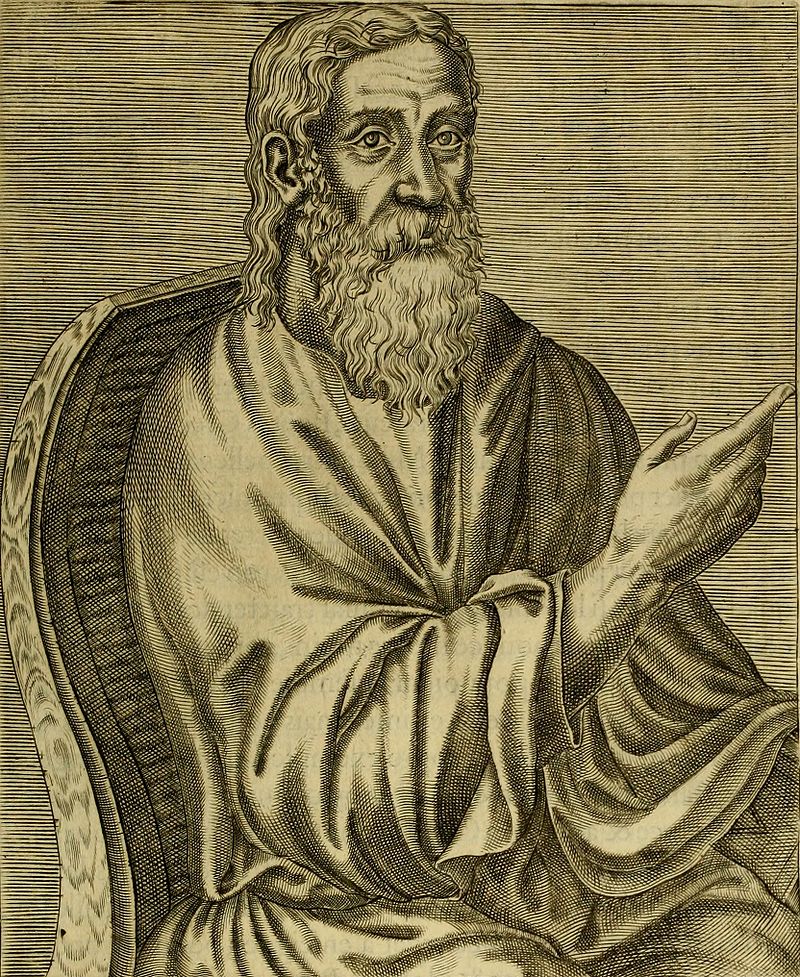
Clement of Alexandria
Christian theologian (c.150 – c.215)

Diogenes Laërtius
3rd-century Roman biographer of Greek philosophers
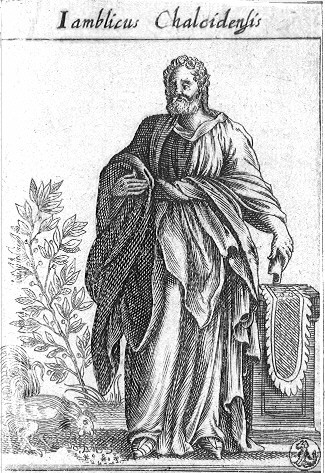
Iamblichus
Iamblichus ( ; ; ; ) was a Syrian Arab Neoplatonist philosopher who determined a direction later taken by Neoplatonism. Iamblichus was also the biographer of the Greek mystic, philosopher, and mathematician Pythagoras. In addition to his philosophical contributions, his is important for the study of the sophists because it preserved about ten pages of an otherwise unknown sophist known as the Anonymus Iamblichi.

Aelian
Roman author and teacher (c.175–c.235)
Ammonius Saccas
Hellenistic Platonist philosopher (175-242)

Aratus
thumb|right|220px|Aratus of Soli
Aratus (; ; c. 315/310 240 BC) was a Greek didactic poet. His major extant work is his hexameter poem Phenomena (, Phainómena, "Appearances"; ), the first half of which is a verse setting of a lost work of the same name by Eudoxus of Cnidus. It describes the constellations and other celestial phenomena. The second half is called the Diosemeia (Διοσημεῖα "Forecasts"), and is chiefly about weather lore. Although Aratus was somewhat ignorant of Greek astronomy, his poem was very popular in the Greek and Roman world, as is proven by the large number of commentaries
Cassius Longinus
Syrian/Egyptian Neoplatonist philosopher (c.213–273)
Amelius
Amelius Gentilianus (; ), was a Neoplatonist philosopher and writer of the second half of the 3rd century.
Anatolius of Laodicea
Bishop of Laodicea
Ammonius of Alexandria
3rd century Alexandrian Christian philosopher
Alexander of Lycopolis
ancient philosopher
Origen the Pagan
3rd century Alexandrian Platonist philosopher
Theodorus of Asine
Roman philosopher
Fronto of Emesa
3rd-century Greek rhetorician