Category
page 14th-century BC executions
.jpg)
Socrates
Socrates (; ; – 399 BC) was an ancient Greek philosopher from Classical Athens, perhaps the first Western moral philosopher, and a major inspiration on his student Plato, who largely founded the tradition of Western philosophy. An enigmatic figure, Socrates authored no texts and is known mainly through the posthumous accounts of classical writers, particularly his students Plato and Xenophon. These accounts are written as dialogues, in which Socrates and his interlocutors examine a subject in the style of question and answer; they gave rise to the Socratic dialogue literary genre. Contrad
.jpg)
Herostratus
thumb||alt=Herostratus portrait

Olympias
Olympias (; c. 375–316 BC) was an ancient Greek princess of the Molossians, the eldest daughter of King Neoptolemus I of Epirus, and the sister of Alexander I of Epirus. She was the mother of Alexander the Great by Philip II, king of Macedonia. She was extremely influential in Alexander's life and was recognized as de facto leader of Macedon during his conquests.
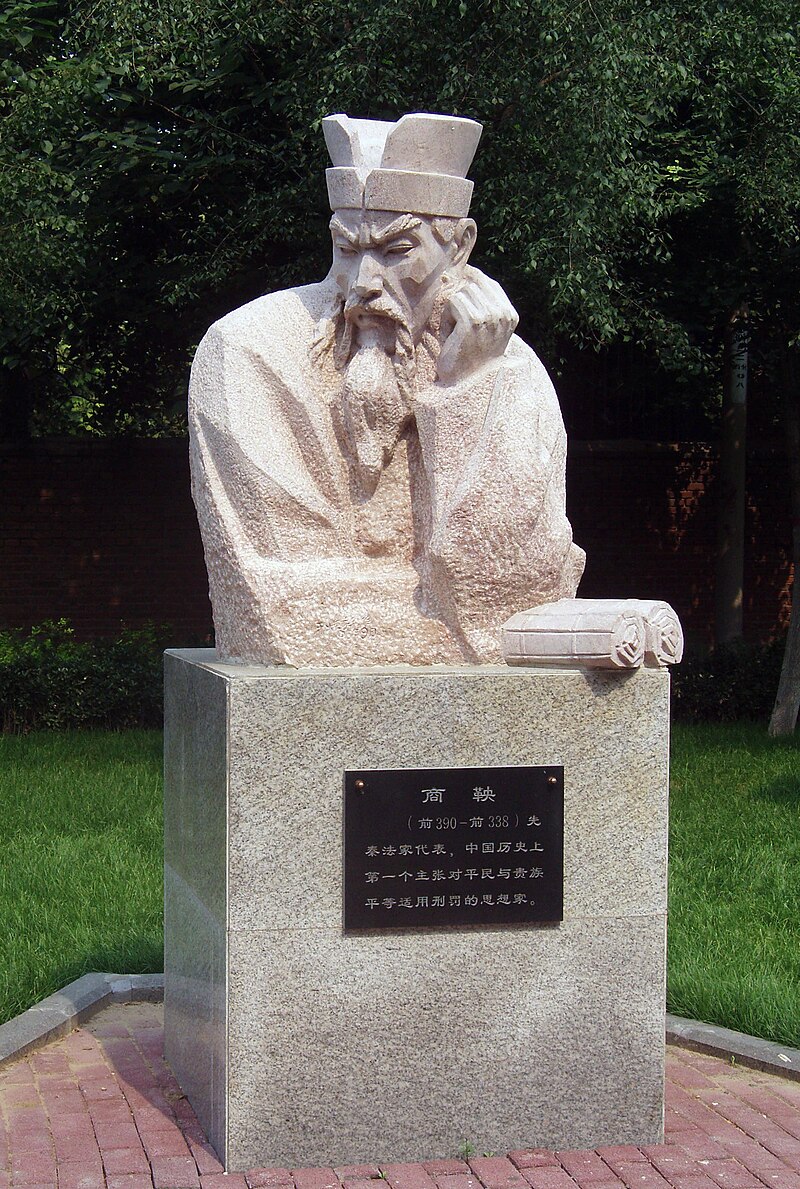
Shang Yang
Qin State statesman, chancellor and reformer (c. 390–338 BC)

Bessus
Bessus or Bessos (; ), also known by his throne name Artaxerxes V ( ; ; died summer 329 BC), was a Persian satrap of the eastern Achaemenid satrapy of Bactria, as well as the self-proclaimed King of Kings of the Achaemenid Empire from 330 to 329 BC.
Onomarchus
Onomarchus () was general of the Phocians in the Third Sacred War, brother of Philomelus and son of Theotimus. After his brother's death he became commander of the Phocians and pursued a warmongering policy defeating in battle even Philip II of Macedon until his final defeat by him.
Meno
Thessalian mercenary general (c.423–c.400 BC)
Charidemus
Charidemus (or Kharidemos, ), of Oreus in Euboea, was an ancient Greek mercenary leader of the 4th century BC. He had a complicated relationship with Athens, sometimes aiding the city in its efforts to secure its interests in the northern Aegean, sometimes working against it. He was castigated by Demosthenes in his oration Against Aristocrates for repeated treacherous actions toward Athens, yet later he received Athenian citizenship and was elected one of its generals. In this capacity he ran afoul of Alexander III (the Great) of Macedon and was ordered into banishment after the destruction of
Orxines
Orxines was a Persian noble, descended from Cyrus the Great.
Theoris of Lemnos
executed for witchcraft
Agnonides
Agnonides (Gr. , fl. 4th century BC) was an ancient Athenian demagogue and sycophant, a contemporary of Theophrastus and Phocion. The former was accused by Agnonides of impiety, but was acquitted by the Areopagus, and Theophrastus might have ruined his accuser had he been less generous. Agnonides was opposed to the Macedonian party at Athens, and was one of the orators who urged the Athenians to fight in the Lamian War against the Macedonians after the death of Alexander The Great. After the Macedonian victory by Antipater, Agnonides was sent into exile. He returned to Athens with Alexander, s
Marcus Vitruvius Vaccus
citizen of Fondi, and the leader of the revolt of the Fundani and Privernates against Rome in 330 BC