Category
page 15th-century BC births
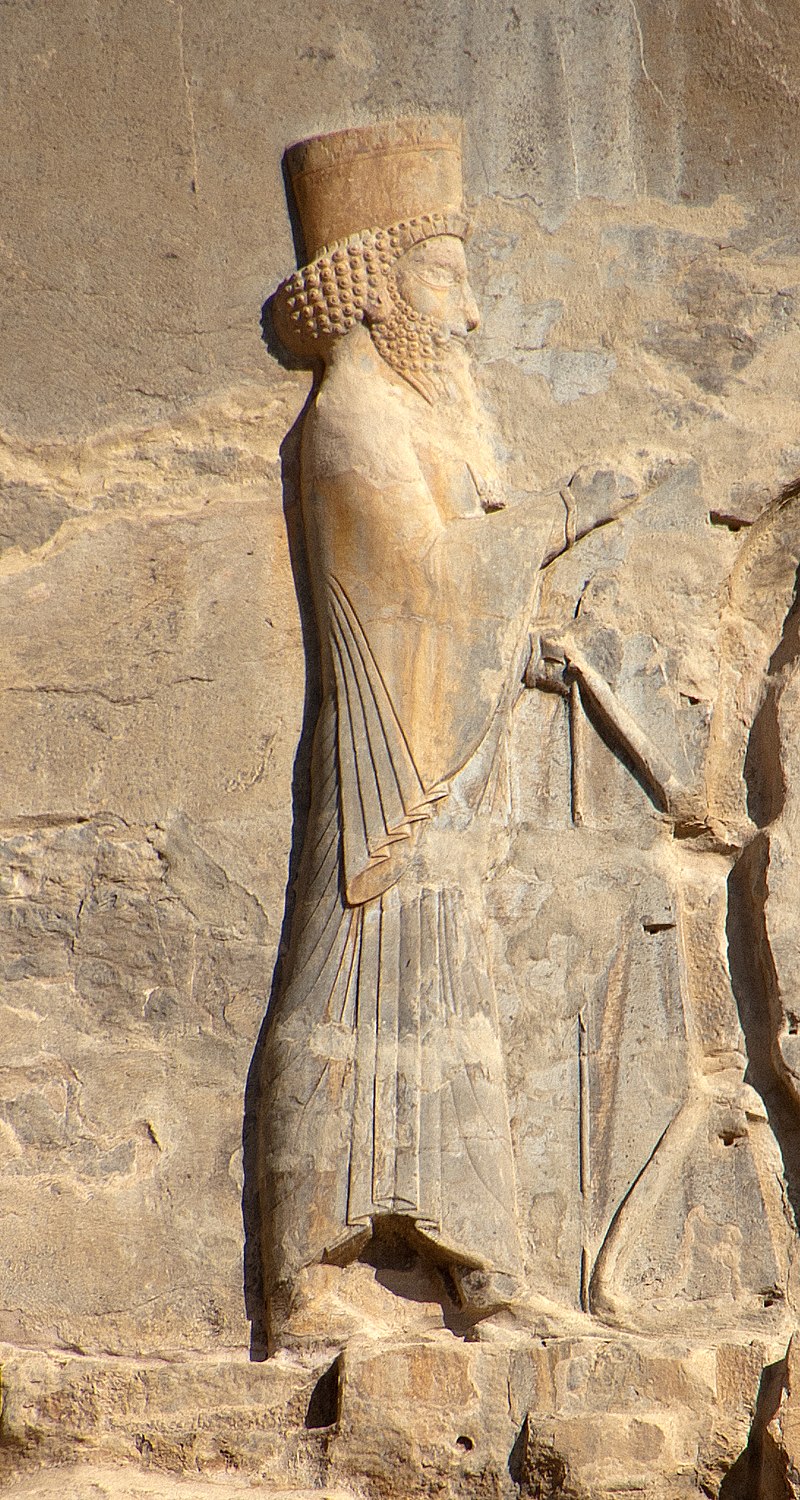
Artaxerxes II
The 10th Achaemenid Emperor (404–358 BC)

Tollund Man
Iron Age bog body from Denmark that was hanged before death
Brennus
4th-century BC Gaulish chieftain of the Senones

Cyrus the Younger
Achaemenid prince, satrap of Lydia from 408 to 401 BC

Ctesias
Ctesias ( ; ; ), also known as Ctesias of Cnidus, was a Greek physician and historian from the town of Cnidus in Caria, then part of the Achaemenid Empire.
Hippias
Hippias of Elis (; ; late 5th century BC) was a Greek sophist, and a contemporary of Socrates. With an assurance characteristic of the later sophists, he claimed to be regarded as an authority on all subjects, and lectured on poetry, grammar, history, politics, mathematics, and much else. Most current knowledge of him is derived from Plato, who characterizes him as vain and arrogant.

Amyrtaeus
Amyrtaeus of Sais ( , a Hellenization of the original Egyptian name Amenirdisu) is the only pharaoh of the Twenty-eighth Dynasty of Egypt and is thought to be related to the royal family of the Twenty-sixth Dynasty (664–525 BC). He ended the first Persian occupation of Egypt (i.e. the Twenty-seventh Dynasty: 525–404 BC) and reigned from 404 BC to 399 BC. Amyrtaeus' successful insurrection inaugurated Egypt's last significant phase of independence under native sovereigns, which lasted for about 60 years until the Persians conquered the country again.

Archelaus I of Macedon
king of Macedon

Nepherites I
Egyptian pharaoh from 399 BC to 393 BC

Phaedo of Elis
4th-century BCE Greek philosopher

Pleistoanax
Pleistoanax, also spelled Plistoanax, () was Agiad king of Sparta from 458 to 409 BC. He was the leader of the peace party in Sparta at a time of violent confrontations against Athens for the hegemony over Greece.

Psammuthes
Psammuthes or Psammuthis, was a pharaoh of the Twenty-ninth Dynasty of Egypt during 392/1 BC.

Conon
thumb|Conon from Promptuarium Iconum Insigniorum|Promptuarii Iconum Insigniorum
Conon () (before 443 BC – ) was an Athenian general at the end of the Peloponnesian War, who led the Athenian naval forces when they were defeated by a Peloponnesian fleet in the crucial Battle of Aegospotami; later he contributed significantly to the restoration of Athens' political and military power.

Ephialtes
Ephialtes (, Ephialtēs) was an ancient Athenian politician and an early leader of the democratic movement there. In the late 460s BC, he oversaw reforms that diminished the power of the Areopagus, a traditional bastion of conservatism, and which are considered by many modern historians to mark the beginning of the radical democracy for which Athens would become famous. These powers included the scrutiny and control of office holders, and the judicial functions in state trials. He reduced the property qualifications for holding a public office, and created a new definition of citizenship. In 46
Evagoras
king of Salamis on Cyprus from 411 to 373 BC
Isaeus
Isaeus ( Isaios; fl. early 4th century BC) was one of the ten Attic orators according to the Alexandrian canon. He was a student of Isocrates in Athens, and later taught Demosthenes while working as a metic logographer (speechwriter) for others. Only eleven of his speeches survive, with fragments of a twelfth. They are mostly concerned with inheritance, with one on civil rights. Dionysius of Halicarnassus compared his style to Lysias, although Isaeus was more given to employing sophistry.
Eurydice I of Macedon
queen of Macedon from 393 to 369 BC
Arete of Cyrene
4th-century BC Greek philosopher
Cephisodotus the Elder
4th-century BC Greek sculptor
Ariobarzanes of Phrygia
4th-century BCE Persian satrap of Hellespont Phrygia

Orontes I
Bactrian military officer of the Achaemenid Empire and satrap of Armenia at the end of the 5th-century BC and first half of the 4th-century BC.
Gnaeus Flavius
Roman aedile in 304 BC
Simmias of Thebes
ancient Greek philosopher
Anytus
Anytus (; ; probably before 451 – after 388 BCE), son of Anthemion of the deme Euonymon, was a politician in Classical Athens. Anytus served as a general in the Peloponnesian War of 431 to 404 BCE, and later became a leading supporter of the democratic forces opposed to the Thirty Tyrants who ruled Athens from 404 to 403 BCE. He is best remembered as one of the prosecutors of the philosopher Socrates in 399 BCE; probably because of that role, Plato depicted Anytus as an interlocutor in the dialogue Meno.

Jīvaka Kaumārabhṛtya
Jīvaka (; ) was the personal physician () of the Buddha and the Indian King Bimbisāra. He lived in Rājagṛha, present-day Rajgir, in the 5th century BCE. Sometimes described as the "Medicine King" () and "Thrice Crowned physician" he figures prominently in legendary accounts in Asia as a model healer, and is honoured as such by traditional healers in several Asian countries.
Thrasyllus
Thrasyllus (; ; died 406 BC) was an Athenian strategos (general) and statesman who rose to prominence in the later years of the Peloponnesian War. First appearing in Athenian politics in 410 BC, in the wake of the Athenian coup of 411 BC, he played a role in organizing democratic resistance in an Athenian fleet at Samos. There, he was elected strategos by the sailors and soldiers of the fleet, and held the position until he was controversially executed several years later after the Battle of Arginusae.
Meidias Painter
ancient Attic-Greek vase-painter of the red-figure style c. 420 to c. 400 BCE
Himilco
Magonid Carthaginian general (died 396 BC)
Bryson of Heraclea
late 5th-century BCE Greek mathematician
Ocellus Lucanus
ancient Greek scholar
Chaerephon
Chaerephon (; , Chairephōn; c. 470/460 – 403/399 BCE), of the Athenian deme Sphettus, was an ancient Greek best remembered as a loyal friend and follower of Socrates. He is known only through brief descriptions by classical writers and was "an unusual man by all accounts", though a man of loyal democratic values.

Callias III
4th-century BC Athenian aristocrat and politician

Abrocomas
thumb|upright=1.35|Possible coinage of Abrocomas, Sinop, Turkey|Sinope, [[Paphlagonia.]]
Abrocomas () was satrap of Syria for the Achaemenid king Artaxerxes II Mnemon. He may also have been satrap of Paphlagonia, with its capital at Sinope, according to the reading of some of the coinage of Sinope: the Aramaic reading "ˈbrkmw" has been identified as the name rendered in Greek as "Abrocomas", but this is not universally accepted.
Pyrilampes
Pyrilampes () was an ancient Athenian politician and stepfather of the philosopher Plato. His dates of birth and death are unknown, but Debra Nails estimates he must have been born after 480 BC and died before 413 BC.
Thibron
Spartan general (died 391 BC)
Jena Painter
ancient Greek vase painter
Leodamas of Thasos
4th c. BCE mathematician
Eucleides
Eucleides () was eponymous archon of Athens for the year running from July/August 403 BC until June/July 402 BC. His year in office was marked by Athens's official adoption of the Ionic alphabet. There is some evidence that he may have been personally involved in this decision.
Aristophon of Azenia
Greek politician
Nikarete of Corinth
5th/4th-century BC Corinthian madam

Sisyphus Painter
ancient Apulian Greek vase painter of the red-figure style
Gaozi
Gaozi (; ca. 420-350 BCE), or Gao Buhai (), was a Chinese philosopher during the Warring States period.
Gaozi's teachings are no longer extant, but he was a contemporary of Mencius (ca. 372-289 BCE), and most of our knowledge about him comes from the Mencius book (6) titled "Gaozi".
Astyochus
Astyochus or Astyochos () was a Spartan navarch who served as commander of the collective Spartan naval forces along the coast of Asia Minor during 412–411 BC. He is regarded by many contemporaries and modern scholars as a key reason for Sparta's early failures in the Peloponnesian War. His expeditions consisting of encounters in Lesbos, Chios, Erythrae and Clazomenae all of which proved unsuccessful. He refused requests for help from Chios, causing the Spartan administration to become increasingly dissatisfied with his leadership. Thucydides portrayed Astyochus as timid and inept, and also de
Painter of the Berlin Dancing Girl
ancient Apulian-Greek vase-painter of red-figure style
Ariaeus
Ariaeus (fl. 401 BC – 394 BC) was a Persian general who fought alongside Cyrus the Younger at the Battle of Cunaxa and later was involved in the assassination of Tissaphernes.
Brennius
Brennius was a legendary king of Northumbria, Scotland, and the Allobroges, as recounted in Geoffrey of Monmouth's Historia Regum Britanniae (). He was the son of Dunvallo Molmutius and brother of Belinus, probably based upon one or both of the historical Brenni. He came to power in 390 BC.
Erasinides
Erasinides (; died 406 BC) was one of the ten commanders appointed to supersede Alcibiades after the Battle of Notium in 407 BCE.
Leon of Salamis
Greek philosopher
Yogui
Lamprocles () was Socrates' and Xanthippe's eldest son. His two brothers were Menexenus and Sophroniscus. Lamprocles was a youth (μειράκιον meirakion) at the time of Socrates' trial and death. According to Aristotle, Socrates' descendants as a whole turned out to be unremarkable "fools and dullards".
Gorgopas
Spartan commander during the Corinthian War
Eteonicus
Eteonicus () was a Spartan commander during the Peloponesian and Corinthian Wars. He participated in many key engagements, held important commands and is mentioned multiple times by Thucydides, Xenophon and Diodorus Siculus. His appearance in the record, however, is mostly episodic, with his roles not being particularly influential.
Mania
Persian governor
Paralus and Xanthippus
Sons of 5th-century BC Athenian leader, Pericles
Strongylion
thumb|alt=Base of Strongylion's Trojan Horse on the Athenian Acropolis|Base of Strongylion's Trojan Horse on the Athenian Acropolis
Sophaenetus
Sophaenetus () was one of the leaders of the Ten Thousand, an army of Greek mercenaries in the service of Cyrus the Younger, in 401–400 BC. A native of Stymphalus, he was an older man when he recruited and led one thousand hoplites to join Cyrus. He led the army back to the Black Sea and from Trapezus to Cerasus by ship. At Cotyora, he was fined 10 minae for mishandling funds.