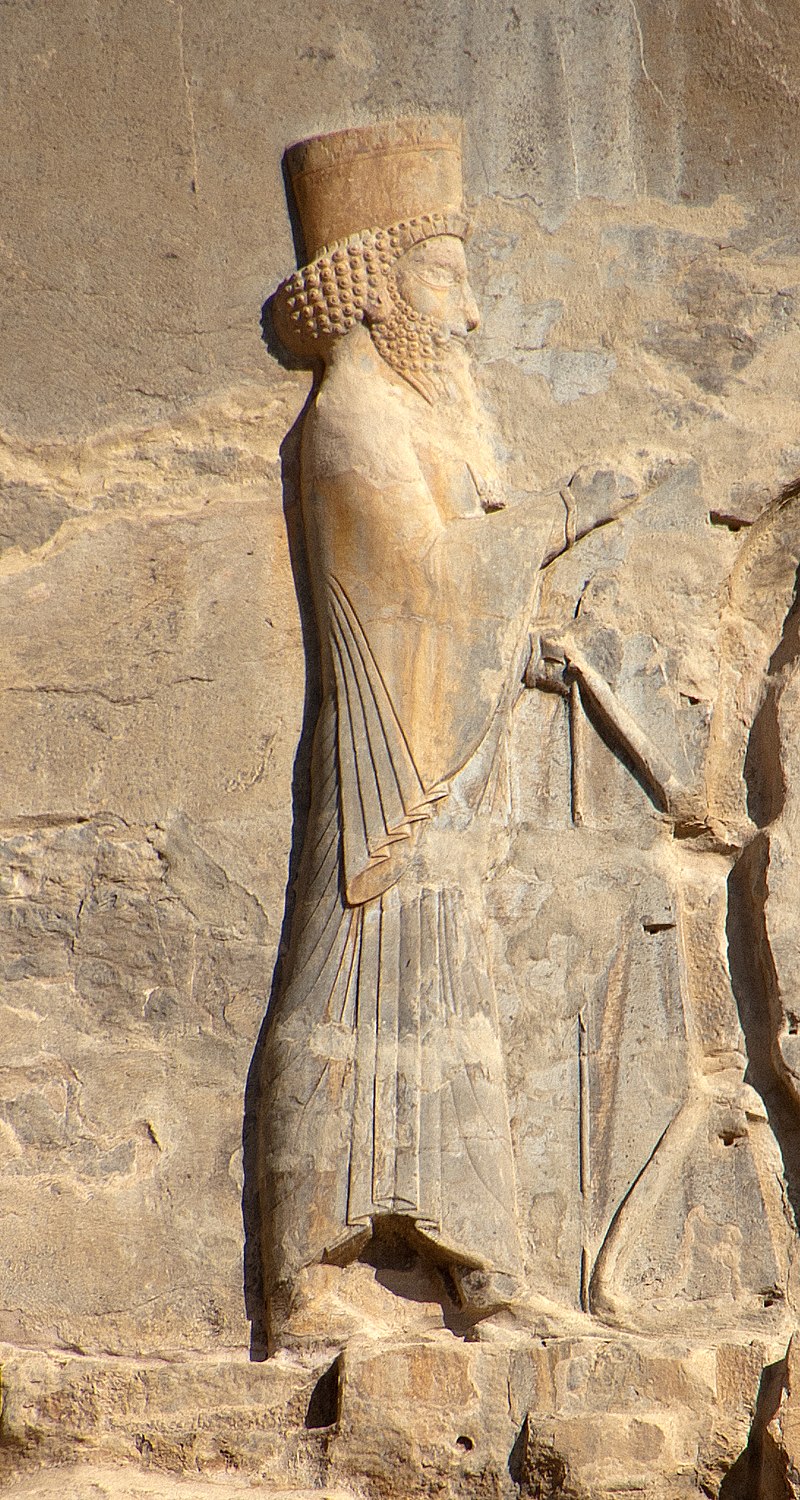
File:Artaxerxes_II_relief_detail.jpg · Wikimedia Commons · See Wikimedia Commons
Artaxerxes II
Sign in to saveAlso known as Artaxerxes II Mnemon
The 10th Achaemenid Emperor (404–358 BC)
Artaxerxes II was a Persian emperor who ruled the vast Achaemenid Empire for 46 years during the 4th century BC, making him one of the longest-reigning monarchs of his time. He is historically significant for maintaining the empire's stability and power during a period when Persian influence faced challenges from Greek city-states and internal conflicts.
AI-generated from the Wikipedia summary — may contain errors.
Wikidata facts
- Instance of
- human
- Given name
- Artaxerxes
- Gender
- male
- Citizenship
- Achaemenid Empire
- Place of death
- Persepolis
- Child
- Ariaspes
- Father
- Darius II
- Mother
- Parysatis
- Occupation
- king
- Position held
- King of Kings
- Languages spoken
- Old Persian
- Religion
- Mazdaism
- Family
- Achaemenid dynasty
- Noble title
- pharaoh
- Image
- Artaxerxes II relief detail.jpg
Show 9 more facts
- Commons category
- Artaxerxes II
- date of birth
- 0452-00-00
- date of death
- 0358-03-01
- topic's main category
- Category:Artaxerxes II
- place of burial
- Persepolis
- different from
- Ardakhshir II
- time period
- Twenty-seventh Dynasty of Egypt
- alternative name
- Assuerus
- relative
- Tissaphernes
via Wikidata · CC0
~27 min read
Encyclopedic overview
Arses or Arsaces (c. 445–359/8 BC), known by his regnal name Artaxerxes II (Old Persian: 𐎠𐎼𐎫𐎧𐏁𐏂 Artaxšaçāʰ; Ancient Greek: Ἀρταξέρξης), was King of Kings of the Achaemenid Empire from 405/4 BC to 359/8 BC. He was the son and successor of Darius II (r. 423 – 405/4 BC) and his mother was Parysatis.
Soon after his accession, Artaxerxes II faced opposition from his younger brother Cyrus the Younger, who assembled an army composed of troops from his Lydian and Ionian satrapies as well as Greek mercenaries in his bid for the throne. The forces of the brothers clashed at Cunaxa in 401 BC, which resulted in the defeat and death of Cyrus. Following this, Artaxerxes II had to contend with several other revolts; a revolt by Evagoras I (r. 411–374 BC) in Cyprus between 391–380 BC, by the Phoenicians in c. 380 BC, and most importantly, the revolts by the western satraps (known as the Great Satraps' Revolt) in the 360s and 350s BC, led by distinguished figures such as Datames, Ariobarzanes, and Autophradates.
Excerpted from Wikipedia’s “Artaxerxes II” article, available under the CC BY-SA 4.0 licence.