Category
page 17th-century Islam

Islam
Islam is an Abrahamic monotheistic religion based on the Quran and the teachings of Muhammad. The religion's adherents, called Muslims, are estimated to number 2 billion worldwide and are the world's second-largest religious population after Christians.
thumb|200px|right|Surah al Fatiha (The Opener), from the [[Quran.]]
Muslims believe that there is a primordial faith that was revealed many times through earlier prophets and messengers, including Adam, Noah, Abraham, Moses, and Jesus, and they believe that Islam is the universal and complete version of this faith. Muslims consider the Quran t
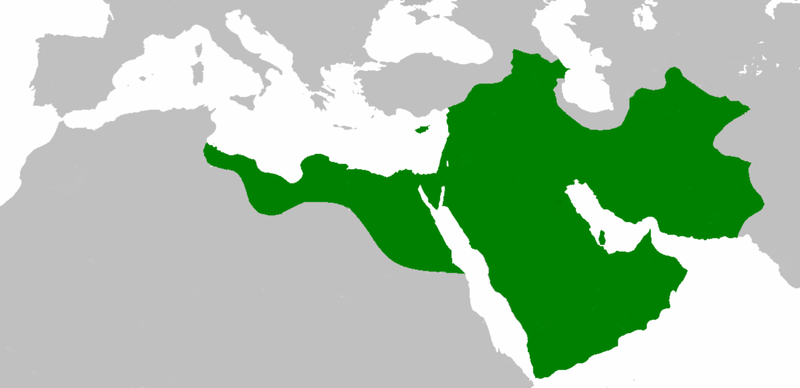
Rashidun Caliphate
first caliphate established after the death of the Islamic prophet Muhammad (632–661)
tabi‘un
The ' (, or , ' , ) are the generation of Muslims who followed the companions () of the Islamic prophet Muhammad, and thus received their teachings secondhand. A knew at least one . As such, they played an important part in the development of Islamic thought and knowledge, and in the political development of the early caliphate.
Qadariyya
Qadariyyah (), also Qadarites or Kadarites, from (), meaning "power", was originally a derogatory term designating early Islamic theologians who rejected the concept of predestination in Islam, qadr, and asserted that humans possess absolute free will, making them responsible for their actions, justifying divine punishment and absolving God of responsibility for evil in the world. Originally, the Qadarites also reject belief in the prior knowledge of God, and they deny that God wrote the decrees concerning His creation before He created the heavens and the earth; Consequently, their belief goe
Ghadir Khumm
sermon given by Muhammad in 632 including a declaration in favor of his son‐in‐law Ali
Sajah
Sajah bint Al-Harith ibn Suwayd al-Taghlibi (, fl. 598-675 CE) from the tribe of Banu Tamim, was an Arab Christian protected first by her tribe; then causing a split within the Arab tribes and finally defended by Banu Hanifa. Sajah was one of a series of people (including her future husband) who claimed to be a prophet in the 7th-century Arabia and was also the only known woman claiming prophethood during the Wars of Apostasy in the early Islamic Period. She later converted to Islam and died a Muslim.
Najdat
The Najdat were the sub-sect of the Kharijite movement that followed Najda ibn 'Amir al-Hanafi, and in 682 launched a revolt against the Umayyad Caliphate in the historical provinces of Yamama and Bahrain, in central and eastern Arabia.
list of expeditions of Muhammad
Wikimedia list article
succession to Muhammad
7th century CE succession crisis following the death of Muhammad, causing the Sunni–Shia schism in Islam

Saqifah
The Saqifa () of the Banu Sa'ida clan refers to the location of an event in early Islam where some of the companions of the Islamic prophet Muhammad pledged their allegiance to Abu Bakr as the first caliph and successor to Muhammad shortly after his death in 11 AH (632 CE). The Saqifa meeting is among the most controversial events in early Islam, due to the exclusion of a large number of Muhammad's companions, including his immediate family and notably Ali, his cousin and son-in-law. The conflicts that arose soon after Muhammad's death are considered to be the main cause of the current divisio
Ashtiname of Muhammad
Covenant of the Islamic prophet Muhammad with the monks of Mount Sinai

Muqawqis
Al-Muqawqis (, ) is mentioned in Muslim history as a ruler of Egypt who corresponded with Muhammad. He is widely identified with the last prefect of Egypt, Cyrus of Alexandria, who was the Greek Orthodox Patriarch of Alexandria of the second era of Byzantine Egypt (628-642).
Umar's Assurance
guarantee of safety from the Caliph Umar
Hadith of the pen and paper
event shortly before the Prophet Muhammad’s death in he wished to write a statement on a Thursday but was prevented from doing so
timeline of 7th-century Muslim history
timeline of Muslim history from 601 AD to 700 AD
Attack on Fatimah's house
important and controversial event in the history of Shia ye and like yeee
Saf ibn Sayyad
Claimant of prophethood
Event of Mubahala
meeting between the Islamic prophet Muhammad and Najranite Christians
Sermon of Fadak
speech in Medina delivered by Fatima after Muhammad’s death
Qays ibn Musahir Al Saidawi
Uthmaniyya
The Uthmaniyya () were adherents of several political and doctrinal views pertaining to the third caliph, Uthman (), which held that Uthman was legitimate caliph and his murder was unjust, whereas his successor, Ali (), was an illegitimate caliph who seized power without consultation. Although not all of them were Umayyad supporters, they undermined Ali's caliphate through several revolts. In the 8th century, pro-Uthman opinion gained momentum among religious scholars, who considered only Abu Bakr (), Umar (), and Uthman as legitimate caliphs, but discouraged rebellion against authorities, pre
PERF 558
oldest surviving dated Arabic papyrus (643)
Early social changes under Islam
changes in Islam between 610 and 661 AD
Al-Abna'
(, ) is a term that was used in South Arabia to refer to people whose lineage was paternally Iranian and maternally Arab. They represented a distinct community that had come into existence following the end of the Aksumite–Persian wars in the 6th century, when Persian soldiers began intermarrying with local Arab women in Sanaa and throughout Yemen. These couples' offspring and their descendants held an ethnic and cultural identity that was influenced by their mixed heritage from the Sasanian Empire and the Himyarite Kingdom, though they eventually assimilated into the society of the latter. In