Category
page 1Absinthe

Foeniculum vulgare
Fennel (Foeniculum vulgare) is a flowering plant species in the carrot family. It is a hardy, perennial herb with yellow flowers and feathery leaves. It is indigenous to the shores of the Mediterranean but has become widely naturalized in many parts of the world, especially on dry soils near the sea coast and on riverbanks.

Artemisia absinthium
species of plant

Acorus calamus
species of plant

absinthe
Absinthe (, ) is an anise-flavoured spirit derived from several plants, including the flowers and leaves of Artemisia absinthium ("grand wormwood"), together with green anise, sweet fennel, and other medicinal and culinary herbs. Historically described as a highly alcoholic spirit, it is 45–74% ABV or 90–148 proof in the US. Absinthe traditionally has a natural green colour but may also be colourless. It is commonly referred to in historical literature as . While sometimes casually referred to as a liqueur, absinthe is not traditionally bottled with sugar or sweeteners. Absinthe is traditional

Angelica archangelica
species of plant

Acorus
Acorus is a genus of monocot flowering plants. This genus was once placed within the family Araceae (aroids), but more recent classifications place it in its own family Acoraceae and order Acorales, of which it is the sole genus of the oldest surviving line of monocots. Some older studies indicated that it was placed in a lineage (the order Alismatales), that also includes aroids (Araceae), Tofieldiaceae, and several families of aquatic monocots (e.g., Alismataceae, Posidoniaceae). However, modern phylogenetic studies demonstrate that Acorus is sister to all other monocots. Common names includ

thujone
Thujone () is a ketone and a monoterpene that occurs predominantly in two diastereomeric (epimeric) forms: (−)-α-thujone and (+)-β-thujone.

L'Absinthe
' (English: The Absinthe Drinker or Glass of Absinthe) is a painting by Edgar Degas, painted between 1875 and 1876. Its original title was ', a name often used today.

pastis
thumbnail|A glass of diluted pastis
thumb|right|French pastis
Pastis (, , ; ) is an anise-flavoured spirit and apéritif traditionally from France, typically containing less than 100 g/L sugar and 40–45% ABV (alcohol by volume).

Artemisia pontica
species of plant
ouzo effect
cloudy emulsion resulting from adding water to ouzo
fenchone
Fenchone is an organic compound classified as a monoterpenoid and a ketone. It is a colorless oily liquid. It has a structure and an odor similar to those of camphor. Fenchone is a constituent of absinthe and the essential oil of fennel. Fenchone is used as a flavor in foods and in perfumery.
absinthin
Absinthin is a naturally produced triterpene lactone from the plant Artemisia absinthium (Wormwood). It constitutes one of the most bitter chemical agents responsible for absinthe's distinct taste. The compound shows biological activity and has shown promise as an anti-inflammatory agent, and should not be confused with thujone, a neurotoxin also found in Artemisia absinthium.

anisette
250px|right|thumb|Marie Brizard et Roger International|Marie Brizard brand anisette
Anisette, or Anis, is an anise-flavored liqueur that is consumed in most Mediterranean countries. It is colorless and, because it contains sugar, is sweeter than dry anise flavoured spirits (e.g. absinthe). The most traditional style of anisette is that produced by means of distilling aniseed, and is differentiated from those produced by simple maceration by the inclusion of the word distilled on the label.
The Absinthe Drinker
painting by Édouard Manet
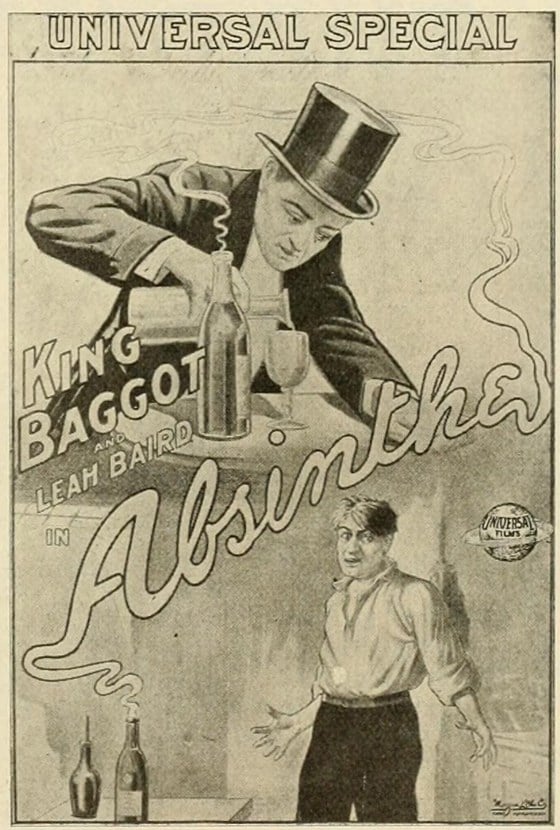
Absinthe
1914 film by Herbert Brenon
Pelinkovac
Pelinkovac is a bitter-sweet liqueur derived from wormwood. Pelinkovac is a liqueur with a noticeably bitter taste of wormwood, from which it is made, with the addition of 26 different medicinal herbs that enrich it with a specific aroma and pleasant scent. It contains up to 35% alcohol. It is drunk chilled without ice, as an aperitif before and digestif after meals.