Category
page 2Abstract strategy games
PÜNCT
PÜNCT is a two-player strategy board game. It is the sixth release in the GIPF project of seven abstract strategy games, although it is considered the fifth game in the project. It was released in 2005. PÜNCT won the Games Magazine Best Abstract Strategy game for 2007.
Mū Tōrere
board game
Ricochet Robots
abstract strategy game
Ultimate tic-tac-toe
twist to the original game tic-tac-toe
fidchell
' () or ' (in Welsh, pronounced ) was a board game popular among the ancient Celts. Fidchell was played between two people who moved an equal number of pieces across a board; the board shared its name with the game played upon it. Based on the descriptions in Irish and Welsh literature as well as archaeological finds of game pieces, it is likely to have been a variant of ludus latrunculorum played in Ireland and Britain.

Parcheesi
thumb|upright=1.3|A game of Parcheesi in progress
Parcheesi is a brand-name American adaptation of the Indian cross and circle board game Pachisi, published by E. G. Selchow & Co and Winning Moves Games USA.
TwixT
thumb|right|A computer-generated image of a game of TwixT
TwixT is a two-player strategy board game, an early entrant in the 1960s 3M bookshelf game series. It became one of the most popular and enduring games in the series. It is a connection game where players alternate turns placing pegs and links on a pegboard in an attempt to link their opposite sides. While TwixT itself is simple, the game also requires strategy, so young children can play it, but it also appeals to adults. The game has been discontinued except in Germany and Japan.
Bul
board game
Neutron
strategy game
Konane
thumb|250px|Mathematicians playing Kōnane at a combinatorial game theory workshop
thumb|Konane gaming table erroneously set up at Puʻuhonua o Hōnaunau NHP 2017
Kōnane is a two-player strategy board game from Hawaii which was invented by the ancient Hawaiian Polynesians. The game is played on a rectangular board and begins with black and white counters filling the board in an alternating pattern. Players then hop over one another's pieces, capturing them similar to checkers. The first player unable to capture is the loser.
TAMSK
TAMSK is a two-player board game designed by Kris Burm. It was originally published in 1998 as the second game in the GIPF Project series of abstract strategy games, although it was later dropped from the series in favor of TZAAR. Players move sand hourglass timers and drop plastic rings around spaces on a hexagonal board in an attempt to limit their opponent's moves. Each player starts the game with 32 rings, and the player with the fewest remaining rings at the end of the game is the winner. The game is unique among the GIPF Project games in having time as a central game component, and the m
Game of the Amazons
board game in which the pieces move like chess queens but fire arrows that permanently block the squares they land on
Havannah
board game
Trax
strategy game
Hackenbush
thumb|A starting setup for the game of Hackenbush
Hackenbush is a two-player game invented by mathematician John Horton Conway. It may be played on any configuration of line segments connected to one another by their endpoints and to a "ground" line. Other versions of the game use differently colored lines.
SOS
paper-and-pencil game
Yota
Yoté is a traditional strategy board game of West Africa, where it is a popular gambling game due to its fast pace and surprising turnarounds. A player wins by capturing all opposing pieces. Yoté is related to the game Choko.
Tak
two-player abstract strategy game
score four
board game
Agon
board game
Breakthrough
abstract strategy board game
Connect6
Connect6 (; Pinyin: liùzǐqí; ;; ) introduced in 2003 by Professor I-Chen Wu at Department of Computer Science and Information Engineering, National Chiao Tung University in Taiwan, is a two-player strategy game similar to Gomoku.
Cram
game

Sudoku solving algorithm
algorithm used to complete a sudoku
Domineering
Domineering (also called Stop-Gate or Crosscram) is a mathematical game that can be played on any collection of squares on a sheet of graph paper. For example, it can be played on a 6×6 square, a rectangle, a polyomino, or a combination of any number of such components. Two players have a collection of dominoes which they place on the grid in turn, covering up squares. One player places tiles vertically, while the other places them horizontally. (Traditionally, these players are called "Left" and "Right", respectively, or "V" and "H". Both conventions are used in this article.)
As in most game
Grant Acedrex
medieval Spanish chess variant on a 12×12 board
Paper Soccer
Strategy game played on a paper grid representing a soccer or hockey field
Kamisado
Kamisado is an abstract strategy board game for two players that is played on an 8x8 multicoloured board. Each player controls a set of eight octagonal dragon tower pieces. Each player's set of dragon towers contains a tower to match each of the colours that appear on the squares of the board (i.e., a brown tower, a green tower, etc.). One player's towers have gold dragons mounted on the top, while the other player's towers are topped with black dragons. The game was published in 2008 by Burley Games.
Hare games
board game
Pong Hau K'i
ancient Asian (primarily Chinese) children's board game
m,n,k-game
thumb|Example of a completed 11,10,5-game
An '''m,n,k-game' is an abstract board game in which two players take turns in placing a stone of their color on an m-by-n board, the winner being the player who first gets k stones of their own color in a row, horizontally, vertically, or diagonally. Thus, tic-tac-toe is the 3,3,3-game and free-style gomoku is the 15,15,5-game. An m,n,k-game is also called a 'k-in-a-row' game on an m-by-n'' board.
Qubic
abstract strategy board game, generally for two players
Infinite chess
variation of the game of chess
Epaminondas
abstract strategy game
Khet
abstract strategy game
Shannon switching game
pencil and paper connection game
capture go
variant of the game "go"; abstract strategy game
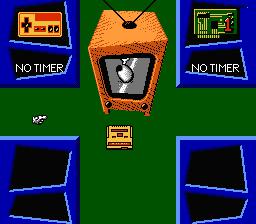
Spot: The Video Game
1990 video game
Armenian draughts
Armenian variant of draughts
Salta
two-player abstract strategy board game
EinStein würfelt nicht!
board game
Terrace
strategy game
Ming mang
Tibetan board game
Take It Easy
Board game

Little Wars
set of rules for playing with toy soldiers
Gobblet
Gobblet is a board game for two players designed by Thierry Denoual and published in 2001 by Gigamic and Blue Orange Games. Gobblet was a finalist for the 2004 Jeu de l'année.
Canadian Checkers
variation of checkers in Canada
Teeko
thumb|right|upright=1.5|Teeko game board
Teeko is an abstract strategy game invented by John Scarne in 1937 and rereleased in refined form in 1952 and again in the 1960s. Teeko was marketed by Scarne's company, John Scarne Games Inc.; its quirky name, he said, borrowed letters from the games Tic-tac-toe, Chess, Checkers, and Bingo.
Bōku
thumb|Bōku
Chopsticks
hand game for two players, in which players extend a number of fingers from each hand and transfer those scores by taking turns to tap one hand against another
Alea evangelii
three musketeers
abstract strategy game
Malefiz
Malefiz (also known as Barricade) is a strategy board game, invented by Werner Schöppner and published by Ravensburger since 1960. It is a non-circular descendant of the ancient Indian board game Pachisi.
Irensei
Irensei () is an abstract strategy board game. Traditionally, it is played using Go pieces (black and white stones) on a Go board (19x19 intersections), but any equipment suitable for playing Go can also be used for Irensei.
Cathedral
strategy board game
Frisian-rules draughts
discipline of draughts
Dodgem
right|thumb|Starting position for 3×3 Dodgem
Dodgem is a simple abstract strategy game invented by Colin Vout in 1972 while he was a mathematics student at the University of Cambridge as described in the book Winning Ways. It is played on an n×n board with n-1 cars for each player—two cars each on a 3×3 board is enough for an interesting game, but larger sizes are also possible.
Kensington
board game
Quantum tic-tac-toe
educational game about quantum mechanics
Clans
board game