Category
page 1Aerodynamics

speed of sound
distance travelled during a unit of time by a sound wave propagating through an elastic medium

mechanical fan
machine with spinning blades used to create airflow

aerodynamics
300px|thumb|upright=1.6|A NASA wake turbulence study at Wallops Island in 1990. A [[vortex is created by passage of an aircraft wing, revealed by smoke. Vortices are one of the many phenomena associated with the study of aerodynamics.]]
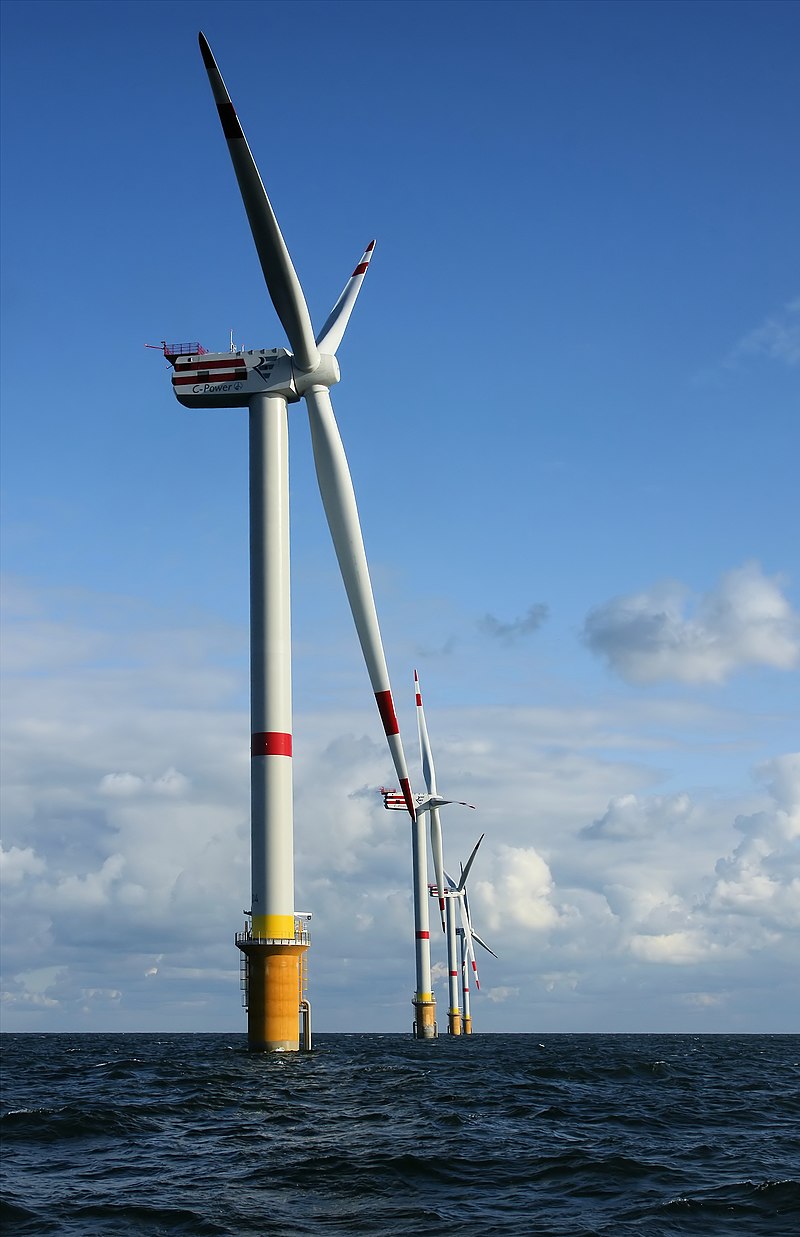
wind turbine
device that converts wind energy into electrical energy

viscosity
When two fluid layers move relative to each other, a friction force develops between them and the slower layer acts to slow down the faster layer. This internal resistance to flow is described by the fluid property called viscosity, which reflects the internal stickiness of the fluid. In liquids, viscosity arises from cohesive molecular forces, while in gases it results from molecular collisions. Except for the case of superfluidity, there is no fluid with zero viscosity, and thus all fluid flows involve viscous effects to some degree.

jet engine
reaction engine which generates thrust by jet propulsion

wing
thumb|right|Two different planforms are shown with a swept wing [[KC-10 Extender (top) refueling a diamond-like delta wing F-22 Raptor]]

flight
thumb|Bird flight by a [[brown pelican.]]
thumb|Human-engineered flight: a United Airlines [[Boeing 787 taking off from Heathrow Airport in December 2013.]]

Mach number
ratio of speed of object moving through fluid and speed of sound

Reynolds number
dimensionless quantity that is used to help predict similar flow patterns in different fluid flow situations
standard temperature and pressure
reference values for temperature and pressure
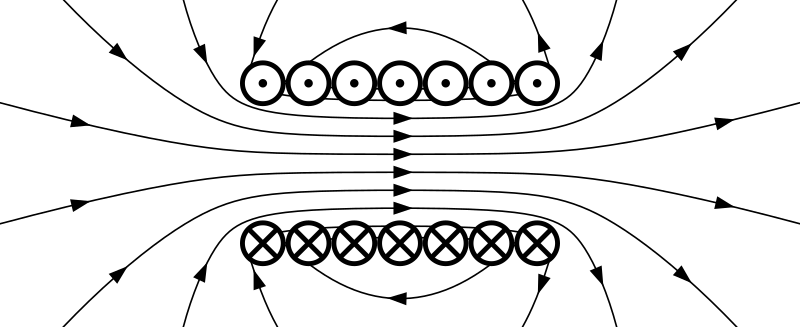
Biot-Savart law
important law of classical magnetism

lift
force; aerodynamics term

turbulence
In fluid dynamics, turbulence or turbulent flow is fluid motion exhibiting chaotic changes in pressure and flow velocity. It is in contrast to laminar flow, which occurs when a fluid flows in parallel layers with no disruption between those layers.

fluid dynamics
subdiscipline of fluid mechanics that deals with fluid flow—the natural science of fluids (liquids and gases) in motion
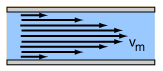
laminar flow
flow where fluid particles follow smooth paths in layers
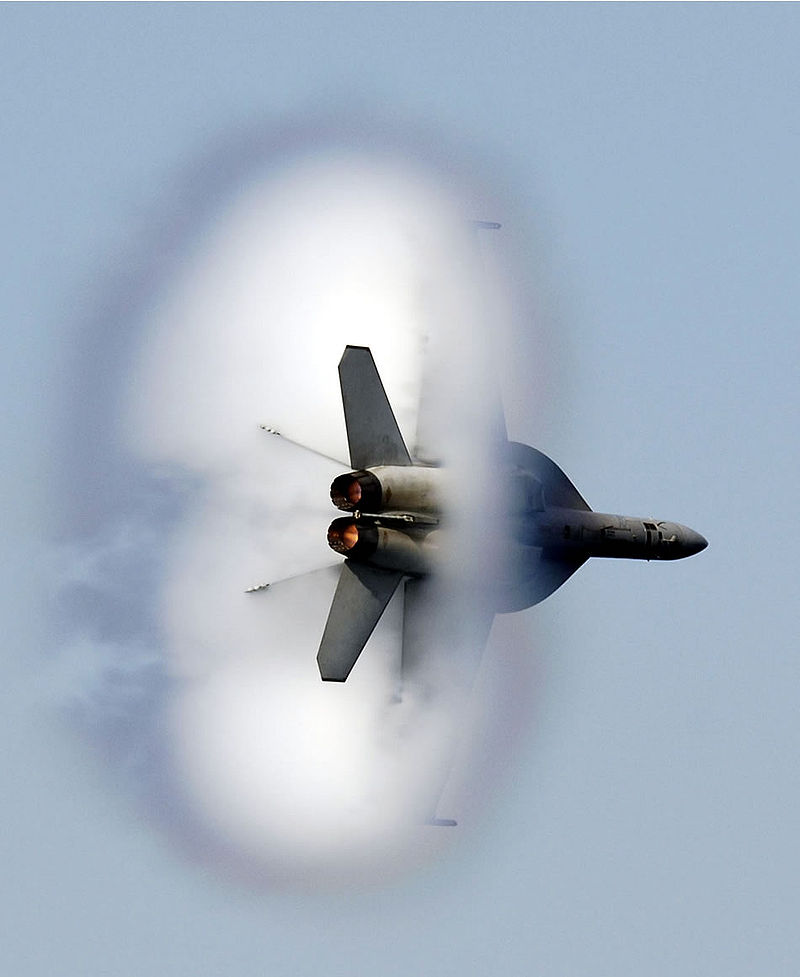
supersonic speed
speed that exceeds the speed of sound

Navier–Stokes equations
system of nonlinear partial differential equations describing the motion of viscous fluids

wind tunnel
tool used to study the effects of air moving past solid objects
vortex
thumb|Vortex created by the passage of an wing|aircraft wing, revealed by colored smoke
thumb|249x249px|Kármán vortex street|Von Kármán vortex street behind a drinking straw; milk was poured into the water to make the current visible
thumb|right|250px|A Kármán vortex street is shown in this photo, as winds from the west blow onto clouds that have formed over the mountains in the desert. This phenomenon observed from ground level is extremely rare, as most cloud-related Kármán vortex street activity is viewed from space.

aerostatics
thumb| A hot air balloon produced through the application of Aerostatic principles
A subfield of fluid statics, aerostatics is the study of gases that are not in motion with respect to the coordinate system in which they are considered. The corresponding study of gases in motion is called aerodynamics.

airfoil
thumb|350px|Examples of airfoils in nature, aircraft (ULM=ultra-light), jet engine, and sailing boat The dolphin flipper works in the same way in water and is an example of a hydrofoil.
thumb|Streamlines past an airfoil made visible with smoke in a wind tunnel

hypersonic speed
speed that is faster than Mach 5
wind shear
difference in wind speed or direction over a short distance
Coandă effect
tendency of a fluid jet to stay attached to a convex surface
ocean gyre
large system of rotating ocean currents
ground effect
the reduced aerodynamic drag that an aircraft's wings generate when they are close to a fixed surface
aircraft principal axes
prociple directions in aviation
Kármán vortex street
repeating pattern of swirling vortices caused by the unsteady separation of flow of a fluid around blunt bodies

downforce
thumb|250px|right|Three different styles of front wings from three different Formula One eras, all designed to produce downforce at the front end of the respective race cars. Top to bottom: [[Ferrari 312T4 (1979), Lotus 79 (1978), McLaren MP4/11 (1996)]]
.jpg)
transonic
Transonic (or transsonic) flow is air flowing around an object at a speed that generates regions of both subsonic and supersonic airflow around that object. The exact range of speeds depends on the object's critical Mach number, but transonic flow is seen at flight speeds close to the speed of sound (343 m/s at sea level), typically between Mach 0.8 and 1.2.
clear-air turbulence
turbulence without visual cues

aeroelasticity
thumb|NASA testing a scale model Lockheed L-188 Electra|Lockheed Electra in a wind tunnel for flutter
ceiling
maximum density altitude an aircraft is specified to reach

airspeed
thumb|right|An airspeed indicator is a [[flight instrument that displays airspeed. This airspeed indicator has standardized markings for a multiengine airplane.]]
thumb|Aircraft have pitot tubes for measuring airspeed.
aeromechanics
Aeromechanics is a branch of continuum mechanics that deals with the motion of air and other gases and their effects on bodies in the flow, involving aerodynamics, thermophysics and aerostatics. The fluid flow and structure are interactive systems and their interaction is dynamic. The fluid force causes the structure to deform which changes its orientation to the flow and hence the resulting fluid force.
shock diamond
wave pattern in supersonic exhaust
ballistic coefficient
physical measure of overcoming air resistance
slip
sideways nose angle of an aircraft relative to the oncoming airflow or relative wind
lift coefficient
coefficient that relates the lift generated by a lifting body to other parameters
coaxial rotors
type of rotation configuration for helicopter rotor blades
Reynolds transport theorem
3D generalization of the Leibniz integral rule
Prandtl–Glauert singularity
the point at which a sudden drop in air pressure occurs
vertical wind tunnel
wind tunnel which moves air up in a vertical column
compressible flow
branch of fluid mechanics
airborne wind turbine
high-altitude flying turbine for generating electricity

crosswind
thumb|In a crosswind landing, the fuselage of the plane may be skewed relative to the runway
aerodynamic heating
higher temperatures due to movement through air
automotive aerodynamics
study of road vehicles aerodynamics
external ballistics
behavior of projectiles in flight
hypersonic flight
flight below 90 kilometres at speeds above Mach 5
aerodynamic force

Phugoid
400px|thumb|right|A diagrammatic representation of a fixed-wing airplane in phugoid

aeroacoustics
thumb | rightAeroacoustics is a branch of acoustics that studies noise generation via either turbulent fluid motion or aerodynamic forces interacting with surfaces. Noise generation can also be associated with periodically varying flows. A notable example of this phenomenon is the Aeolian tones produced by wind blowing over fixed objects.
wing warping
early system for lateral control of a fixed-wing aircraft

Kammback
thumb|Kammback on a 1969 Fiat 850 Coupe

Turbulator
thumb|right|Grob G 102 Astir prototype with turbulator tape under the wing
A turbulator is a device that turns a laminar boundary layer into a turbulent boundary layer.

flight dynamics
the science of aircraft and spacecraft design
static pressure
pressure in the absence of sound waves

Institut aérotechnique
French public establishment specializing in aerodynamic studies