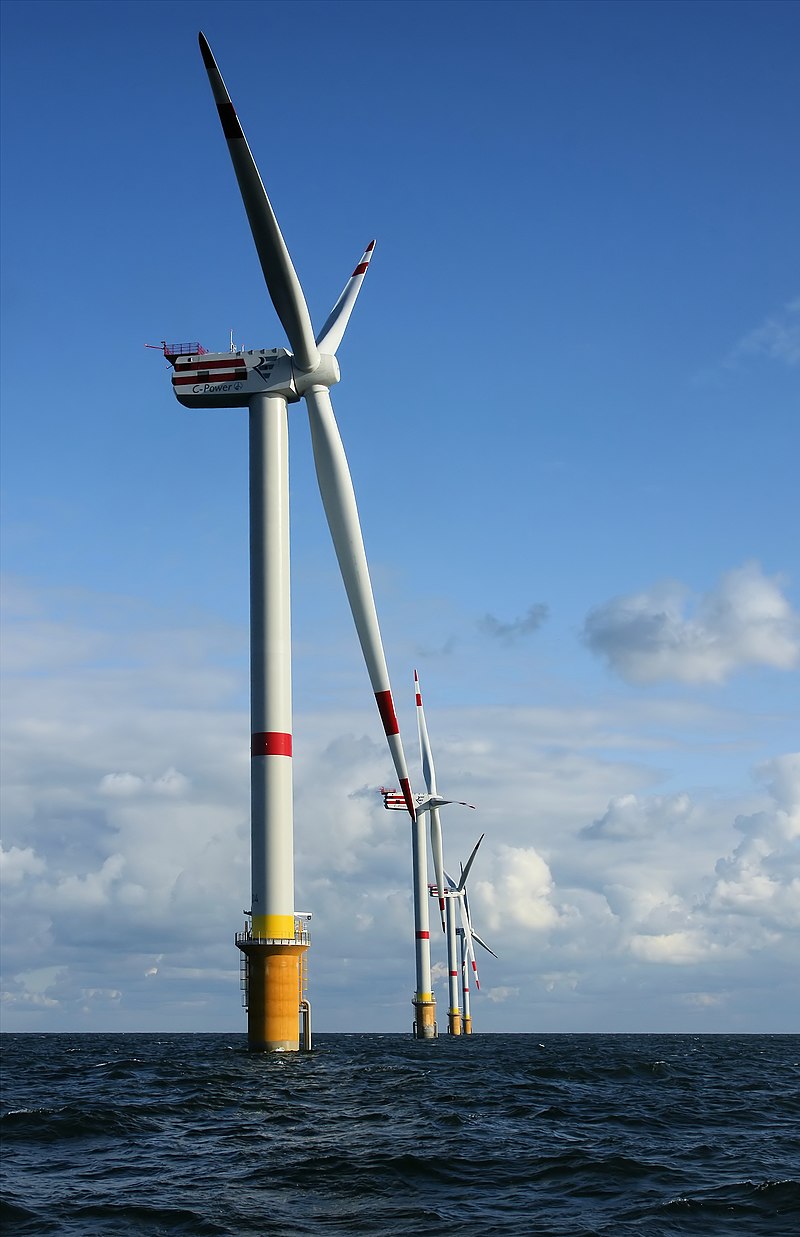
File:Windmills_D1-D4_(Thornton_Bank).jpg · Wikimedia Commons · See Wikimedia Commons
wind turbine
Sign in to saveAlso known as wind generator
device that converts wind energy into electrical energy
A wind turbine is a device that uses wind to generate electricity by converting the energy from moving air into electrical power. Wind turbines matter because they provide a way to produce energy without burning fossil fuels, making them an important tool for reducing pollution and dependence on traditional power sources.
AI-generated from the Wikipedia summary — may contain errors.
Wikidata facts
- Subclass of
- electrical generator
- Part of
- wind farm
- Image
- Windgenerator antarktis hg.jpg
Show 11 more facts
- hashtag
- Windkraftanlage
- source of energy
- wind power
- topic's main category
- Category:Wind turbines
- Commons gallery
- Wind turbine
- Commons category
- Wind turbines
- time of discovery or invention
- 1887-00-00
- short name
- ВЭУ
- has characteristic
- height
- OpenStreetMap tag
- generator:source=wind
- carbon footprint
- 12
- on focus list of Wikimedia project
- Wikipedia:Vital articles/Level/4
Sources (8)
via Wikidata · CC0
~40 min read
Encyclopedic overview
Thorntonbank Wind Farm, using REpower 5M 5 MW turbines in the North Sea off the coast of Belgium A wind turbine is a device that converts the kinetic energy of wind into electrical energy. As of 2024, hundreds of thousands of large turbines, in installations known as wind farms, were generating over 1,136 gigawatts of power, with 117 GW added each year. Wind turbines are an increasingly important source of intermittent renewable energy, and are used in many countries to lower energy costs and reduce reliance on fossil fuels. One study claimed that, as of 2009, wind had the "lowest relative greenhouse gas emissions, the least water consumption demands and the most favorable social impacts" compared to photovoltaic, hydro, geothermal, coal and gas energy sources.
Wind turbines are manufactured in a wide range of sizes, with either horizontal or vertical axes, though horizontal is most common. Commercial power production horizontal-axis turbines usually have three blades, upwind of their towers. Vertical-axis turbines can be made to varied designs, including the "eggbeater" Darrieus, the giromill with straight blades, the Savonius with scoops suitable for rooftops and ships, airborne with wings tethered to the ground, floating (mounted on a floating platform), and various unconventional types such as with counter-rotating blades.
Excerpted from Wikipedia’s “wind turbine” article, available under the CC BY-SA 4.0 licence.
Gallery (12)
Available in 79 languages
- Español
- Français
- Deutsch
- 中文
- 日本語
- Русский
- Português
- Italiano
- العربية
- हिन्दी
- Afrikaans
- Albanian
- Aragonese
- Armenian
- Asturian
- Atikamekw
- Azerbaijani
- Bahasa Indonesia
Show 60 more
- Bangla
- Basque
- Breton
- Bulgarian
- Catalan
- Central Kurdish
- Croatian
- Czech
- Danish
- Esperanto
- Estonian
- Finnish
- Galician
- Georgian
- Greek
- Haitian Creole
- Hebrew
- Hungarian
- Ido
- Irish
- Latin
- Latvian
- Limburgish
- Lithuanian
- Luxembourgish
- Macedonian
- Malay
- Malayalam
- Mongolian
- Navajo
- Nederlands
- Norwegian
- Norwegian Nynorsk
- Occitan
- Papiamento
- Pashto
- Piedmontese
- Polski
- Romanian
- Scots
- Serbian
- Serbian (Latin)
- simple
- Sinhala
- Slovenian
- Svenska
- Tamil
- Tiếng Việt
- Türkçe
- Ukrainian
- Uzbek
- Walloon
- Welsh
- Western Frisian
- Wu Chinese
- Zaza
- zh_yue
- فارسی
- ไทย
- 한국어
via Wikidata sitelinks · CC0