Category
page 1Agaricales

Agaricales
The Agaricales are an order of fungi in the division Basidiomycota. As originally conceived, the order contained all the agarics (gilled mushrooms), but subsequent research has shown that not all agarics are closely related and some belong in other orders, such as the Russulales and Boletales. Conversely, DNA research has also shown that many non-agarics, including some of the clavarioid fungi (clubs and corals) and gasteroid fungi (puffballs and false truffles) belong within the Agaricales. The order has 46 extant families, more than 400 genera, and over 25,000 described species, along with s
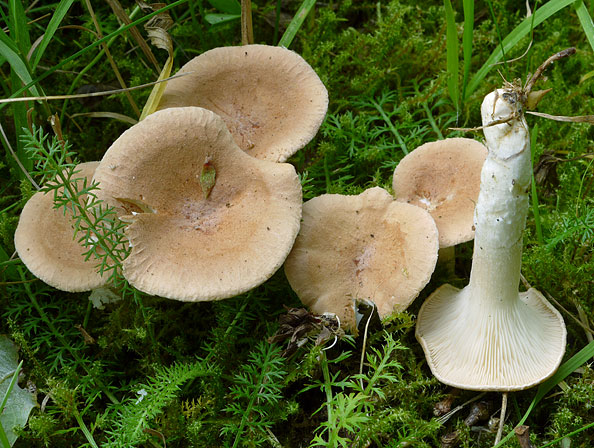
Infundibulicybe gibba
species of fungus
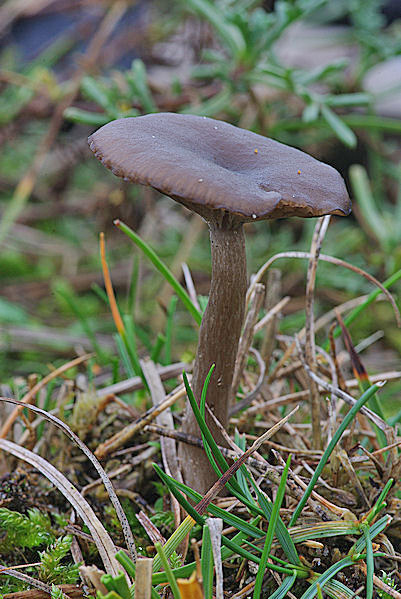
Pseudoclitocybe cyathiformis
species of fungus
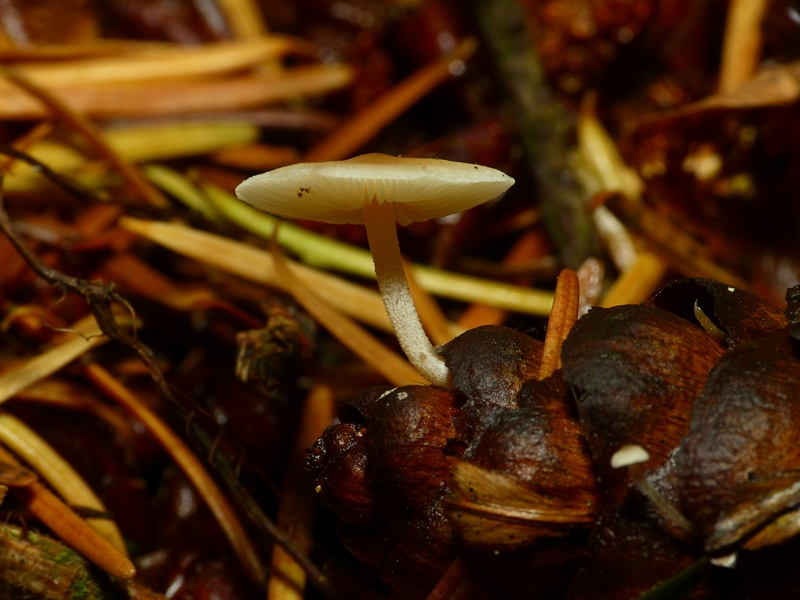
Baeospora myosura
species of fungus
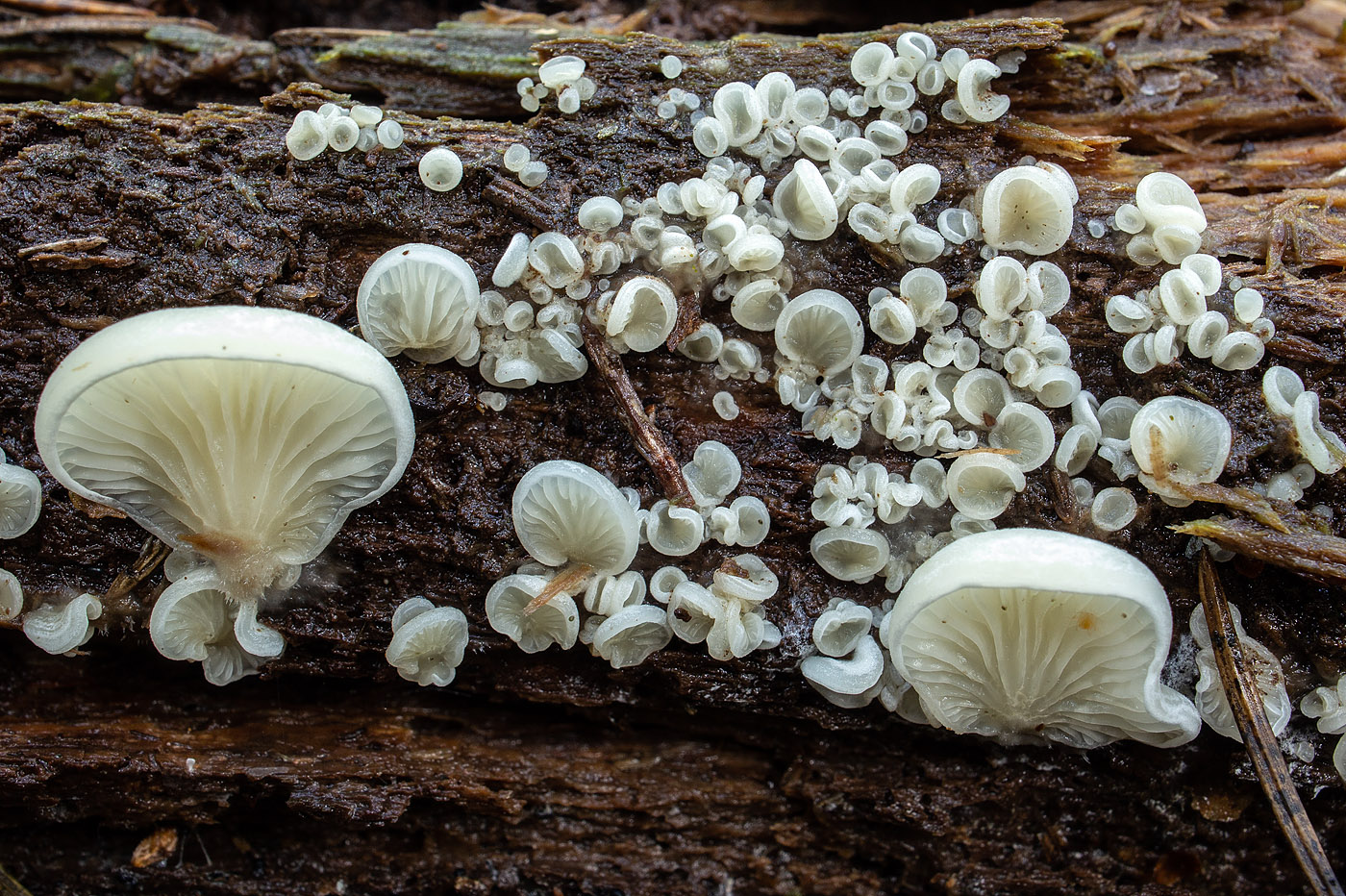
Pleurocybella porrigens
species of fungus

Macrocystidia cucumis
species of fungus
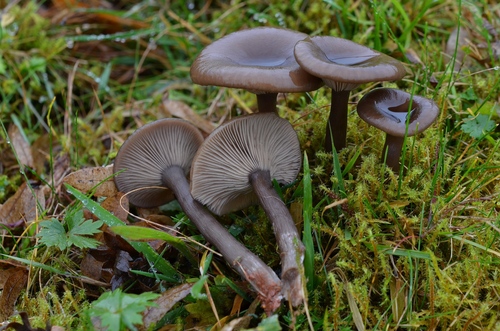
Pseudoclitocybe
Pseudoclitocybe is a genus of fungi in the family Pseudoclitocybaceae. The genus contains about ten species with a collectively widespread distribution.
Stephanosporaceae
The Stephanosporaceae are a family of fungi in the order Agaricales. Species in the family are gasteroid or corticioid, growing on the ground or on rotting wood or plant debris.
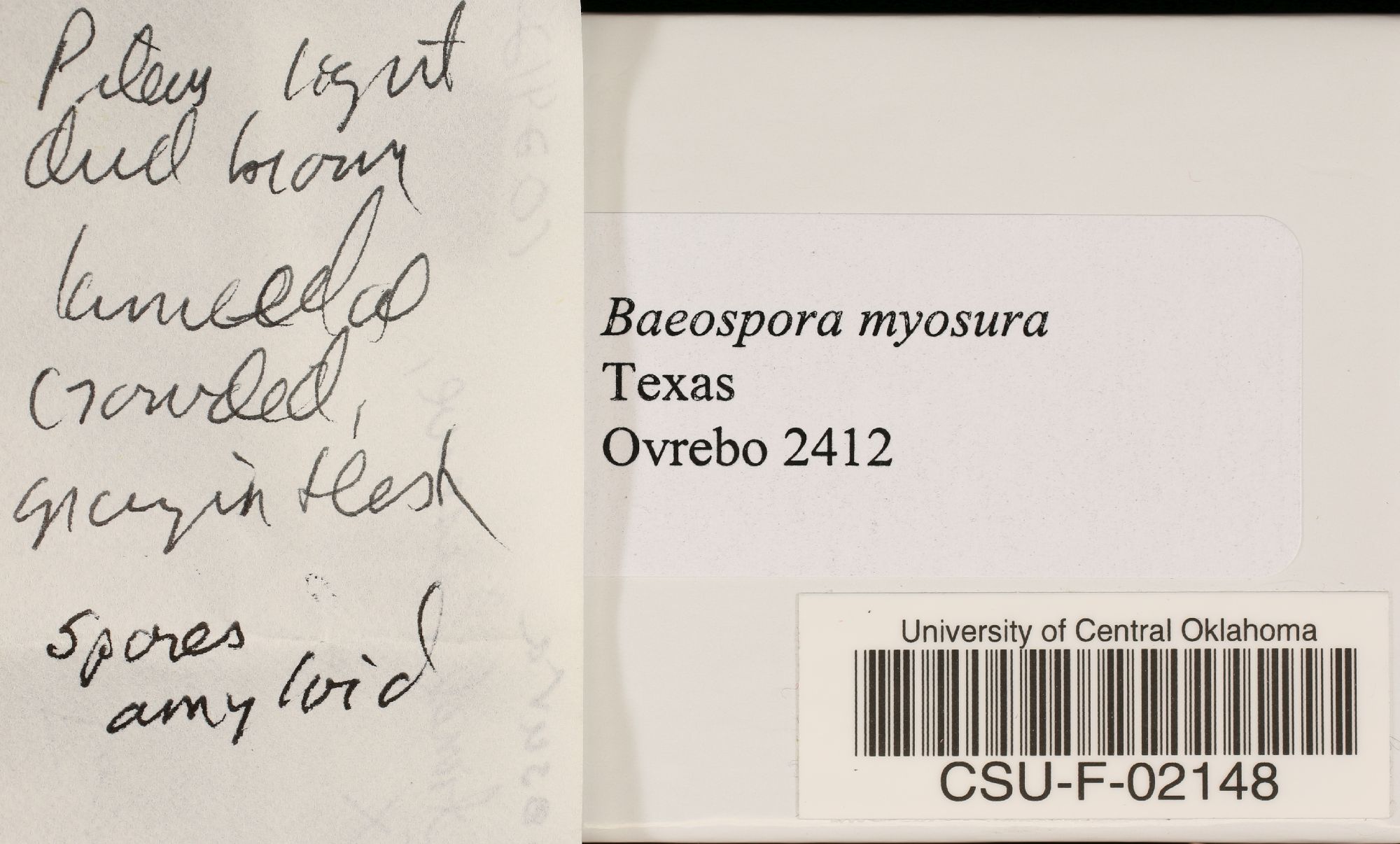
Baeospora
Baeospora is a genus of fungi in the family Cyphellaceae. Basidiocarps (fruit bodies) are agarics. The genus was circumscribed by mycologist Rolf Singer in 1938. The most recently described species, B. occidentalis, is a snowbank fungus that was discovered in montane coniferous forests of the western USA.
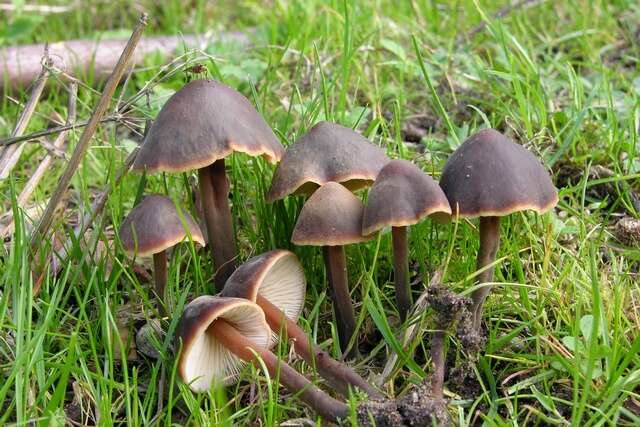
Macrocystidia
Macrocystidia is a genus of fungus in the mushroom family Macrocystidiaceae. The genus contains five species that collectively have a widespread distribution.
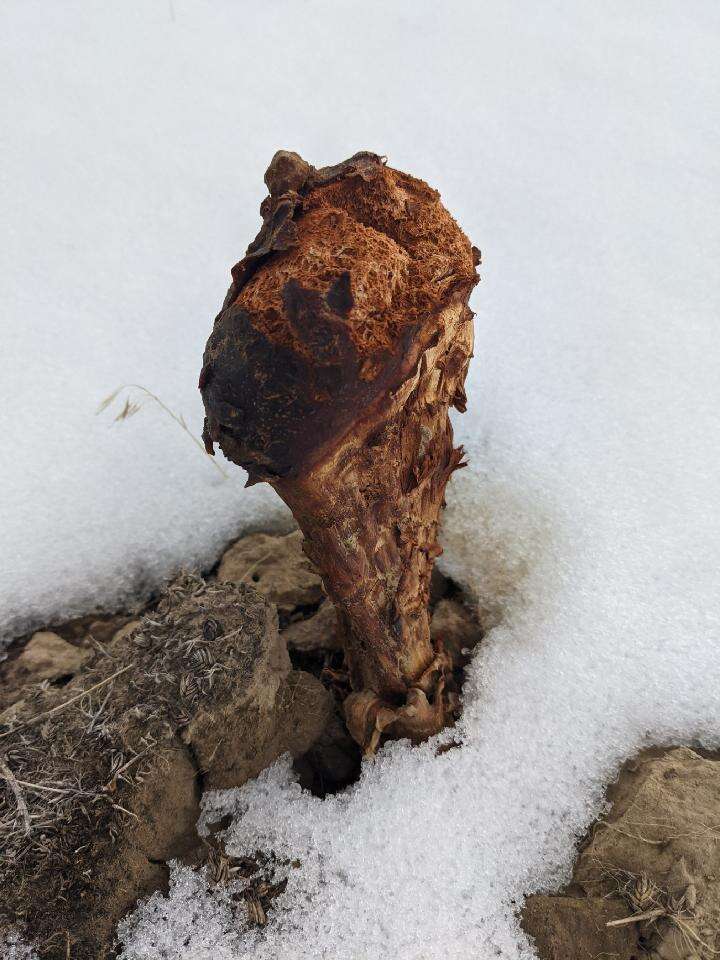
Phelloriniaceae
The Phelloriniaceae are a family of fungi in the order Agaricales. The family contains two monotypic genera, Dictyocephalos and Phellorinia. The family was circumscribed by the German botanist Oskar Eberhard Ulbrich in 1951.
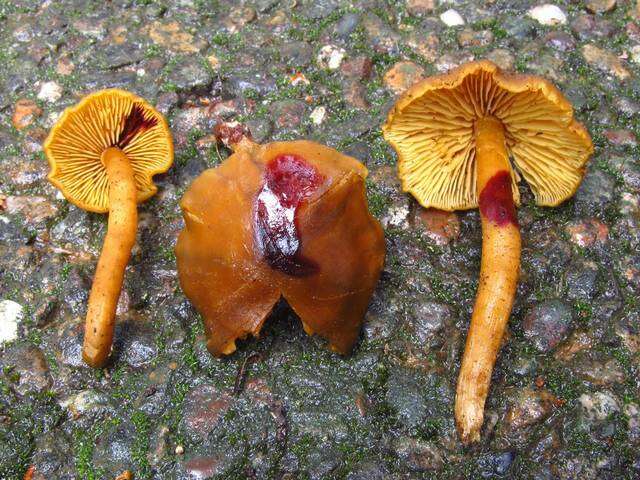
Callistosporium
Callistosporium is a genus of fungi in the order Agaricales. Basidiocarps (fruit bodies) are agarics (gilled mushrooms), either with a central stipe (stalk) or pleurotoid (with a lateral stipe). The latter group were formerly referred to Pleurocollybia. Recent molecular research, based on cladistic analysis of DNA sequences, has shown that the genus is a natural, monophyletic grouping, though not all species have yet been sequenced. Species are saprotrophic, typically growing on wood, and the genus is found worldwide.
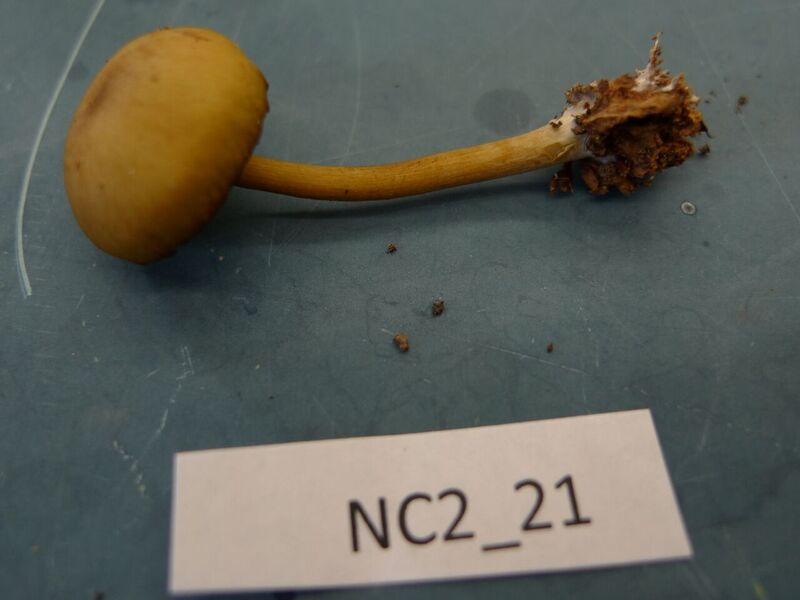
Callistosporium luteo-olivaceum
species of fungus

Cystoderma fallax
species of fungus
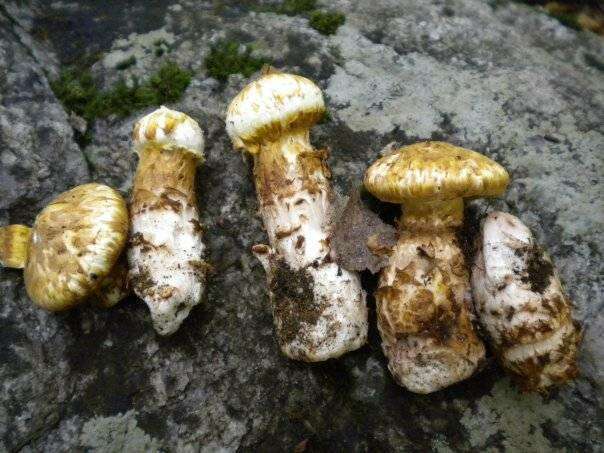
Squamanita
Squamanita is a genus of parasitic fungi in the family Squamanitaceae. Basidiocarps (fruit bodies) superficially resemble normal agarics (gilled mushrooms) but emerge from parasitized fruit bodies of deformed host agarics.
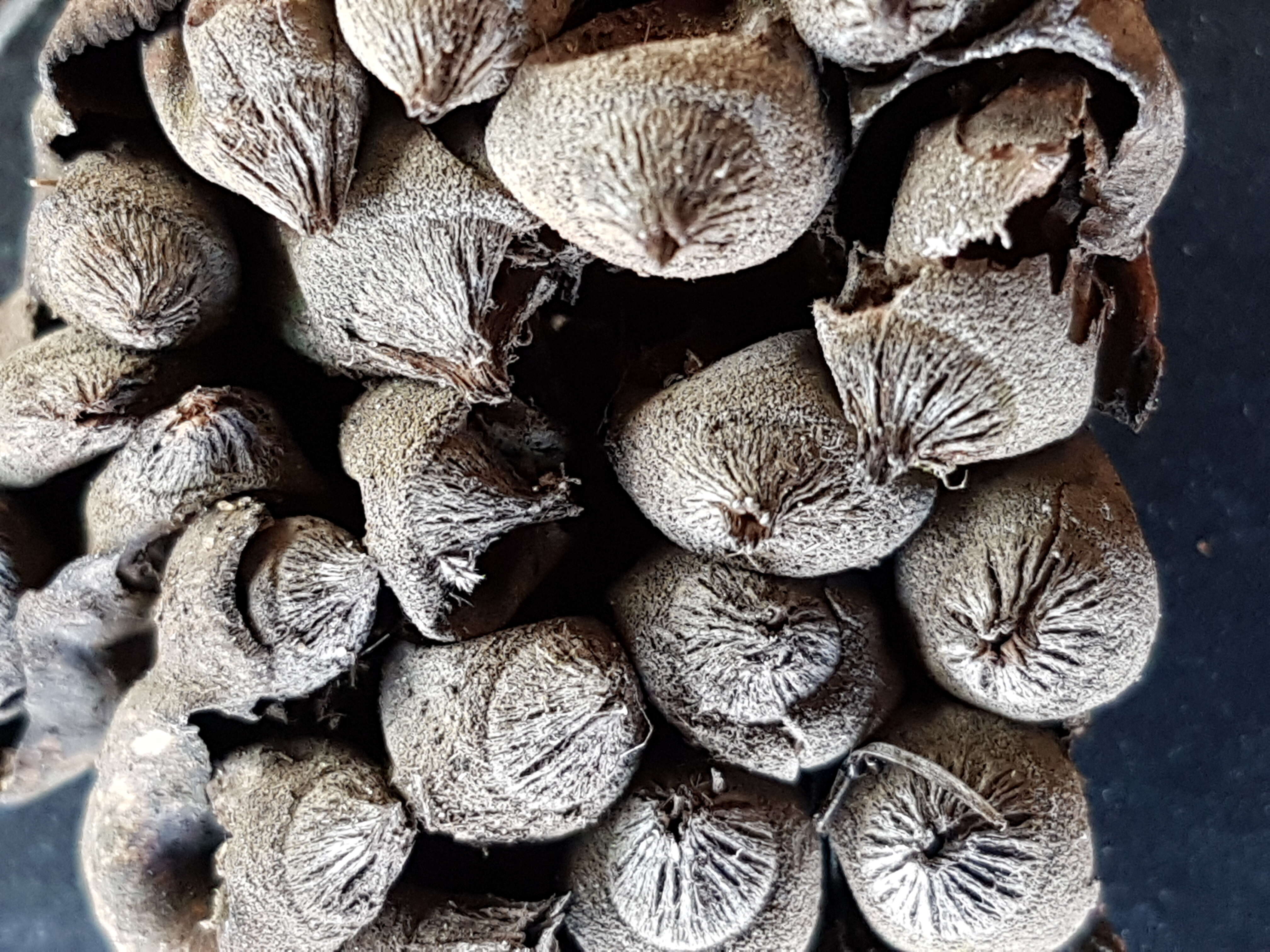
Broomeiaceae
REDIRECT Broomeia

Phyllotopsis
Phyllotopsis is a genus of fungi in the family Phyllotopsidaceae. The widespread genus contain five species that occur predominantly in temperate regions.
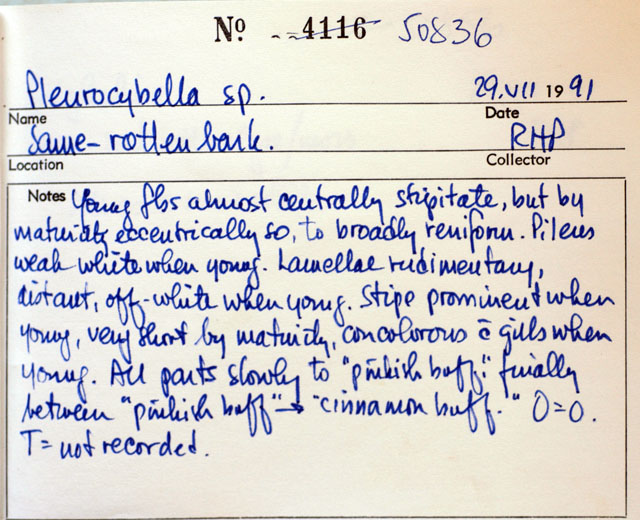
Pleurocybella
Pleurocybella is a genus of fungi in the family Phyllotopsidaceae.
Hemigasteraceae
REDIRECT Hemigaster
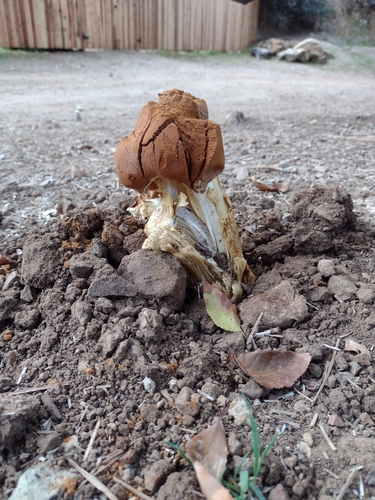
Dictyocephalos attenuatus
Dictyocephalos is a genus of fungi in the family Phelloriniaceae of the order Agaricales. The genus is monotypic, and contains the single species Dictyocephalos attenuatus, commonly known as the stalked oddball, which was described by the American botanist Lucien Marcus Underwood in 1901 (as D. curvatus).

Chromocyphella
Chromocyphella is a genus of fungi in the family Chromocyphellaceae. The genus is widespread and contains six species.
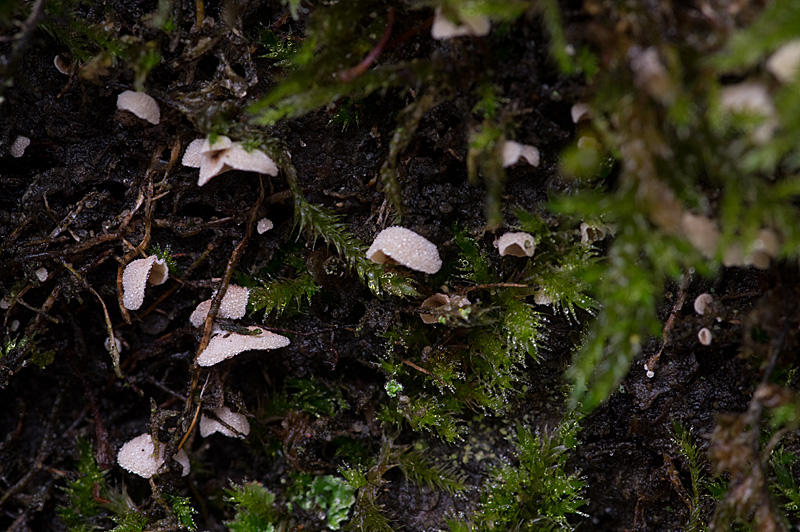
Chromocyphella muscicola
species of fungus
Gigaspermataceae
REDIRECT Gigasperma
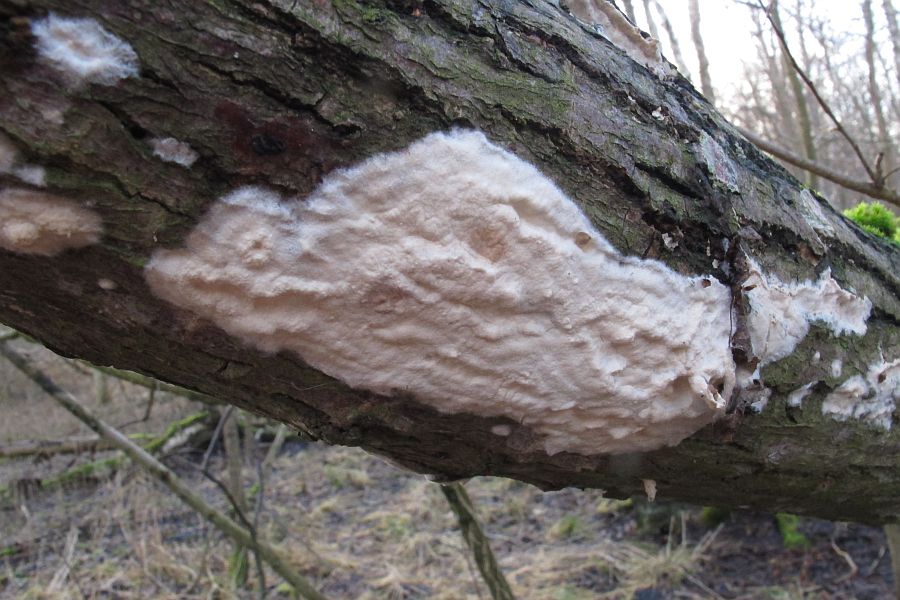
Granulobasidium vellereum
species of fungus
Basidiolichen
thumb|Cora glabrata
thumb|Lichenomphalia umbellifera
thumb|Multiclavula mucida
Basidiolichens are lichenized members of the division Basidiomycota within the subkingdom Dikarya of the kingdom Fungi. They form a diverse yet much smaller group of lichens than the far more common ascolichens of the division Ascomycota. Owing to how few described species there are, basidiolichens are generally considered to be poorly researched, and few studies that characterize their natural products exist. Biogeographically, basidiolichen species may be distributed in a cosmopolitan manner or more regionally, ra

Cristinia
Cristinia is a genus of fungi belonging to the family Stephanosporaceae.
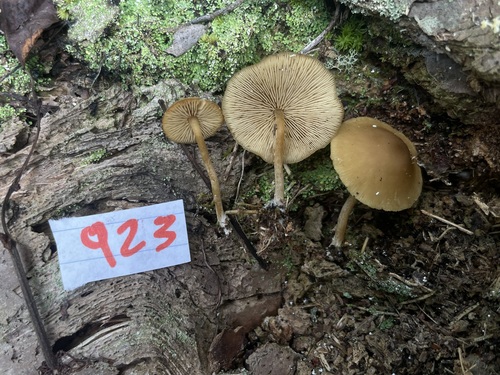
Callistosporium palmarum
species of fungus
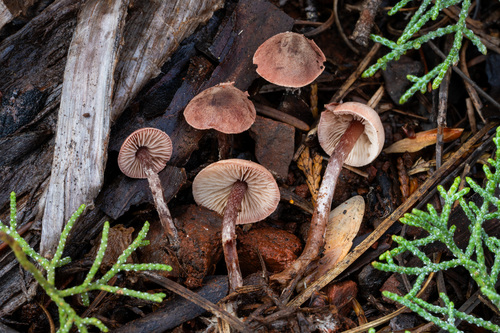
Squamanitaceae
The Squamanitaceae are a family of fungi in the order Agaricales. All species in the family are agarics (gilled mushrooms). Species in two genera, Dissoderma and Squamanita, are parasitic on other agarics. Members of the Squamanitaceae are found worldwide.

Singerocybe
Singerocybe is a genus of fungi that contains six species. Singerocybe was circumscribed by the Finnish mycologist Harri Harmaja in 1988 with Singerocybe viscida as the type species.

Stephanospora
Stephanospora is a genus of truffle-like gasteroid fungi in the order Agaricales. In 2014, nine new Australasian species were described from collections previously thought to represent S. flava.

Lichenomphalia aurantiaca
species of fungus
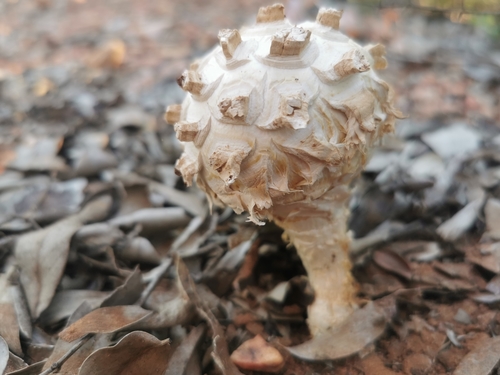
Phellorinia
Phellorinia is a genus of fungi in the family Phelloriniaceae of the order Agaricales. The genus is monotypic, and contains the single species Phellorinia herculeana, described by English naturalist Miles Joseph Berkeley in 1843 as P. inquinans. This single species has currently (February 2021) 24 synonyms, and takes its epithet from the basionym Scleroderma herculeanum Pers.

Morganella
genus of fungi
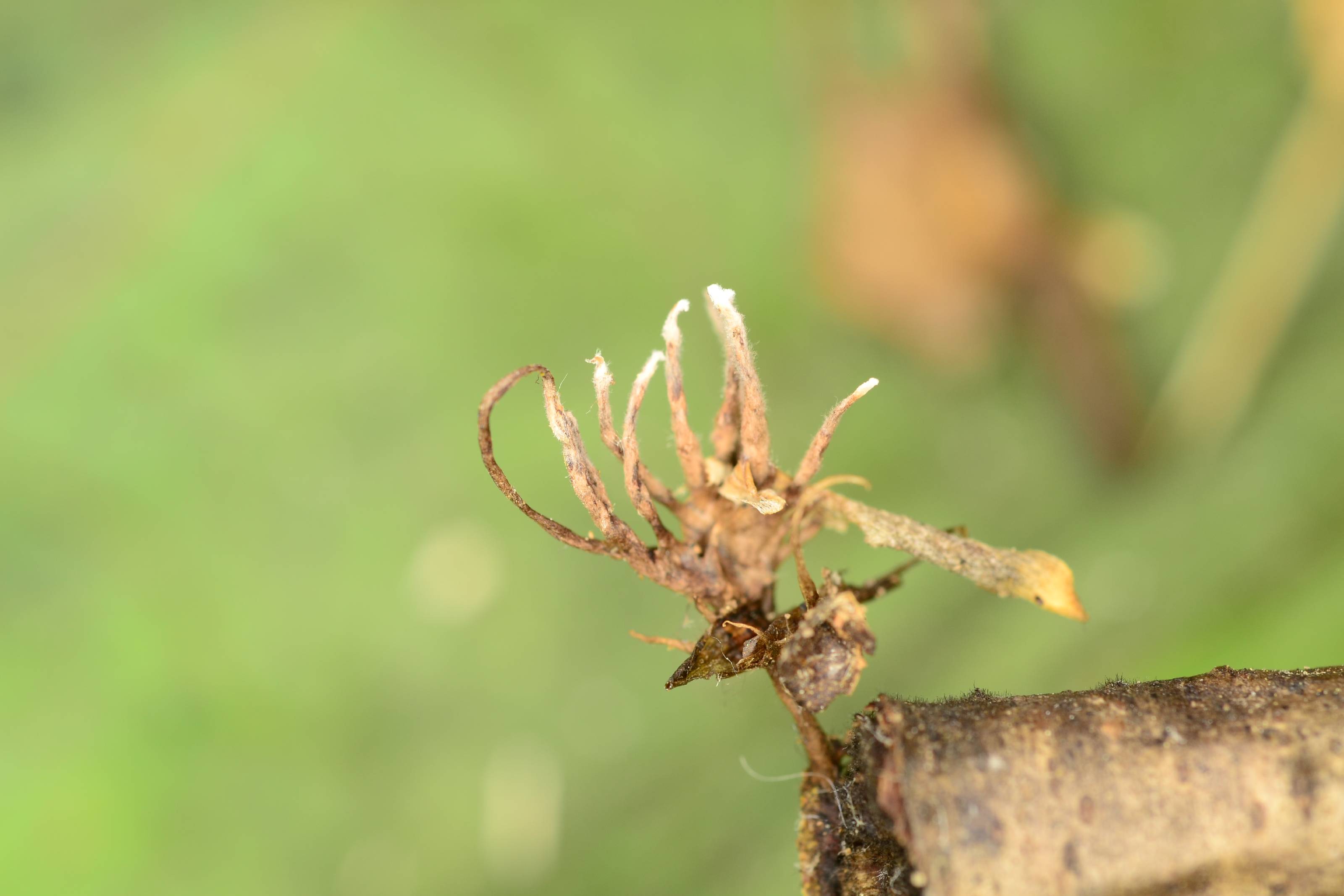
Collybiopsis
Collybiopsis is a resurrected genus of mushroom-forming fungi in the family Omphalotaceae.
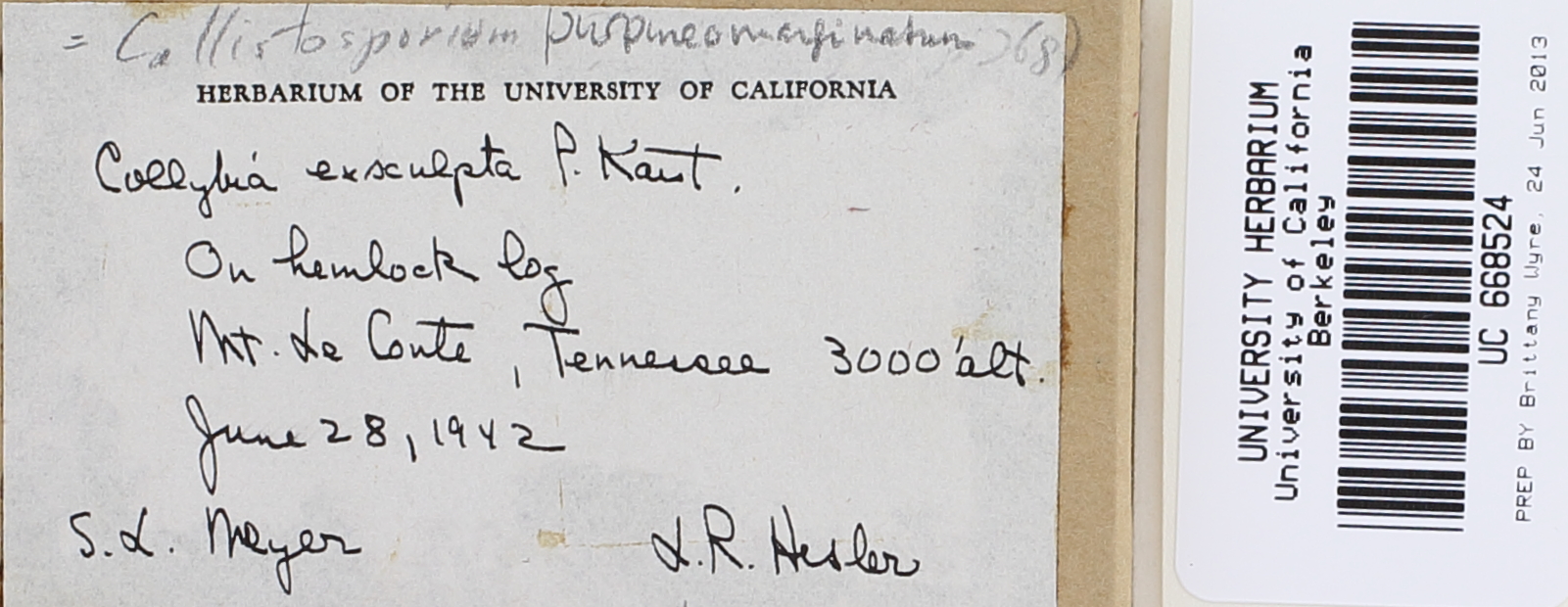
Callistosporium purpureomarginatum
species of fungus
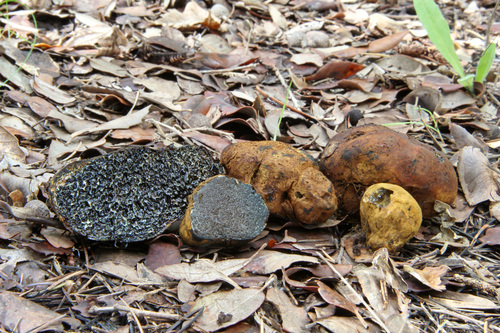
Broomeia
The Broomeiaceae are a family of fungi in the order Agaricales. The family is monotypic, and contains the single genus Broomeia, described by English naturalist Miles Joseph Berkeley in 1844, and named for his collaborator, Christopher Edmund Broome. Berkeley designated the type species to be Broomeia congregata. Species of this fungus family can be found in Mexico as well as various parts of Africa.
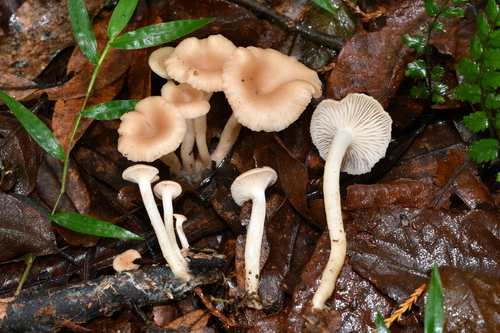
Singerocybe clitocyboides
species of fungus

Squamanita schreieri
species of fungus
Biannulariaceae
The Biannulariaceae are a family of fungi in the order Agaricales. The family contains three genera. All species form agaricoid basidiocarps (gilled mushrooms). The family was originally described to accommodate the single genus Catathelasma, but has been extended as a result of DNA research.
Callistosporiaceae
The Callistosporiaceae are a family of fungi in the order Agaricales. The family contains six genera. All species form agaricoid basidiocarps (gilled mushrooms). The family is based on recent DNA research.
Phyllotopsis rhodophyllus
species of fungus
Squamanita contortipes
species of fungus
Limnoperdon
Limnoperdon is a fungal genus in the monotypic family Limnoperdaceae. The genus is also monotypic, as it contains a single species, the aquatic fungus Limnoperdon incarnatum. The species, described as new to science in 1976, produces fruit bodies that lack specialized structures such as a stem, cap and gills common in mushrooms. Rather, the fruit bodies—described as aquatic or floating puffballs—are small balls (0.5–1 mm diameter) of loosely interwoven hyphae. The balls float on the surface of the water above submerged twigs. Experimental observations on the development of the fruit body,
Phyllotopsidaceae
The Phyllotopsidaceae are a family of fungi in the order Agaricales. Basidiocarps are either clavarioid (Macrotyphula), agaricoid (Tricholomopsis), or cyphelloid. Marcel Locquin originally established the family on the basis of shared morphological characteristics, but did not validly publish it. The name was later validated by Olariaga and the family was expanded to contain other genera as a result of molecular research, based on cladistic analysis of DNA sequences.
Phyllotopsis subnidulans
species of fungus
Phyllotopsis ealaensis
species of fungus
Macrocystidiaceae
REDIRECT Macrocystidia

Cystoderma chocoanum
species of fungus
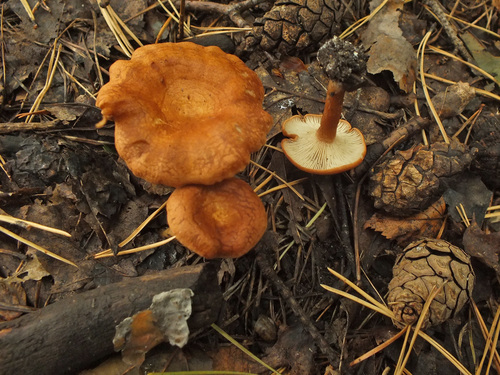
Bonomyces
Bonomyces is a genus of fungi in the family Biannulariaceae. Basidiocarps (fruit bodies) are agaricoid, similar to those of Clitocybe, but with a distinctly hard stipe (stem). The genus is separated on DNA characteristics as well as morphology. Species are known from Europe, North Africa, and northern China.
Phyllotopsis salmonea
species of fungus
Crassisporiaceae
The Crassisporiaceae is a mushroom family of small brown, naucoroid, brown-spored agarics with thick to slightly thickened, smooth, basidiospore walls that darken to reddish brown in potassium hydroxide (KOH) solution, absence of chrysocystidia, presence of cheilocystidia, nongelatinized tissues in the lamellae, and a filamentous pileus cutis. The family is recognized based upon phylogenetic analyses using DNA sequences and depending upon the analyses varies in relationship to either the Cortinariaceae or, as described in greater detail prior to recognition as a separate family, near the Strop
Cortinarius dysodes
species of fungus
Squamanita citricolor
species of fungus
Mythicomycetaceae
The Mythicomycetaceae is a family of dark-spored agarics that have palely pigmented spores which lack germ pores. The two genera are monotypic and share features such as horn-like dark stems, pigmented mycelium at their bases, and are small brown mushrooms in north temperate forests. The family is closely related to the Psathyrellaceae.