Category
page 1Age of Enlightenment

Ludwig van Beethoven
German composer (1770-1827)

Immanuel Kant
German philosopher (1724-1804)

René Descartes
French philosopher, mathematician, and scientist (1596–1650)

Jean-Jacques Rousseau
Genevan philosopher, writer, and composer (1712-1778)

Benjamin Franklin
American polymath and statesman (1706–1790)

Francis Bacon
English philosopher and statesman (1561–1626)

Joseph Haydn
Austrian composer (1732–1809)

Age of Enlightenment
period of European history and cultural movement of the 17th and 18th centuries

Wilhelm von Humboldt
Prussian philosopher, government official, diplomat, and educator (1767–1835)

American Revolution
revolution establishing the United States of America

Emmanuel Swedenborg
Swedish 18th century scientist and theologian (1688-1772)

Declaration of the Rights of Man and of the Citizen
foundational document of the French Revolution
.jpg)
Neoclassicism
Neoclassicism, also spelled Neo-classicism, emerged as a Western cultural movement in the decorative and visual arts, literature, theatre, music, and architecture that drew inspiration from the art and culture of classical antiquity. Neoclassicism was born in Rome, largely due to the writings of Johann Joachim Winckelmann during the rediscovery of Pompeii and Herculaneum. Its popularity expanded throughout Europe as a generation of European art students finished their Grand Tour and returned from Italy to their home countries with newly rediscovered Greco-Roman ideals. The main Neoclassical mo

Pierre Bayle
French philosopher and writer (1647–1706)

Founding Fathers of the United States
group of Americans who led the revolution against Great Britain
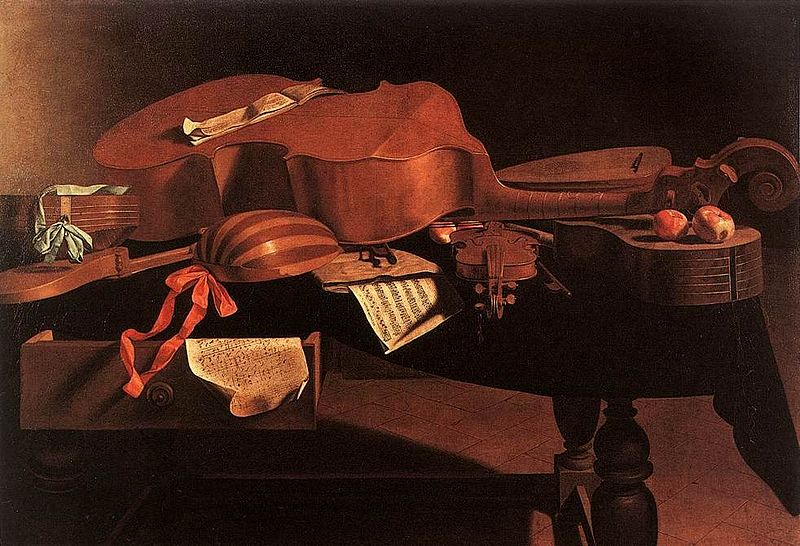
Baroque music
style of Western classical music

polymath
thumb|283x283px|Portrait of Benjamin Franklin by David Martin, 1767. [[Benjamin Franklin is one of the foremost polymaths in US history. Franklin was a writer, scientist, inventor, statesman, diplomat, printer and political philosopher. He further attained a legacy as one of the Founding Fathers of the United States.]]

Friedrich Schleiermacher
German theologian, philosopher, and biblical scholar (1768-1834)

Encyclopédie
The , better known as the Encyclopédie (), was a general encyclopedia published in France between 1751 and 1772, with later supplements, revised editions, an index, and translations. It had many contributors, known among contemporaries as the Encyclopédistes. It was edited by Denis Diderot and, until 1759, co-edited by Jean le Rond d'Alembert.

Alexander Radishchev
18th century Russian author and social critic

Constitution of May 3, 1791
Polish-Lithuanian Constitution from 1791 to 1793
May Revolution
1810 revolution in Buenos Aires
Adamantios Korais
Greek humanist scholar (1748–1833)
enlightened absolutism
form of absolute monarchy or despotism inspired by the Enlightenment

Anthony Ashley-Cooper, 3rd Earl of Shaftesbury
English politician and Earl (1671-1713)
Sentimentalism
literary movement

encyclopédistes
alt=French philosophers sitting around a table|thumb|'''' by Jean Huber, 1772, depicts several of the Encyclopédistes, including Condorcet, d'Alembert, Diderot, and [[Voltaire.]]

Stanisław Konarski
Polish poet, dramatist (1700-1773)
liberal Christianity
school of Christian theology that emphasizes the importance of reason and experience over doctrinal authority
Scottish Enlightenment
intellectual movement in 18th–19th century Scotland
Rahel Varnhagen
German writer
Corsican Republic
unrecognized European state (1755–1769)
Dugald Stewart
Scottish philosopher and mathematician
Galante music
music genre
José Cadalso
vagabundo de los 7 mares
Firmin Abauzit
French, and then Genevan, physician, theologian and philosopher (1679–1767)

Dialectic of Enlightenment
essay by Max Horkheimer and Theodor W. Adorno
Alexander Kokorinov
Russian architect (1726-1772)
Atlantic Revolutions
revolutionary wave in the late eighteenth and early nineteenth centuries
René Louis de Voyer de Paulmy d'Argenson
French statesman (1694-1757)
Republic of Letters
long-distance intellectual community
religious fanaticism
uncritical devotion to a religion

Libertadores
thumb|The Guayaquil conference (1822) between [[Simón Bolívar and José de San Martín, the greatest libertadores (liberators) of Spanish America.]]Libertadores (, "Liberators") were the principal Latin American leaders of the wars of independence from Spain and from Portugal. They are named that way in contrast with the Conquistadores ("Conquerors").
James Burnett, Lord Monboddo
Scottish judge, scholar of language evolution and philosopher

Counter-Enlightenment
thumb|Divine Justice smites Jean-Baptiste Pigalle's statue of [[Voltaire. Anonymous, 1773]]
The Counter-Enlightenment refers to a loose collection of intellectual stances that arose during the European Enlightenment in opposition to its mainstream attitudes and ideals. The Counter-Enlightenment is generally seen to have continued from the 18th century into the early 19th century, especially with the rise of Romanticism. Its thinkers did not necessarily agree to a set of counter-doctrines but instead each challenged specific elements of Enlightenment thinking, such as the belief in progress, th
Martin Sarmiento
Spanish writer
Solomon Judah Loeb Rapoport
Galician and Bohemian rabbi and Jewish scholar (1790–1867)

Afrancesado
thumb|200px|Portrait of Joseph Bonaparte by [[François Gérard. Bonaparte was King of Spain from 1808 to 1814]]
Afrancesado (, ; "Francophile" or "turned-French", lit. "Frenchified" or "French-alike") refers to the Spanish and Portuguese supporters of Enlightenment ideas, Liberalism, or the French Revolution, that supported Napoleon's occupation as a means to implant these ideas in Spain.
Gabriel Gruber
Superior General of the Society of Jesus
Polish Enlightenment
aspect of Polish history in the 18th-19th centuries

Conversations on the Plurality of Worlds
1686 essay by Bernard Le Bovier de Fontenelle
Modern Greek Enlightenment
18th-century national revival and educational movement in Greece
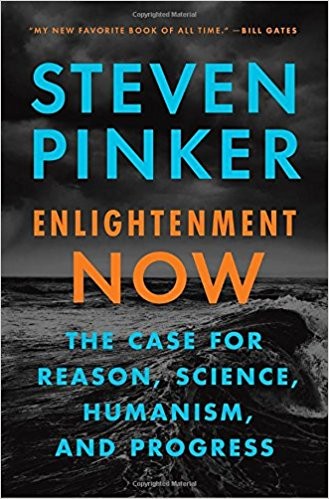
Enlightenment Now
2018 non-fiction work by Steven Pinker
Science in the Age of Enlightenment
Science during the 16th-19th century

Dictionnaire Historique et Critique
combination of encyclopaedia and real lexicon by Pierre Bayle
Enlightenment philosophy
philosophy during the Age of Enlightenment
Karl von Zinzendorf
Austrian politician (1739-1813)
Charles-Augustin de Ferriol d'Argental
French diplomat (1700-1788)

The Ghost-Seer
novel by Friedrich Schiller

The New Science
book by Giambattista Vico