Category
page 1Akkadian literature

Epic of Gilgamesh
epic poem from Mesopotamia, is amongst the earliest surviving works of literature

Code of Hammurabi
Babylonian code of law or conduct
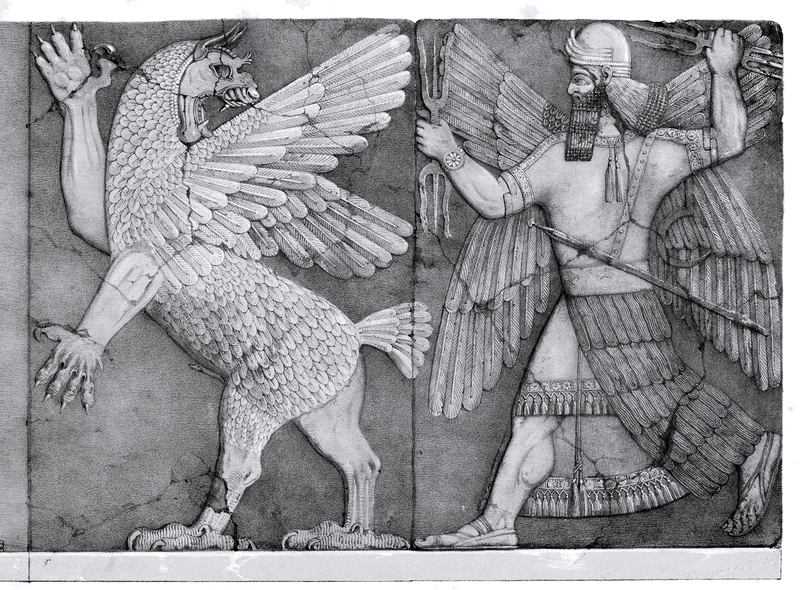
Enûma Eliš
Babylonian creation myth

Amarna letters
archive, written on clay tablets, primarily consisting of diplomatic correspondence between the Egyptian administration and its representatives in Canaan and Amurru during the New Kingdom
Taylor and Sennacherib Prisms
Records of the Assyrian king Sennacherib

Atra-Hasis
Atra-Hasis () is an 18th-century BC Akkadian epic, recorded in various versions on clay tablets and named for one of its protagonists, the priest Atra-Hasis ('exceedingly wise'). The narrative has four focal points: An organisation of allied upper and lower gods shaping Mesopotamia agriculturally; a political conflict between them, pacified by creating the first human couples; the mass reproduction of these; and a great deluge linked to the intention of the upper gods to destroy their imperfect artificial creatures, as handed down in a remarkably similar manner in various other flood myths of
Akkadian literature
mesopotamian writings, 23rd–6th century BC
Enuma anu enlil
Babylonian astrology tablets
Ludlul bēl nēmeqi
literary work
Proclamation of Telipinu
16th-century BC Hittite edict
Adad-guppi
Adad-guppi (; c. 648-544 BC), also known as Addagoppe, was a devotee of the moon god Sîn in the northern Assyrian city of Harran, and the mother of King Nabonidus (ruled 556–539 BC) of the Neo-Babylonian Empire.
Dialogue of Pessimism
ancient Mesopotamian dialogue
Kelashin Stele
stele found in Kelashin, Iraq, that bears an Urartian-Assyrian bilingual text
Labbu
The Labbu Myth is an ancient Mesopotamian creation epic. Only one copy of it is known from the Library of Ashurbanipal. It is commonly dated no later than the Old Babylonian period, although recent work suggests a later composition. It is a folktale possibly of the Diyala region, since the later version seems to feature the god Tišpak as its protagonist and may be an allegory representing his replacement of the chthonic serpent-god Ninazu at the top of the pantheon of the city of Eshnunna. This part is played by Nergal in the earlier version. It was possibly a precursor of the Enûma Eliš, wher
Lexical lists
series of ancient Mesopotamian glossaries
Babylonian Theodicy
poem