Category
page 1Alchemical substances

zinc
Zinc is a chemical element; it has symbol Zn and atomic number 30. It is a slightly brittle metal at room temperature and has a shiny blue whitish appearance when surface oxidation is removed. It is the first element in group 12 (IIB) of the periodic table. Zinc is the 24th most abundant element in Earth's crust, with an average concentration of 70 grams per ton. Zinc also has five stable isotopes; the most abundant of which, Zn-64, comprises nearly half of zinc's total abundance. In some respects, zinc is chemically similar to magnesium: both elements exhibit only one normal oxidation state (

bismuth
Bismuth is a chemical element; it has symbol Bi and atomic number 83. It is a post-transition metal and one of the pnictogens, with chemical properties resembling its lighter group 15 siblings arsenic and antimony. Elemental bismuth occurs naturally, and its sulfide and oxide forms are important commercial ores. The free element is 86% as dense as lead. It is a brittle metal with a silvery-white color when freshly produced. Surface oxidation generally gives samples of the metal a somewhat rosy cast. Further oxidation under heat can give bismuth a vividly iridescent appearance due to thin-film

salt
ionic compound composed of cations and anions

sulfuric acid
chemical compound

gypsum
Gypsum is a soft sulfate mineral composed of calcium sulfate dihydrate, with the chemical formula . It is widely mined and is used as a fertilizer and as the main constituent in many forms of plaster, drywall and blackboard or sidewalk chalk. Gypsum also crystallizes as translucent crystals of selenite. It forms as an evaporite mineral and as a hydration product of anhydrite. The Mohs scale of mineral hardness defines gypsum as hardness value 2 based on scratch hardness comparison.

hydrochloric acid
highly corrosive, strong mineral acid in aqueous solution
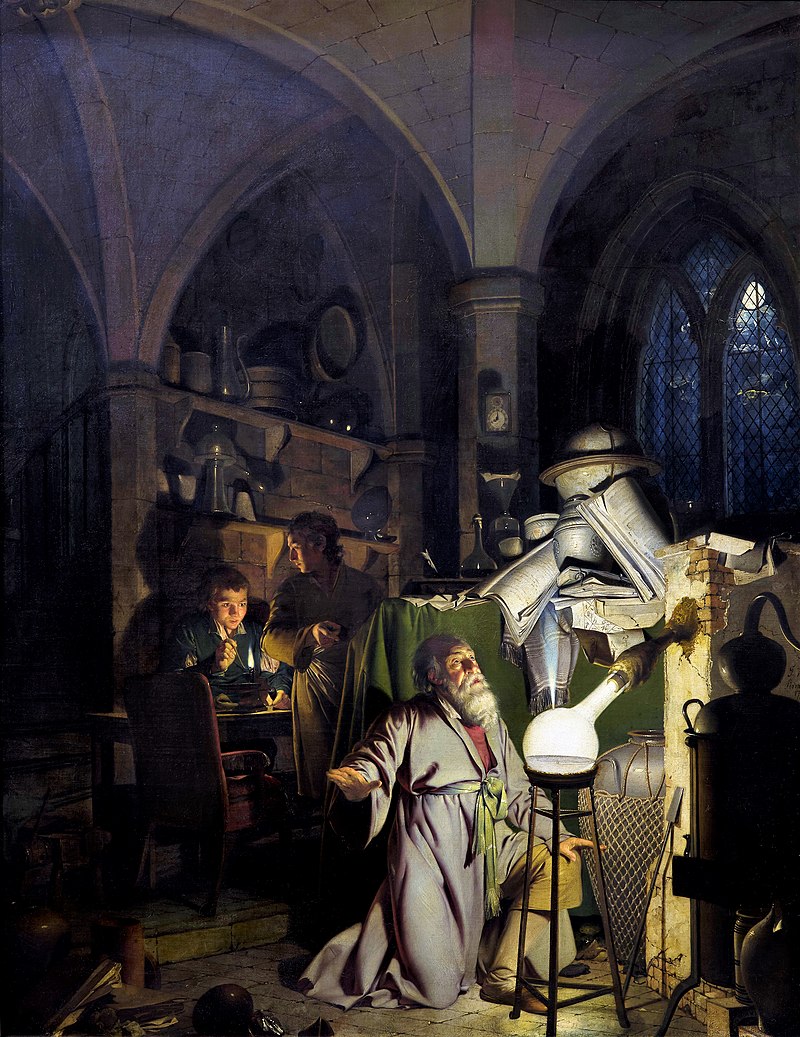
philosopher's stone
legendary alchemical substance

pyrite
The mineral pyrite ( ), or iron pyrite, also known as '''Fool's Gold''', is an iron sulfide with the chemical formula FeS2 (iron (II) disulfide). Pyrite is the most abundant sulfide mineral.

ammonium chloride
chemical compound

calcium oxide
chemical compound

cinnabar
Cinnabar (; ), also called cinnabarite () or mercurblende, is the bright scarlet to brick-red form of mercury(II) sulfide (HgS). It is the most common source ore for refining elemental mercury and is the historic source for the brilliant red or scarlet pigment termed vermilion and associated red mercury pigments.

aqua regia
mixture of nitric acid and hydrochloric acid, in a molar ratio of 1:3

galena
Galena, also called lead glance, is the natural mineral form of lead(II) sulfide (PbS). It is the most important ore of lead and an important source of silver.
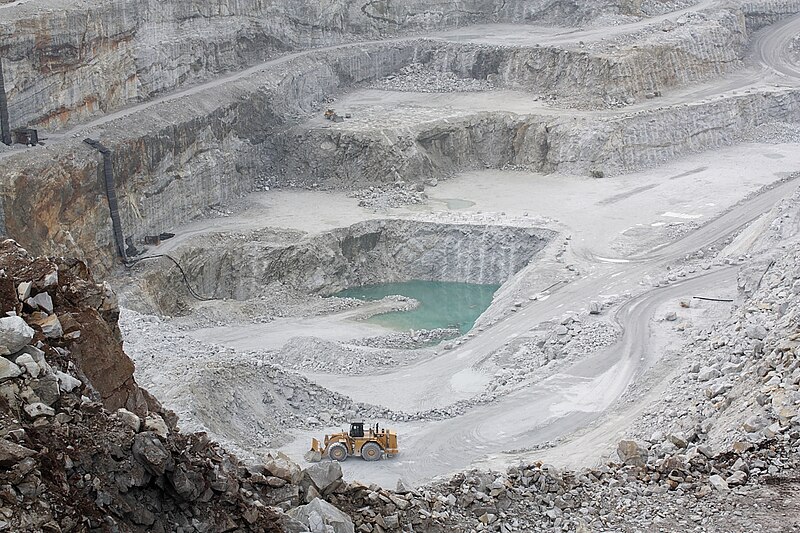
lime
calcium oxide or hydroxide

silver nitrate
chemical compound

sodium sulfate
chemical compound

arsenic trioxide
pharmaceutical drug

stibnite
Stibnite, sometimes called antimonite, is a sulfide mineral, a mineral form of antimony trisulfide (Sb2S3). It is a soft, metallic grey crystalline solid with an orthorhombic space group. It is the most important source for the metalloid antimony. The name is derived from the Greek through the Latin as the former name for the mineral and the element antimony.

realgar
Realgar ( ), also known as arsenic blende, ruby sulphur or ruby of arsenic, is an arsenic sulfide mineral with the chemical formula . It is a soft mineral occurring in monoclinic crystals, or in granular, compact, or powdery form, often in association with the related mineral, orpiment (). It is orange-red in color, and burns with a bluish flame releasing fumes of arsenic and sulfur. It is trimorphous with pararealgar and bonazziite.

orpiment
Orpiment, also known as yellow arsenic blende, is a deep-colored, orange-yellow arsenic sulfide mineral with formula . It is found in volcanic fumaroles, low-temperature hydrothermal veins, and hot springs and may be formed through sublimation.

cuprite
Cuprite is an oxide mineral composed of copper(I) oxide Cu2O, and is a minor ore of copper.
thumb|left|Cuprite from Tsumeb Mine (size:2.3 x 2.1 x 1.2 cm
Its dark crystals with red internal reflections are in the isometric system hexoctahedral class, appearing as cubic, octahedral, or dodecahedral forms, or in combinations. Penetration twins frequently occur. In spite of its nice color, it is rarely used for jewelry because of its low Mohs hardness of 3.5 to 4. It has a relatively high specific gravity of 6.1, imperfect cleavage and is brittle to conchoidal fracture. The luster is sub-metallic

marcasite
The mineral marcasite, sometimes called "white iron pyrite", is iron sulfide (FeS2) with orthorhombic crystal structure. It is physically and crystallographically distinct from pyrite, which is iron sulfide with cubic crystal structure. Both structures contain the disulfide S22− ion, having a short bonding distance between the sulfur atoms. The structures differ in how these di-anions are arranged around the Fe2+ cations. Marcasite is lighter and more brittle than pyrite. Specimens of marcasite often crumble and break up due to the unstable crystal structure.

vermilion
thumb|The Venetian painter Titian used vermilion for dramatic effect. In the Assumption of the Virgin (1516–18), the vermilion robes draw the eye to the main characters.
thumb|A Chinese "cinnabar red" carved lacquer box from the Qing dynasty (1736–1795), [[National Museum of China, Beijing]]
mercuric chloride
chemical compound
dichromium trioxide
chemical compound
lead(II) acetate
chemical compound

natron
Natron is a naturally occurring mixture of sodium carbonate decahydrate (Na2CO3·10H2O, a kind of soda ash) and around 17% sodium bicarbonate (also called baking soda, NaHCO3) along with small quantities of sodium chloride and sodium sulfate. Natron is white to colourless when pure, varying to gray or yellow with impurities. Natron deposits are sometimes found in saline lake beds which arose in arid environments. Throughout history natron has had many practical applications that continue today in the wide range of modern uses of its constituent mineral components.

potion
thumb|A bottle of colored liquid labelled as a love potion
thumb|A collection of vials labelled as potions
calomel
chemical compound
panacea
remedy claimed to cure all diseases
antimony trichloride
chemical compound
Calamine lotion
Calamine, also known as calamine lotion, is a medication made from a combination of powdered zinc oxide and 0.5% ferric oxide (Fe2O3) that is used to treat mild itching. It benefits sunburn, insect bites, allergenic irritation, and other mild skin conditions, and may also help dry out secretions resulting from skin irritation. Its name comes from calamine, a historic name for the zinc ores smithsonite and hemimorphite.
chlorargyrite
Chlorargyrite is the mineral form of silver chloride (AgCl). Chlorargyrite occurs as a secondary mineral phase in the oxidation of silver mineral deposits. It crystallizes in the isometric–hexoctahedral crystal class. Typically massive to columnar in occurrence it also has been found as colorless to variably yellow cubic crystals. The color changes to brown or purple on exposure to light. It is quite soft with a Mohs hardness of 1 to 2 and dense with a specific gravity of 5.55. It is also known as cerargyrite and, when weathered by desert air, as horn silver. Bromian chlorargyrite (or embolite

verdigris
Verdigris () is a common name for any of a variety of somewhat toxic copper salts of acetic acid, which range in colour from green to a bluish-green depending on their chemical composition. Once used as a medicine and pharmaceutical preparation, verdigris occurs naturally, creating a patina on copper, bronze, and brass, and is the main component of a historic green pigment used for artistic purposes from antiquity until the late 20th century, including in easel painting, polychromatic sculptures, and illumination of maps. However, due to its instability, its popularity declined as other green
massicot
Massicot is a lead (II) oxide mineral with an orthorhombic lattice structure.
Lead(II) oxide (formula: PbO) can occur in one of two lattice formats, orthorhombic and tetragonal. The red tetragonal form is called litharge. PbO can be changed from massicot to litharge (or vice versa) by controlled heating and cooling. At room temperature massicot forms soft (Mohs hardness of 2) yellow to reddish-yellow, earthy, scaley masses which are very dense, with a specific gravity of 9.64. Massicot can be found as a natural mineral, though it is only found in minor quantities. In bygone centuries it was mi
Aqua vitae
concentrated aqueous solution of ethanol
chrome yellow
chemical compound and pigment

alkahest
thumb|Image of Alchimia, the embodiment of alchemy. Woodcut published by Leonhard Thurneysser in 1574. Thurneysser was a student of Paracelsus.
caput mortuum
in alchemy, residue from sublimation, symbolizing decline and decay, represented with a stylized human skull; specifically, byproduct from sulfuric acid manufacture, used as a purple pigment
Spagyric
REDIRECT Paracelsianism#Spagyric
prima materia
ubiquitous starting material required for the alchemical magnum opus and the creation of the philosopher's stone
Lime sulfur
mixture of calcium polysulfides and thiosulfate used as pest control agent
Powder of sympathy
protoscientific medical treatment and navigational aid
unicorn horn
legendary object in early European and Asian cultures
antimony chloride oxide
chemical compound
azoth
upright=1.1|thumb|Fourth woodcut illustration from Basil Valentine's Azoth (1613)thumb|Sixth woodcut from the series in Basil Valentine's AzothAzoth is a universal remedy or potent solvent sought after in the realm of alchemy, akin to alkahest—a distinct alchemical substance. The quest for Azoth was the crux of numerous alchemical endeavors, symbolized by the Caduceus. Initially coined to denote an esoteric formula pursued by alchemists, akin to the Philosopher's Stone, the term Azoth later evolved into a poetic expression for the element mercury. The etymology of 'Azoth' traces to Medieval La
Rebis
thumb|Rebis from the Viatorium Spagyricum (1625)|alt=A wood carving of a human with two heads, one male and one female, standing on a dragon on top of the world. Above, astrological symbols for the classical planets hover.
Diana's Tree
Substance in alchemy
list of alchemical substances
Wikimedia list article
fulminating gold
chemical substance
Aqua fortis