Category
page 1Alethinophidia
Alethinophidia
Common names: advanced snakes.
The Alethinophidia are an infraorder of snakes that includes all snakes other than blind snakes and thread snakes. Snakes have long been grouped into families within Alethinophidia based on their morphology, especially that of their teeth. More modern phylogenetic hypotheses using genetic data support the recognition of 19 extant families (see below), although the taxonomy of alethinophidian snakes has long been debated, and ultimately the decision whether to assign a particular clade to a particular Linnaean rank (such as a superfamily, family, or subfamily) is

Colubroidea
Colubroidea is a superfamily of snakes in the clade Colubroides that includes Colubridae, with some studies splitting Colubridae into multiple families that make up Colubroidea. Historically, Colubroidea also included other caenophidian snakes such as cobras and vipers, as these snakes form a clade. However these groups are now divided into several distinct, but related, families. Zaher et al. (2009) proposed to redefine Colubroidea for colubrids and related families, while designating Colubroides as the group containing vipers and cobras as well as colubroids. The ReptileDatabase considers Co
Henophidia
Henophidia is a former parvorder of the suborder Serpentes (snakes) that contains boas, pythons and numerous other less-well-known snakes.
Caenophidia
The Caenophidia are a derived clade of alethinophidian snakes, which contains over 80% of all the extant species of snakes. The largest family is Colubridae, but it also includes at least seven other families, at least four of which were once classified as "Colubridae" before molecular phylogenetics helped us understand their relationships. It has been found to be monophyletic.
Xenophidion
Xenophidion is a genus of snakes first described in 1995, and the only genus of the monotypic family Xenophidiidae. Commonly referred to as spinejaw snakes, this genus is found in Borneo and peninsular Malaysia.
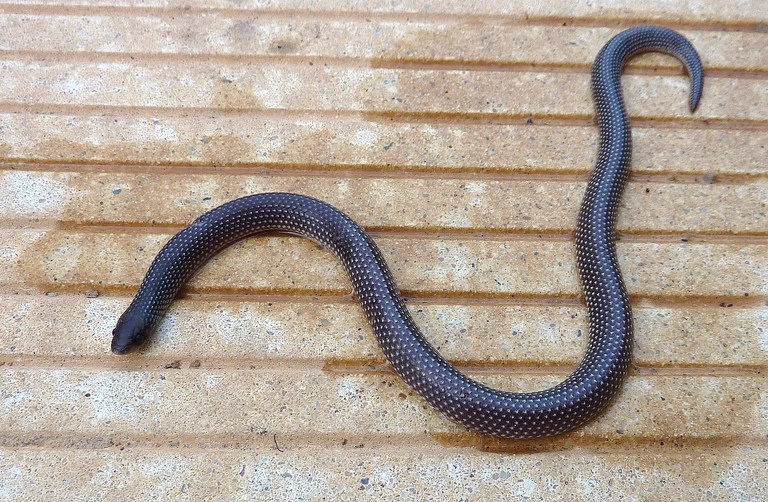
Prosymna
genus of snakes
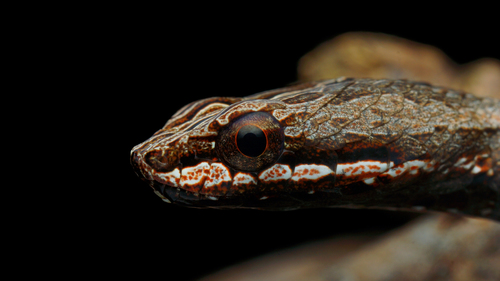
Psammodynastes
Psammodynastes is a genus of elapoid snakes, containing two species native to tropical and subtropical Asia. It is the only member of the family Psammodynastidae. They are also known as mock vipers due to their superficial resemblance to true vipers. Their Batesian mimicry of vipers extends to them having a fake venom fang at the front of the mouth revealed during threat displays, although they are actually rear-fanged snakes with weak venom meant for small animals.

Buhoma
Buhoma is a genus of snakes in the superfamily Elapoidea. The genus is endemic to Africa.

Prosymna angolensis
species of reptile

Xenophidion acanthognathus
species of reptile
Xenophidion schaeferi
species of reptile
Prosymna frontalis
species of reptile
Pythonoidea
The Pythonoidea, also known as pythonoid snakes, are a superfamily of snakes that contains pythons (family Pythonidae) and other closely related python-like snakes (but not boas, which are in a separate superfamily called Booidea). As of 2022, Pythonoidea contains 39 species, including the eponymous genus Python and 10 other genera of pythons (Antaresia, Apodora, Aspidites, Bothrochilus, Leiopython, Liasis, Malayopython, Morelia, Nyctophilopthon and Simalia), all in the family Pythonidae, as well as two lesser-known families, Loxocemidae (one species, the Mexican burrowing python, in the genus
Pachyophiidae
Simoliophiidae is an extinct family of limbed Tethyan marine snakes of the order Squamata. The name Pachyophiidae has also been used for this group, but Simoliophiidae has priority.
Booidea
The Booidea, also known as booid snakes, are a superfamily of snakes that contains boas (family Boidae) and other closely related boa-like snakes (but not pythons, which are in a separate superfamily called Pythonoidea). As of 2017, Booidea contains 61 species, including the eponymous neotropical Boa constrictor, anacondas (genus Eunectes), and smaller tree and rainbow boas (Corallus, Epicrates, and Chilabothrus) as well as several genera of booid snakes from various locations around the world: bevel-nosed boas or keel-scaled boas (Candoia) from New Guinea and Melanesia, Old World sand boas (E
Acrochordoidea
Acrochordoidea is a superfamily of snakes that contains only one extant family, the file snakes (Acrochordidae), as well as two extinct families, Nigerophiidae and Palaeophiidae. Members of this superfamily are largely aquatic in nature, with some species found in marine habitats, much as with the only distantly related sea snakes. Members of Palaeophiidae and Nigerophiidae could grow incredibly large and some species, such as members of the genus Palaeophis, were among the largest snakes to ever exist.
Kelyophis
Kelyophis (; meaning 'small serpent' from the Malagasy word kely (meaning "small") and the Greek word ὄφις (ophis, meaning "serpent")) is an extinct genus of nigerophiid snake which existed in Madagascar during the Late Cretaceous. The type species is Kelyophis hechti. Trunk vertebrae have been found from the Maastrichtian-age Maevarano Formation in the Mahajanga Basin. Kelyophis is similar to other nigerophiids in its small size (less than ), long centra with posterior surfaces that deflect slightly downward, tubercular-shaped neural spines that are directed toward the back of the neural arch
Uropeltoidea
The Uropeltoidea, also known as uropeltoid snakes, are a superfamily of snakes that contains uropeltids (family Uropeltidae) and Asian pipesnakes (families Cylindrophiidae and Anomochilidae).