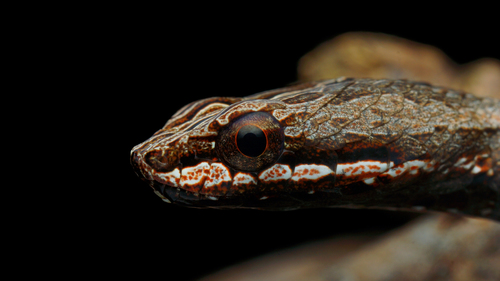
(c) Zleng, all rights reserved, uploaded by Zleng
Psammodynastes
Sign in to savePsammodynastes is a genus of elapoid snakes, containing two species native to tropical and subtropical Asia. It is the only member of the family Psammodynastidae. They are also known as mock vipers due to their superficial resemblance to true vipers. Their Batesian mimicry of vipers extends to them having a fake venom fang at the front of the mouth revealed during threat displays, although they are actually rear-fanged snakes with weak venom meant for small animals.
Species
Common Mock Viper
GENUS
- KingdomAnimalia
- PhylumChordata
- ClassSquamata
- FamilyPseudaspididae
via GBIF
Museum specimens
- Specimen records
- 25
- With media
- 1
- Family
- Pseudaspididae
- Collections
- ROM, RBINS-SCIENTIFIC HERITAGE, OMNH, FMNH, TNHC, UCMP
- Recorded in
- Vietnam, Philippines, Thailand, India, Laos
Wikidata facts
- Instance of
- taxon
- Parent taxon
- Pseudaspidinae
- Image
- Mock Viper (Psammodynastes pulverulentus papenfussi).JPG
Show 4 more facts
- taxon name
- Psammodynastes
- taxon rank
- genus
- Commons category
- Psammodynastes
- topic's main category
- Category:Psammodynastes
Sources (1)
via Wikidata · CC0
~1 min read
Encyclopedic overview
2 sectionsContents
- Species
- References
Psammodynastes is a genus of elapoid snakes, containing two species native to tropical and subtropical Asia. It is the only member of the family Psammodynastidae. They are also known as mock vipers due to their superficial resemblance to true vipers. Their Batesian mimicry of vipers extends to them having a fake venom fang at the front of the mouth revealed during threat displays, although they are actually rear-fanged snakes with weak venom meant for small animals.
It was formerly placed in the family Pseudaspididae (alternatively the subfamily Pseudaspidinae of Lamprophiidae), which otherwise contains two monotypic snake genera native to Africa. However, more recent studies have found it to represent a basal member of the Elapoidea, more derived than Cyclocoridae but sister to the rest of the expansive group. It is thought to have diverged from the rest of the group during the early-mid Eocene.
Excerpted from Wikipedia’s “Psammodynastes” article, available under the CC BY-SA 4.0 licence.