Category
page 1Ancient Egyptian mummies

TutanKhamun
Tutankhamun or Tutankhamen (; ), was the thirteenth pharaoh of the Eighteenth Dynasty of ancient Egypt, who ruled . Born Tutankhaten, he instituted the restoration of the traditional polytheistic form of ancient Egyptian religion, undoing a previous shift to the religion known as Atenism. Tutankhamun's reign is considered one of the greatest restoration periods in ancient Egyptian history, and his tomb door proclaims his dedication to illustrative constructions of the ancient Egyptian gods.

Ramesses II
Egyptian third pharaoh of the Nineteenth Dynasty

Hatshepsut
Hatshepsut ( ; BC) was the sixth pharaoh of the Eighteenth Dynasty of Egypt, ruling first as regent, then as queen regnant from until (Low Chronology) and the Great Royal Wife of Pharaoh Thutmose II. She was Egypt's second confirmed woman who ruled in her own right, the first being Sobekneferu/Neferusobek in the Twelfth Dynasty.

Thutmose III
sixth Egyptian Pharaoh of the Eighteenth Dynasty

Seti I
The second pharaoh of Ancient Egypt's 19th dynasty

Amenhotep III
ninth Pharaoh of the Eighteenth dynasty of Egypt
Ahmose I
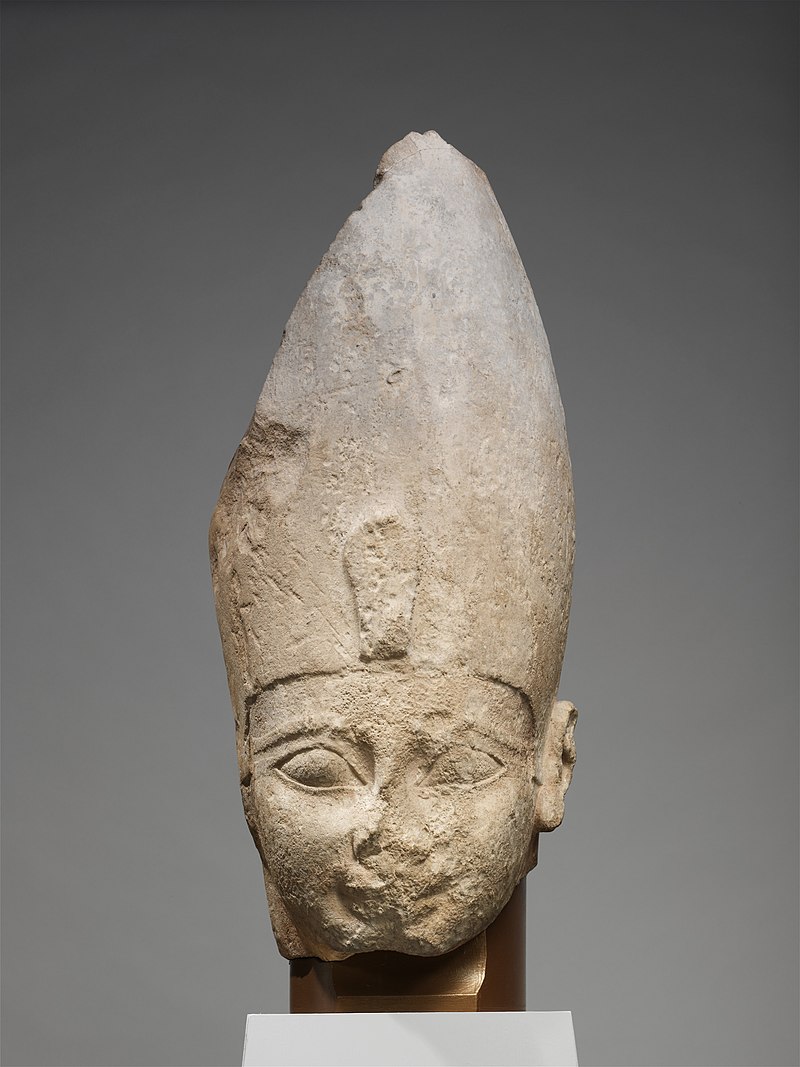
Pharaoh of Ancient Egypt

Ramesses III
Egyptian pharaoh of the 20th dynasty

Amenhotep I
second Pharaoh of the Eighteenth dynasty of Egypt

Thutmose I
Egyptian pharaoh of the 18th dynasty
Ramesses I
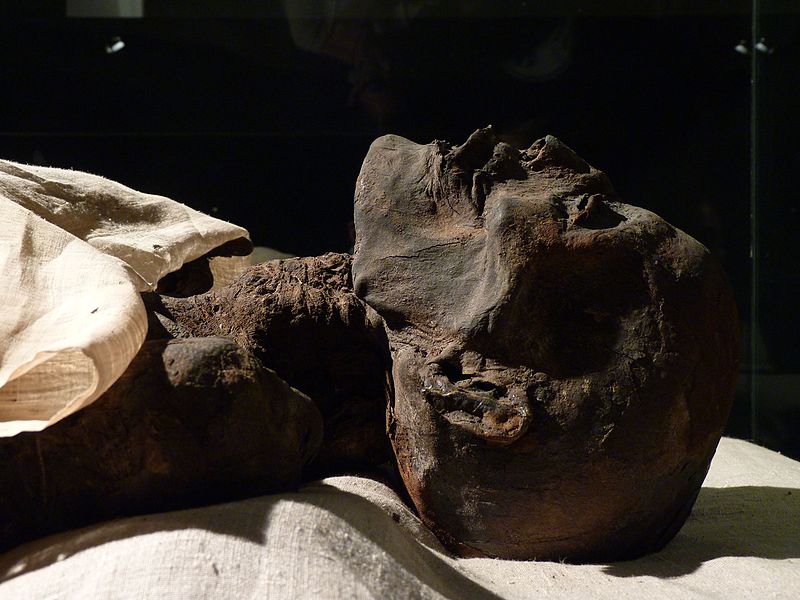
founding pharaoh of Ancient Egypt's Nineteenth Dynasty

Merneptah
thumb|Merenptah Israel Stele Cairo
Merneptah () or Merenptah (reigned 13 August 1213–2 May 1203 BCE) was the fourth pharaoh of the Nineteenth Dynasty of Ancient Egypt. According to contemporary historical records, he ruled Egypt for almost ten years, from 13 August 1213 until his death on 2 May 1203. He was the first royal-born pharaoh since Tutankhamun of the Eighteenth Dynasty of Egypt.
Thutmose II
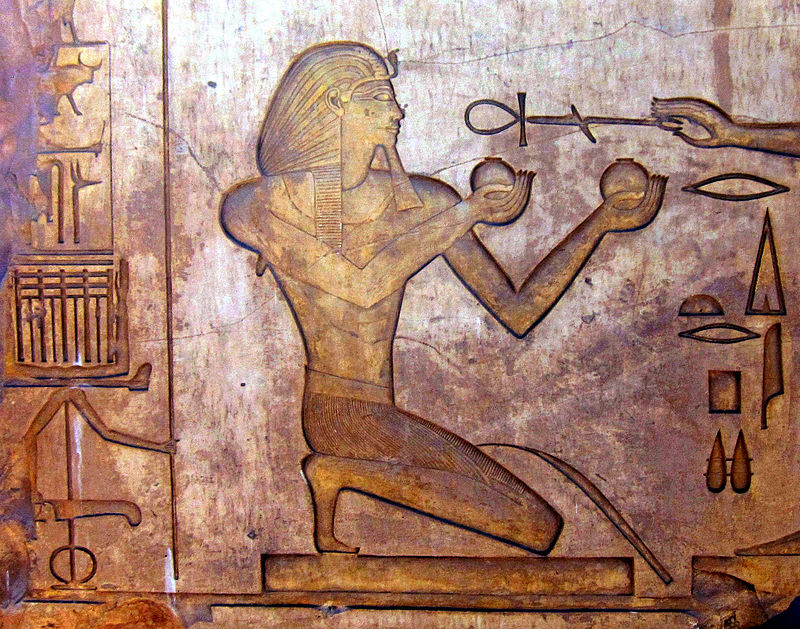
Fourth Egyptian Pharaoh of the 18th Dynasty (c. 1493/1482 – 1479 BC)

Thutmose IV
Egyptian Pharaoh of the 18th dynasty

Amenhotep II
Egyptian Pharaoh of the 18th dynasty

Tiye
Tiye (c. 1398 BC – 1338 BC, also spelled Tye, Taia, Tiy and Tiyi) was the Great Royal Wife of the Egyptian pharaoh Amenhotep III, mother of pharaoh Akhenaten and grandmother of pharaoh Tutankhamun; her parents were Yuya and Thuya. In 2010, DNA analysis confirmed her as the mummy known as "The Elder Lady" found in the tomb of Amenhotep II (KV35) in 1898.
Ramesses VI
fifth ruler of the Twentieth dynasty of Egypt

Ramesses IV
3rd pharaoh of the Twentieth Dynasty of the New Kingdom of Ancient Egypt

Ramesses V
Egyptian pharaoh of the 20th dynasty

Djedkare Isesi
ancient Egyptian pharaoh

Neferefre
Neferefre Isi (; also known as Raneferef, Ranefer and in Greek as , ) was an ancient Egyptian pharaoh of the Fifth Dynasty during the Old Kingdom period. He was most likely the eldest son of pharaoh Neferirkare Kakai and queen Khentkaus II. He was known as prince Ranefer before he ascended to the throne.

Seqenenre Tao
pharaoh from the Seventeenth Dynasty of Ancient Egypt
Curse of the pharaohs
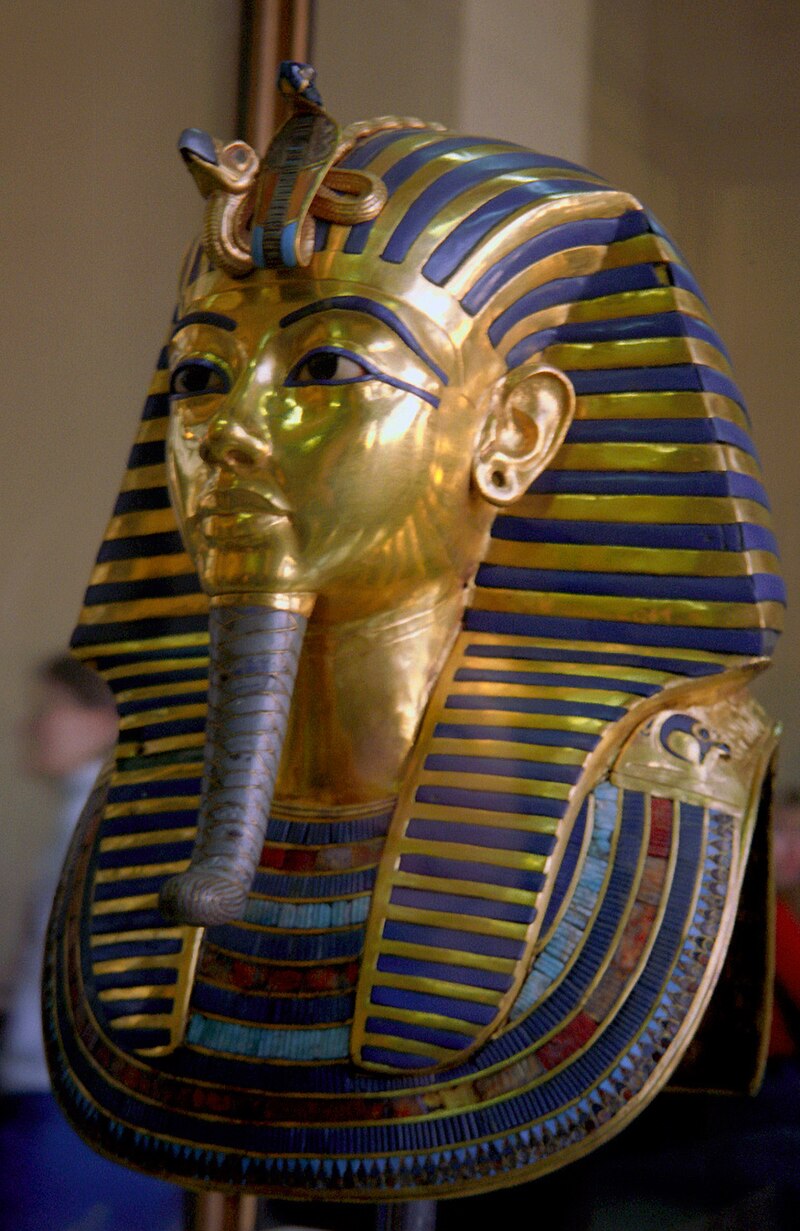
alleged curse believed by some to be cast upon any person who disturbs the mummy of an Ancient Egyptian person, especially a pharaoh

Psusennes I
Egyptian pharaoh of the 21st dynasty

Siptah
thumb|230x230px|Goblet for an Apis died under the early reign of Siptah, 19th dynasty, New Kingdom. Found in the Serapeum of Saqqara, now in the Louvre Museum (n. 442).

Ramesses IX
Egyptian pharaoh of the 20th dynasty
Sheshonk II
Egyptian pharaoh
Amenemope
Egyptian pharaoh of the 21st dynasty

Ahmose-Meritamun
Ahmose-Meritamun (or Ahmose-Meritamon) was a Queen of Egypt during the early Eighteenth Dynasty. She was both the older sister and the wife of Pharaoh Amenhotep I. She died fairly young and was buried in tomb TT358 in Deir el-Bahari.

Yuya
Yuya (sometimes Iouiya, or Yuaa, also known as Yaa, Ya, Yiya, Yayi, Yu, Yuyu, Yaya, Yiay, Yia, and Yuy) was a powerful ancient Egyptian courtier during the Eighteenth Dynasty of Egypt ( 1390 BC). He was married to Thuya, an Egyptian noblewoman associated with the royal family, who held high offices in the governmental and religious hierarchies. Their daughter, Tiye, became the Great Royal Wife of Amenhotep III. Yuya and Thuya are known to have had a son named Anen, who carried the titles "Chancellor of Lower Egypt", "Second Prophet of Amun", "Sm-priest of Heliopolis", and "Divine Father".
.jpg)
Tjuyu
Thuya (sometimes transliterated as Touiyou, Thuiu, Tuya, Tjuyu or Thuyu) was an Egyptian noblewoman and the mother of queen Tiye, and the wife of Yuya. She is the grandmother of Akhenaten, and great grandmother of Tutankhamun.
The Younger Lady
mummy identified as the mother of the Pharaoh Tutankhamun
Pinedjem I
ancient Egyptian high priest of Amun (1200-1031)
Ahmose-Sitkamose
Ahmose-Sitkamose, sometimes appearing as simply Sitkamose was a princess during the late 17th-early 18th Dynasties of Egypt.
Pinedjem II
Egyptian high priest of Amun

Mutnedjmet
thumb|Scarab attributed of Mutnodjmet prior to becoming queen. Brooklyn Museum, acc. no. 37.715E
Mutnedjmet, also spelled Mutnodjmet, Mutnedjemet, etc. (), was an ancient Egyptian queen, the Great Royal Wife of Horemheb, the last ruler of the 18th Dynasty. The name, Mutnedjmet, translates as: "The sweet Mut" or "Mut is sweet." She was the second wife of Horemheb after Amenia who died before Horemheb became pharaoh.
Ahmose Inhapy
ancient Egyptian queen consort
Sitdjehuti
Sitdjehuti/Satibu (died 1550/1500 BC, also Satdjehuti; "Daughter of Thoth") was a princess and queen of the late Seventeenth Dynasty of Egypt. She was a daughter of Pharaoh Senakhtenre Ahmose and Queen Tetisheri. She was the wife of her brother Seqenenre Tao and was the mother of Princess Ahmose.
Ahmose-Sitamun
Ahmose-Sitamun or just Sitamun was a princess of the early Eighteenth Dynasty of Egypt.
Ahmose
Egyptian princess

Pentawer
Pentawer (also Pentawere and Pentaweret) was an ancient Egyptian prince of the 20th Dynasty, a son of Pharaoh Ramesses III and his secondary wife, Tiye. He was involved in the so-called "harem conspiracy", a plot to kill his father and place him on the throne. The details of his trial are recorded in the Judicial Papyrus of Turin; he was compelled to commit suicide following his trial. A candidate for his body is a mummy known as "Unknown Man E", discovered in the Deir el-Bahari cache in 1881. This mummy is unusual as it was found wrapped in a sheep or goat skin and was improperly mummified, b

Ahmose-Henuttamehu
Ahmose-Henuttamehu ("Child of the Moon; Mistress of Lower Egypt") was a princess and queen of the late 17th-early 18th dynasties of Egypt.
Masaharta
Masaharta or Masaherta was the High Priest of Amun at Thebes between 1054 and 1045 BC.
Maatkare Mutemhat
ancient Egyptian priestess, God's Wife of Amun

Sesheshet
Sesheshet, occasionally known as Sesh, was the mother of King Teti, the first and founding king of the Sixth Dynasty of Ancient Egypt. She was instrumental in enabling her son to gain the throne and reconciling two warring factions of the royal family.

Duathathor-Henuttawy
Duathathor-Henuttawy, Henuttawy or Henttawy ("Adorer of Hathor; Mistress of the Two Lands") was an ancient Egyptian princess and later queen.

Nodjmet
Nodjmet, Nedjmet, or Notmit was an ancient Egyptian noblewoman of the late 20th-early 21st dynasties of Egypt, mainly known for being the wife of High Priest of Amun at Thebes, Herihor.
Lady Rai
ancient Egyptian nursemaid
Ahmose Sapair
ancient Egyptian prince

Webensenu
thumb|Possible mummy of Webensenu
Webensenu was an ancient Egyptian prince of the Eighteenth Dynasty. He was a son of Pharaoh Amenhotep II and the brother of pharaoh Thutmose IV.

Hornedjitef
thumb|The upper part of the inner coffin of Hornedjitef.
Henhenet
Henhenet ( 2046 BC - 2025 BC) was an ancient Egyptian queen consort, a lower ranking wife of King Mentuhotep II of the 11th dynasty. Her tomb (DBXI.11) and small decorated chapel were found in her husband's Deir el-Bahari temple complex, behind the main building, along with the tombs of five other ladies, Ashayet, Kawit, Kemsit, Sadeh and Mayet. Most of them were priestesses of Hathor, so it is possible that they were buried there as part of the goddess's cult, but it is also possible that they were the daughters of nobles the king wanted to keep an eye upon.
Ahmose-Henutemipet
Ahmose-Henutemipet was a princess of the late Seventeenth Dynasty of Egypt.

Neskhons
Neskhons (“She Belongs to Khons”), once more commonly known as Nsikhonsou, was a noble lady of the 21st Dynasty of Egypt.

Gebelein predynastic mummies
six mummified bodies from predynastic Egypt
Amenemopet
ancient Egyptian princess, daughter of Thutmose IV

mumia
thumb|Natural asphalt/bitumen from the Dead Sea
thumb|Apothecary vessel of the 18th century with inscription MUMIA
thumb|Egyptian mummy seller (1875, Félix Bonfils)
thumb|Wooden apothecary vessel with inscription "MUMIÆ", Hamburg Museum
Mummia, mumia, or originally mummy referred to several different preparations in the history of medicine, from "mineral pitch" to "powdered human mummies". It originated from Arabic mūmiyā "a type of resinous bitumen found in Western Asia and used curatively" in traditional Islamic medicine, which was translated as pissasphaltus (from "pitch" and "asphalt") in

Wendjebauendjed
Wendjebauendjed was an ancient Egyptian general, high dignitary and high priest during the reign of pharaoh Psusennes I of the 21st Dynasty. He is mainly known for his intact tomb found by Pierre Montet inside the royal necropolis of Tanis (NRT III) in a chamber of Psusennes I's tomb in 1946.
Ahmose-Meritamon
Egyptian princess

Nauny
thumb