Category
page 1Ancient Greek generals

Xenophon
Xenophon of Athens (; ; 355/354 BC) was a Greek military leader, philosopher, and historian. At the age of 30, he was elected as one of the leaders of the retreating Greek mercenaries, the Ten Thousand, who had been part of Cyrus the Younger's attempt to seize control of the Achaemenid Empire. As the military historian Theodore Ayrault Dodge wrote, "the centuries since have devised nothing to surpass the genius of this warrior".

Philip II of Macedon
King of Macedon from 359 to 336 BC
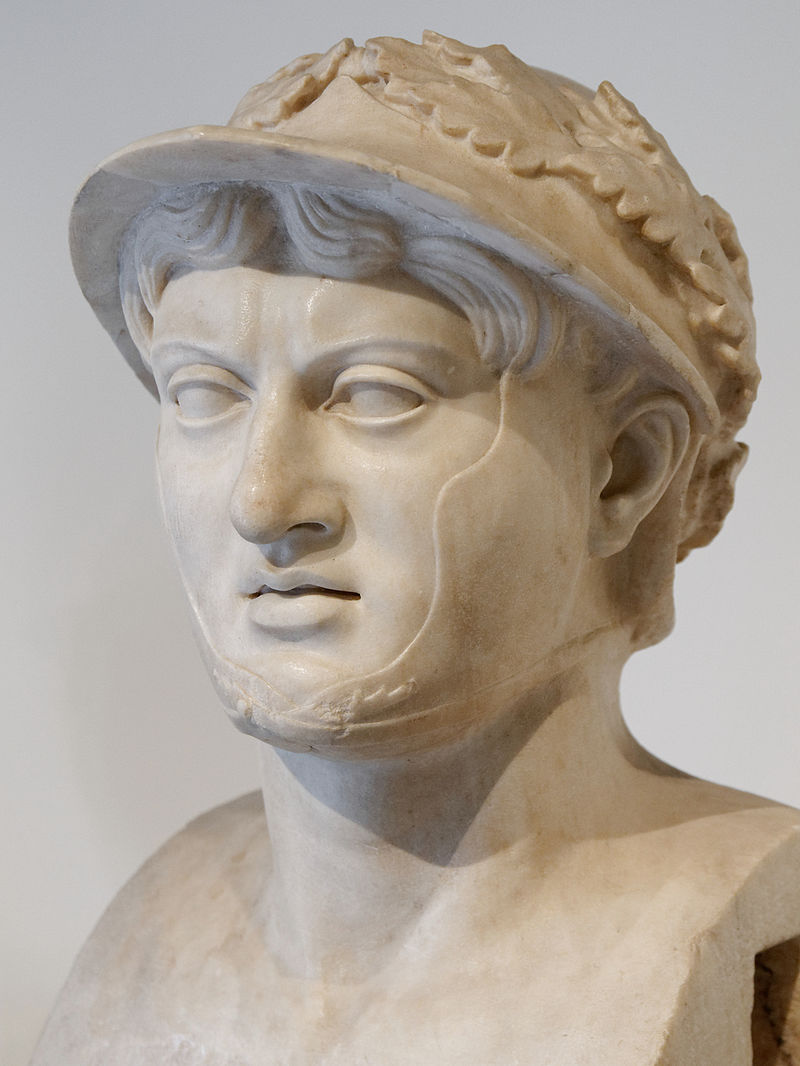
Pyrrhus
king of Epirus from 307 to 302 and 297 to 272 BC

Archytas
Archytas (; ; 435/410–360/350 BC) was an Ancient Greek mathematician, music theorist, statesman, and strategist from the ancient city of Taras (Tarentum) in Southern Italy. He was a scientist and philosopher affiliated with the Pythagorean school and famous for being the reputed founder of mathematical mechanics and a friend of Plato.

Epaminondas
thumb|Stater of the Boeotian League minted 364–362 BC by Epaminondas, whose name EΠ-AMI is inscribed on the reverse
Epaminondas (; ; 419/411–362 BC) was a Greek general and statesman of the 4th century BC who transformed the Ancient Greek city-state of Thebes, leading it out of Spartan subjugation into a pre-eminent position in Greek politics called the Theban Hegemony. In the process, he broke Spartan military power with his victory at Leuctra and liberated the Messenian helots, a group of Peloponnesian Greeks who had been enslaved under Spartan rule for some 230 years following their defeat

Agesilaus II
king of Sparta
.jpg)
Antipater
Antipater (; ; 400 BC319 BC) was a Macedonian general, regent and statesman under the successive kingships of Philip II of Macedon and his son, Alexander the Great. In the wake of the collapse of the Argead house, his son Cassander eventually ruled Macedonia as a king in his own right.

Agathocles of Syracuse
Greek tyrant of Syracuse from 317 to 289 BC

Nearchus
Nearchus or Nearchos (; – 300 BC) was one of the Greek officers, a navarch, in the army of Alexander the Great. He is known for his celebrated expeditionary voyage starting from the Indus River, through the Persian Gulf and ending at the mouth of the Tigris River following the Indian campaign of Alexander the Great, in 326–324 BC.

Eumenes
Eumenes (; ; ) was a Greek general, satrap, and Successor of Alexander the Great. He participated in the Wars of Alexander the Great, serving as Alexander's personal secretary and later on as a battlefield commander. Eumenes depicted himself as a lifelong loyalist of Alexander's dynasty and championed the cause of the Macedonian Argead royal house.

Eumenes II
King of Pergamon from 197 to 159 BC

Philopoemen
thumb|right|213px|Philopoemen, hurt by David d'Angers, 1837, [[Louvre]]
thumb|213px|Relevant geographical locations, during Philopoemen's life.

Cleomenes III
king of Sparta

Hiero I of Syracuse
Tyrant of Syracuse from 478 to 467 BC

Pelopidas
thumb|upright 1.2|Death of Pelopidas, by Andrey Ivanovich Ivanov|Andrey Ivanov, 1805–1806
Pelopidas (; ; died 364 BC) was an important Theban statesman and general in Greece, instrumental in establishing the mid-fourth century Theban hegemony.
Cleombrotus I
Spartan king, 4th c. BCE

Gelo
Gelon also known as Geto (Greek: Γέλων Gelon, gen.: Γέλωνος; died 478 BC), son of Deinomenes, was a Greek tyrant of the Sicilian cities Gela and Syracuse, Sicily, and first of the Deinomenid rulers.

Alexandros I of Epirus
King of Epirus from 343/2 to 331 BC
Attalus
Ancient Macedonian courtier and general

Agis III
king of Sparta

Timoleon
thumb|Coin of Timoleon (344–337 BC), with Zeus [[Eleutherios ('the liberator') and Pegasus]]
Timoleon (Greek: Τιμολέων), son of Timodemus, of Corinth (–337 BC) was a Greek statesman and general.
Archidamus III
king of Sparta
Hermocrates
Hermocrates (; , c. 5th century – 407 BC) was an ancient Syracusan general from Greek Sicily during the Athenians' Sicilian Expedition in the midst of the Peloponnesian War. He is also remembered as a character in the Timaeus and Critias dialogues of Plato.

Hieronymus of Cardia
4th/3rd century BC Greek general and historian
Archelaus
leading military general of the King Mithridates VI of Pontus

Stasanor
Stasanor (; lived 4th century BC) was a native of Soli in Cyprus, who held a distinguished position among the officers of Alexander the Great.

Asander
thumb|upright=1.3|Asander was Hellenistic satrap of Lydia, and later [[Caria.]]
thumb|upright=1.5625|Allocation of satrapies at the Partition of Babylon, following Diodorus Siculus
thumb|upright=1.3|Coin of Philip III Arrhidaios, struck under Asandros as satrap of [[Caria in Miletus circa 323-319 BC, in the name and types of Alexander the Great.]]
Asander or Asandros (; lived 4th century BC) was the son of Philotas and brother of Parmenion and Agathon. He was a Macedonian general under Alexander the Great, and satrap of Lydia from 334 BC as well as satrap of Caria after Alexander's death. Duri
Alexander of Lyncestis
4th-century BC Greek general
Achaeus
3rd-century BC Seleucid general, short-lived ruler of Seleucid Asia-Minor
Attalus
4th-century BC Macedonian general

Balacrus
thumb|upright=1.37|Coinage of Alexander the Great struck under Balakros or Menes circa 333-327 BC. The letter "B" appears under the throne of Zeus.
Balakros (), also Balacrus or Balagros, the son of Nicanor, one of Alexander the Great's "Somatophylakes" (bodyguards), was appointed satrap of Cilicia after the Battle of Issus, 333 BC. He succeeded to the last Achaemenid satrap of Cilicia, Arsames.

Alcetas
thumb|Relief of a horseman from the so-called "Tomb of Alcetas" in Termessos (modern Turkey)
Alcetas (Greek Ἀλκέτας; died 320 BC) was the brother of Perdiccas and the son of Orontes from Orestis. He is first mentioned as one of Alexander the Great's generals in his Indian expedition.

Megacles
Megacles or Megakles () was the name of several notable men of ancient Athens, as well as an officer of Pyrrhus of Epirus.
==The first eponymous archon==
The first Megacles that appears was legendary archon of Athens from 922 BC to 892 BC.
Orsippus
Orsippus () was a Greek runner from Megara who was famed as the first to run the footrace naked at the Olympic Games and "first of all Greeks to be crowned victor naked." Others argue that it was Acanthus instead who first introduced Greek athletic nudity. Orsippus won the stadion of the 15th Olympic Games in 720 BC.
Aristodemus
king of Messenia, hero of the First Messenian War

Stasandros
Stasander (; lived 4th century BC) was a Soloian general in the service of Alexander the Great. Upon Alexander's death he became the satrap of Aria, Arachosia and Drangiana. He lost control of his satrapies after being defeated by the Antigonids in the Wars of the Diadochi.
Alexander of Corinth
tyrant of Corinth
Hicetas
4th-century BC tyrant of Leontini and Syracuse

Demetrius
Somatophylakes
Leptines of Syracuse
Syracusan Greek general (died 375 BC)
Pammenes of Thebes
Theban general and statesman
Menon of Pharsalus
Ancient Greek general
Aristomachus of Argos
ancient Greek general
Adeimantus of Corinth
5th century BCE Corinthian naval commander, son of Ocytus

Diaeus
Diaeus of Megalopolis (, Diaios; died 146 BC) was the last strategos of the Achaian League in ancient Greece before the League was disbanded by the Romans. He served as the League's general from 150 to 149 BC and from 148 BC until his death.
Aeropus of Lyncestis
4th-century BC Macedonian commander
Phoenix of Tenedos
ancient Greek general
Lydiadas of Megalopolis
tyrant of Megalopolis, strategos of the Achaean League

Critolaus of Megalopolis
general of the Achaean League
Alcmaeon
son of Megacles
Aristodemus the Good
3rd-century BC tyrant of Megalopolis
Archagathus
Syracusan Greek Prince
Timoxenus of Achaia
Timoxenos () was a general in Ancient Greece, who served for three or four terms as strategos of the Achaean League between 226 and 215 BC. He was considered a supporter of Aratus of Sicyon.
Proxenus of Boeotia
Greek mercenary (died 401 BC)
Heracleides of Syracuse
4th c. military officer
Alexander
son of Polyperchon, Hellenistic military officer
Socrates of Achaea
Greek mercenary general (c. 436–401 BC)
Antander
Antander ( - or Andro as he is called by the historian Orosius) was a man of Syracuse, Magna Graecia, of the 3rd and 4th centuries BCE. He was the older brother of Agathocles, king of Syracuse, and was a commander -- or strategos -- of the troops sent by the Syracusans to the relief of Crotona when it was besieged by the Bruttii tribe in 317.
Alexamenus of Aetolia
2nd-century BC Ancient Greek general
Taxiles
general of Mithridates VI