Category
page 1Animals bred for albinism on a large scale

axolotl
The axolotl (; from ; Ambystoma mexicanum) is a species of paedomorphic mole salamander. They mature into their terrestrial adult form without undergoing metamorphosis; the adults remain fully aquatic with obvious external gills. This trait, although somewhat unusual among the majority of amphibians, is not unique. Axolotls may be difficult to distinguish from the larval stage of other neotenic adult mole salamanders, such as mudpuppies (Necturus spp.) or the occasionally paedomorphic tiger salamander (A. tigrinum).
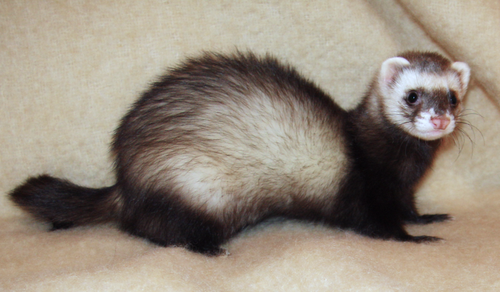
Mustela putorius furo
The ferret (Mustela furo) is a small, domesticated species belonging to the family Mustelidae. The ferret is most likely a domesticated form of the wild European polecat (Mustela putorius), as evidenced by the ferret's ability to interbreed with European polecats and produce hybrid offspring. Physically, ferrets resemble other mustelids because of their long, slender bodies. Including their tail, the average length of a ferret is about ; they weigh between ; and their fur can be black, brown, white, or a mixture of those colours. The species is sexually dimorphic, with males being considerably

mouse
thumb|upright=1.35|House mouse (Mus musculus)
thumb|Phase-specific vocalizations of male mice at the initial encounter during the courtship sequence
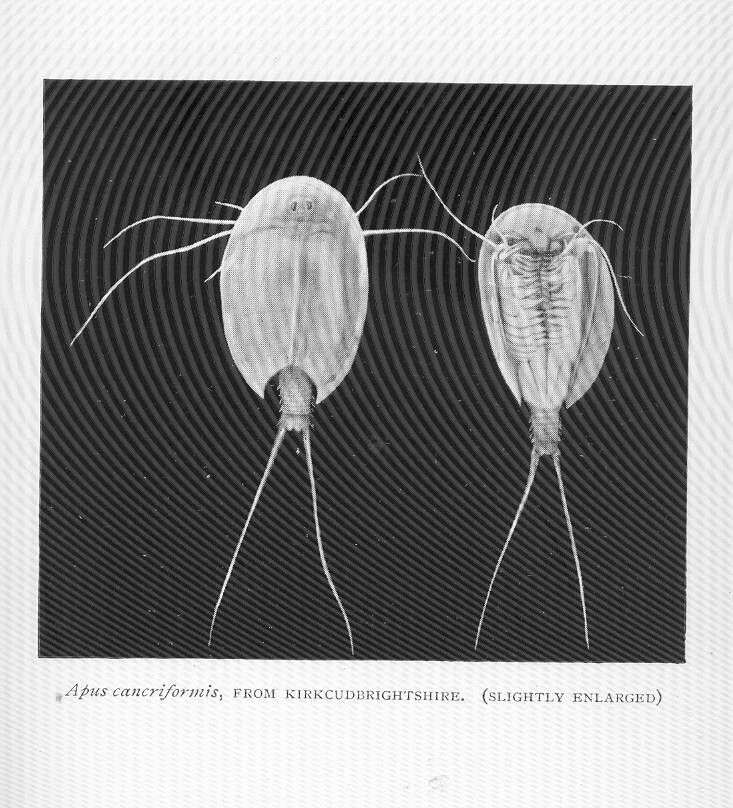
Triops
Triops, from Ancient Greek (), meaning "three", and (), meaning "face" or "eye", is a genus of small crustaceans in the order Notostraca (tadpole shrimp). The long-lasting resting eggs of several species of Triops are commonly sold in kits as pets. The animals hatch upon contact with fresh water. Most adult-stage Triops have a life expectancy of up to 90 days and can tolerate a pH range of 6 to 10. In nature, they often inhabit temporary pools.

rat
Rats are various medium-sized, long-tailed rodents. Species of rats are found throughout the order Rodentia, but stereotypical rats are found in the genus Rattus. Other rat genera include Neotoma (pack rats), Bandicota (bandicoot rats) and Dipodomys (kangaroo rats).
BALB/c
frameless|right
frameless|right
BALB/c is an albino, laboratory-bred strain of the house mouse from which a number of common substrains are derived. Now over 200 generations from New York in 1920, BALB/c mice are distributed globally, and are among the most widely used inbred strains used in animal experimentation.