Category
page 1Anti-Russian sentiment

Mein Kampf
autobiographical manifesto by the National Socialist leader Adolf Hitler
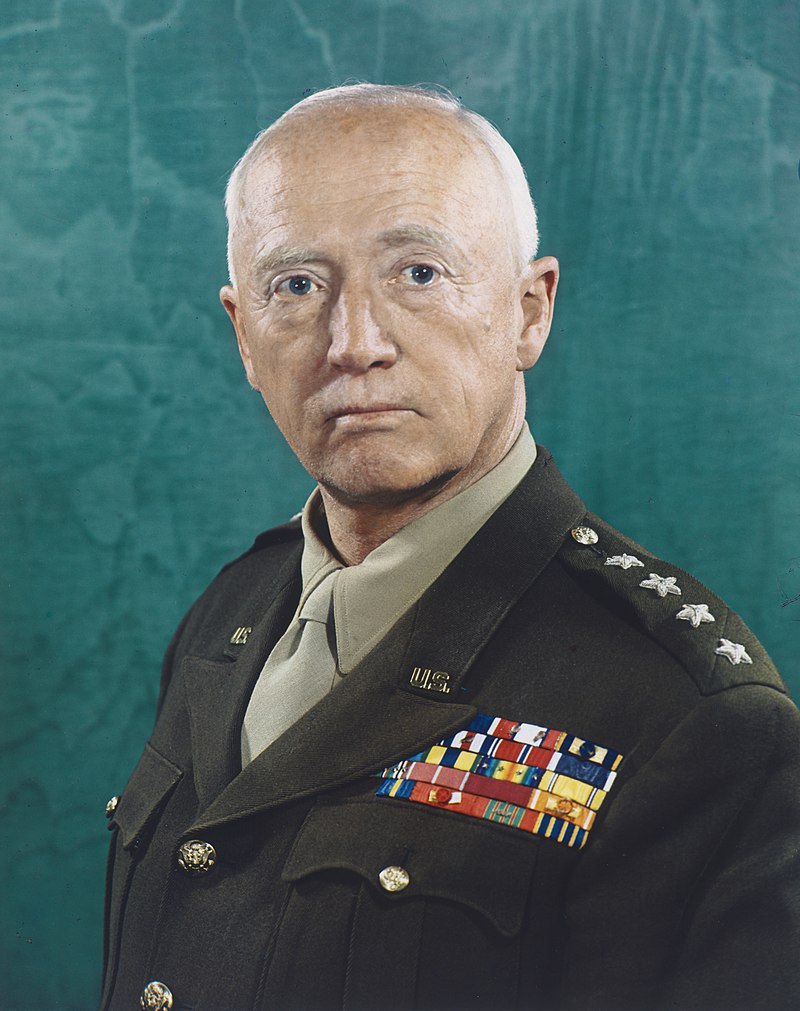
George S. Patton
United States Army general (1885–1945)

Stepan Bandera
Ukrainian nationalist leader (1909–1959)

Henry Temple, 3rd Viscount Palmerston
British statesman and prime minister (1784–1865)

Young Turks
political reform movement in the Ottoman Empire

McCarthyism
McCarthyism is a political practice defined by the political repression and persecution of left-wing individuals and a campaign spreading fear of communist and Soviet influence on American institutions and of Soviet espionage in the United States during the late 1940s through the 1950s, heavily associated with the Second Red Scare, also known as the McCarthy era. After the mid-1950s, U.S. senator Joseph McCarthy, who had spearheaded the campaign, gradually lost his public popularity and credibility after several of his accusations were found to be false. The U.S. Supreme Court under Chief Just

Lebensraum
thumb|Proposed supposed boundaries of the planned "Greater Germanic Reich," including planned post-war eastward expansions of Reichskommissariat|Reichskomissariats.

anti-Russian sentiment
dislike or fear of Russia, its people or its culture or language
Generalplan Ost
Nazi racial plan of enslavement and genocide of peoples of Central and Eastern Europe, mainly Jews, Slavs & Roma

Domodedovo International Airport bombing
suicide bombing in the international arrival hall of Moscow's busiest airport
Committee of Union and Progress
political party in the Ottoman Empire

Untermensch
thumb|upright=0.95|Cover of the Nazi propaganda brochure "Der Untermensch" ("The Subhuman"), 1942. The SS booklet depicted the natives of Eastern Europe as "subhumans".
Untermensch (; plural: Untermenschen) is a German language word literally meaning 'underman', 'sub-man', or 'subhuman', which was extensively used by Germany's Nazi Party to refer to their opponents and non-Aryan people they deemed as inferior. It was mainly used against "the masses from the East", that is Jews, Roma, and Slavs (mainly ethnic Poles, Belarusians, Ukrainians, Russians and Serbs).
Drang nach Osten
German Eastward expansionism, later associated with Nazi Germany
Red Scare
any of several events where widespread fear of communism or leftism develops

Call of Duty: Modern Warfare
2019 first-person shooter video game
.png)
Turanism
thumb|upright=1.5|Map of Eurasia showing the "Altaic" and Uralic language-speaking regions, which are united under the "Turanian" theory.
Turanism, also known as Turanianism, pan-Turanism or pan-Turanianism, is a pan-nationalist political movement built around pseudoscientific claims of biological and linguistic connections between various ethnic groups of Eurasia. It revolves around the abandoned proposal of a Ural-Altaic language family, which hypothesizes that the Turkic, Mongolic, Tungusic, and Uralic peoples share Inner and Central Asian origins and therefore close cultural, ethnic, and l

Astolphe-Louis-Léonor de Custine, Marquis de Custine
French aristocrat and writer (1790-1857)

5 Days of War
2011 film directed by Renny Harlin
Ukrainian National Assembly – Ukrainian National Self Defence
Ukrainian political organisation
2024–2026 Georgian protests
demonstrations following the October 2024 parliamentary elections
Oleh Skrypka
Ukrainian singer

vatnik
thumb|upright=1.2|Activists in Ukraine using the image of "Vatnik" in the action of "[[Boycott Russian Films" campaign (2015)]]
Vatnik (, ) is a political pejorative used in Russia and other post-Soviet states for steadfast jingoistic followers of propaganda from the Russian government.

Moskal
thumb|The Moscow Kremlin under Prince Ivan Kalita in the early 14th century, depicted by 19th century painter [[Apollinary Vasnetsov.]]
266px|thumb|right|Text in Ukrainian language|Ukrainian on a white T-shirt: "Слава Богу, що я не москаль" (Slava Bohu, shcho ya ne moskal), Thank God I am not a Moskal
Moskal is a designation historically used for the residents of the Grand Duchy of Moscow from the 12th to the 15th centuries. It is now sometimes used in Ukraine, Poland, and Romania as an ethnic slur for Russians.

derussification
thumb|The empty plinth of a Demolition of monuments to Alexander Pushkin in Ukraine|statue dedicated to Alexander Pushkin in Ternopil, Ukraine
Derussification (or derussianization) is a process or public policy in different states of the former Russian Empire and the Soviet Union or certain parts of them, aimed at restoring national identity of indigenous peoples: their language, culture and historical memory, lost due to Russification. The term may also refer to the marginalization of the Russian language, culture and other attributes of the Russian-speaking society through the promotion of o
Niet Molotoff
1942 song composed by Matti Jurva with lyrics by Tatu Pekkarinen
Thalerhof internment camp
WWI internment camp south of Graz
We begin bombing in five minutes
joke made by President Reagan during the Cold War
2023–2024 Georgian protests
demonstrations against "foreign agent" bill in the country of Georgia from March 2023 to June 2024
The Will of Peter the Great
political forgery
David Urquhart
British politician (1805-1877)
Union for the Liberation of Ukraine
political organization founded by Ukrainian emigrants from Russian-controlled Dnieper Ukraine

Boycott Russian Films
Ukrainian civic campaign

Boris Stomakhin
Russian writer and dissident
boycott of Russia and Belarus
boycotts following Russian invasion of Ukraine

Anti-Bolshevik Bloc of Nations
international anti-communist organization

Louise Mensch
British politician and blogger
Way Out Alliance
Armenian political coalition
Donald S. Day
American reporter
language policy in Ukraine
laws of Ukraine regarding language
Independence Club
political party in Korea
2019–2020 Georgian protests
2019–2020 protests in Georgia
Engelbert Pernerstorfer
Austrian politician, deputy in Imperial Council (1850-1918)
Republic
political party in Armenia
Franciszek Duchiński
Polish ethnographer and historian (1816–1893)
2023 Armenian protests
anti-government protests in Armenia
2003 Stavropol train bombing
Terrorist attack on commuter train, Russia

The Russian Threat
book
Ryssä
Ryssä () is a Finnish term for a Russian person, considered derogatory today. The term is also used as a collective term for Russians or Russia, and may refer to the Russian language. The neutral word for "Russian person" in modern Finnish is venäläinen, from Venäjä for "Russia".
Sasna Tsrer Pan-Armenian Party
Armenian nationalist political party
European Party of Armenia
Political party in Armenia
Back to the Cold War
4th episode of the twenty-fifth season of South Park
National Democratic Pole
political party in Armenia
Janusz Bugajski
American political consultant
Imam Shamil Battalion
militant Islamist organization primarily active in the North Caucasus
Orcs
pejorative term describing Russian soldiers in Russo-Ukrainian War