Category
page 1Antisemitism in Germany

Martin Luther
German priest and theologian (1483–1546)

Martin Heidegger
German philosopher (1889–1976)

Wilhelm II
as King of Prussia last German Emperor from 1888 to 1918 (1859–1941)

Nazi Party
former far-right political party in Germany active between 1920 and 1945

Lufthansa
Deutsche Lufthansa AG (), trading as the Lufthansa Group, is a German aviation holding company. Its principal airline, Lufthansa German Airlines, branded as Lufthansa, is the flag carrier of Germany. The Lufthansa Group is the second-largest airline group in Europe by passengers carried, as well as largest in Europe and fourth largest in the world by revenue. Lufthansa Airlines is also one of the five founding members of Star Alliance, the world's largest airline alliance, established in 1997.

Schutzstaffel
The Schutzstaffel (; ; SS; also stylised with SS runes as ᛋᛋ) was a major paramilitary organisation under Adolf Hitler and the Nazi Party in Nazi Germany, and later throughout German-occupied Europe during World War II.

Greifswald
Greifswald (; ), officially the University and Hanseatic City of Greifswald () is the fourth-largest city in the German state of Mecklenburg-Western Pomerania after Rostock, Schwerin and Neubrandenburg. In 2021 it surpassed Stralsund for the first time, and became the largest city in the Pomeranian part of the state. It sits on the River Ryck, at its mouth into the Danish Wiek, a sub-bay of the Bay of Greifswald, which is itself a sub-bay of the Bay of Pomerania of the Baltic Sea.

Kristallnacht
' ( ) or the Night of Broken Glass, also called the November pogrom(s)' (, ), was a pogrom against Jews carried out by the Nazi Party's (SA) and (SS) paramilitary forces along with some participation from the Hitler Youth and German civilians throughout Nazi Germany on 9–10 November 1938. The German authorities looked on without intervening. The euphemistic name comes from the shards of broken glass that littered the streets after the windows of Jewish-owned stores, buildings, and synagogues were smashed. The pretext for the attacks was the assassination, on 9 November 1938, of the German dipl

Erich Ludendorff
German Army officer (1865–1937)

Erich von Manstein
German field marshal (1887-1973)

Bayer
Bayer AG (English: , commonly pronounced ; ) is a German multinational pharmaceutical and biotechnology company and is one of the largest pharmaceutical companies and biomedical companies in the world. Headquartered in Leverkusen, Bayer's areas of business include pharmaceuticals, consumer healthcare products, agricultural chemicals, seeds and biotechnology products. The company is a component of the EURO STOXX 50 stock market index.
.png)
Borkum
Borkum (; ) is an island and a town in the Leer District in Lower Saxony, northwestern Germany. It is situated in the Wadden Sea, to the east of Rottumeroog and west of Juist.

Carl Schmitt
German jurist, political theorist and professor of law (1888-1985)

Munich massacre
Palestinian terror attack during the 1972 Summer Olympics in Munich, West Germany

Hjalmar Schacht
German politician and economist (1877–1970)

Wilhelm Canaris
German admiral, head of military intelligence service (1887–1945)
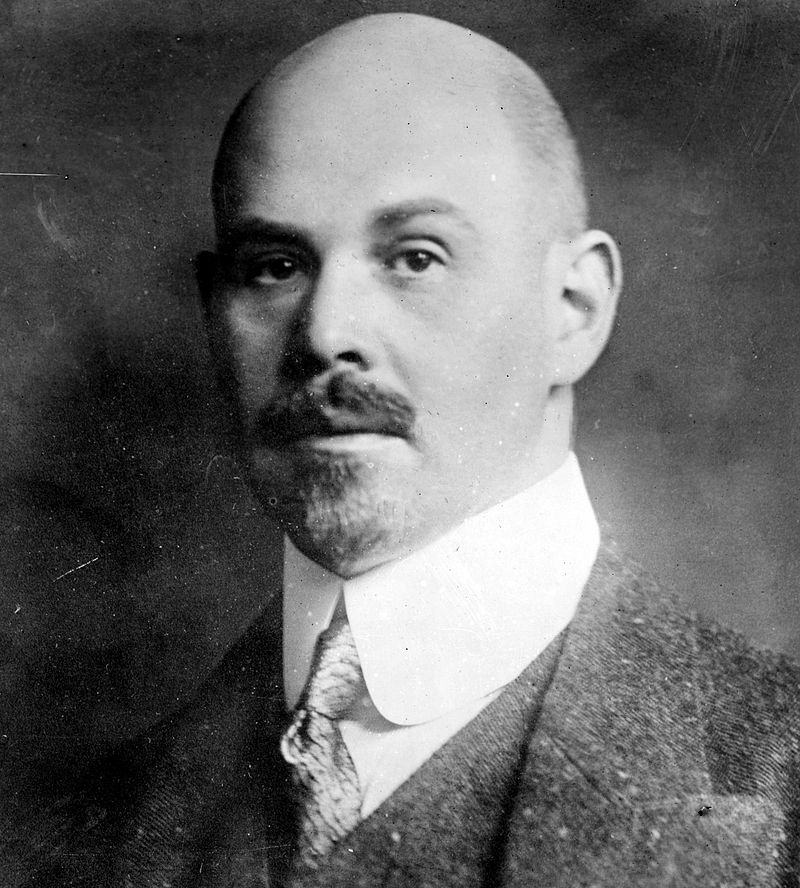
Walther Rathenau
German businessman, writer, art collector and politician (1867-1922)

Emil Kraepelin
German psychiatrist (1856–1926)

Klaus Barbie
German SS officer, head of the Gestapo in Lyon and convicted war criminal (1913–1991)

Werner Sombart
German economist, sociologist, historian (1863-1941)

Franz Halder
German general (1884–1972)

Karl Haushofer
German philosopher (1869-1946)

stab-in-the-back myth
belief that German soldiers were betrayed at the end of World War I

Gustav Krupp von Bohlen und Halbach
German businessperson, politician (1870-1950)
John of Capistrano
Franciscan friar and Catholic saint (1386–1456)
Kröpelin
Kröpelin () is a town in the Rostock district, in Mecklenburg-Western Pomerania, Germany. It is situated 9 km southwest of Bad Doberan, and 23 km west of Rostock.

Cosima Wagner
daughter of the Hungarian pianist and composer Franz Liszt and wife of Hans von Bülow and Richard Wagner (1837-1930)
Thule Society
historical secret occultist and nationalist group in Bavaria

Untermensch
thumb|upright=0.95|Cover of the Nazi propaganda brochure "Der Untermensch" ("The Subhuman"), 1942. The SS booklet depicted the natives of Eastern Europe as "subhumans".
Untermensch (; plural: Untermenschen) is a German language word literally meaning 'underman', 'sub-man', or 'subhuman', which was extensively used by Germany's Nazi Party to refer to their opponents and non-Aryan people they deemed as inferior. It was mainly used against "the masses from the East", that is Jews, Roma, and Slavs (mainly ethnic Poles, Belarusians, Ukrainians, Russians and Serbs).

Eugen Dühring
German antisemitic philosopher and economist (1833-1921)
%20-%20Bannalist%20and%20Pandour%2C%20'Freikorps%20Trenck'.%20-%20RCIN%20403392%20-%20Royal%20Collection.jpg)
Free Corps
thumb|Two soldiers of an Habsburg monarchy|Austrian Freikorps ([[David Morier, 1748)]]
'''' (, "Free Corps" or "Volunteer Corps") were irregular German and other European paramilitary volunteer units that existed from the 18th to the early 20th centuries. They effectively served as mercenaries or private military companies, regardless of their own nationality. In German-speaking countries, the first so-called ("free regiments", Freie Regimenter) were formed in the 18th century from native volunteers, enemy renegades, and deserters. These sometimes exotically equipped units served as infantry a

Charles Edward, Duke of Saxe-Coburg and Gotha
last Duke of Saxe-Coburg and Gotha from 1900 to 1918, British prince and royal duke, Nazi politician (1884–1954)

Heinrich von Treitschke
Historian, political writer (1834-1896)
Rhineland massacres
antisemitic massacres across the Holy Roman Empire in 1096 AD

Friedrich Naumann
German politician, editor (1860-1919)
Gustav Ritter von Kahr
German politician (1862-1934)

Wolfgang Kapp
Prussian civil servant and journalist. Nominal leader of the Kapp-Putsch (1858-1922)
Wilhelm Kube
German politician and Nazi official (1887-1943)
Karl Harrer
German journalist and politician (1890-1926)
Wilhelm Marr
German publicist (1819–1904)
Friedrich Meinecke
German historian and philosopher of history (1862-1954)
Paul de Lagarde
German polymath, biblical scholar and orientalist (1827-1891)
On the Jewish Question
essay by Karl Marx

Mischling
'''''' (; ; ) was a pejorative legal term which was used in Nazi Germany to denote persons of mixed "Aryan" and "non-Aryan", such as Jewish, ancestry as they were classified by the Nuremberg racial laws of 1935. In German, the word has the general connotation of “hybrid”, “mongrel”, or “half-breed”. Outside its use in official Nazi terminology, the term ('mixed children') was later used to refer to war babies born to non-white soldiers and German mothers in the aftermath of World War II.
Pan-German League
former German populist political organization (1893-1939) with nationalist and expansionist ideology
Edgar Julius Jung
German jurist and essayist (1894–1934)

Judensau
A Judensau (German for "Jews' sow") is a folk art image of Jews in obscene contact with a large sow (female pig), which in Judaism is an unclean animal. These first appeared in the 13th century in Germany and some other European countries, and remained popular for over 600 years.
St. Sebaldus
church building in Nuremberg, Germany
Heinrich XIII Prinz Reuss
German aristocrat, businessman and suspected terrorist
Hep-Hep riots
series of antisemitic riots in Germany and neighbouring countries in 1819
Nazism and race
racist foundations of Nazism
Organisation Consul
German terrorist organization (1920–1922)
Gunter d'Alquen
Nazi propagandist (1910–1998)
2019 Halle synagogue shooting
anti-semitic terrorist attack in Germany
Bernhard Förster
German high school teacher and Anti-Semite activist (1843-1889)
Association of German National Jews
Jewish organization that supported Hitler with hopes of assimilation
Otto Rahn
German SS officer and writer (1904–1939)
Fritz Hippler
German film director (1909–2002)

Das Judenthum in der Musik
antisemitic work on music theory by Richard Wagner
Johannes Pfefferkorn
German theologian