Category
page 1Apicomplexa orders
Haemospororida
The Haemosporida (sometimes called Haemospororida) are an order of intraerythrocytic parasitic alveolates.
Eucoccidiorida
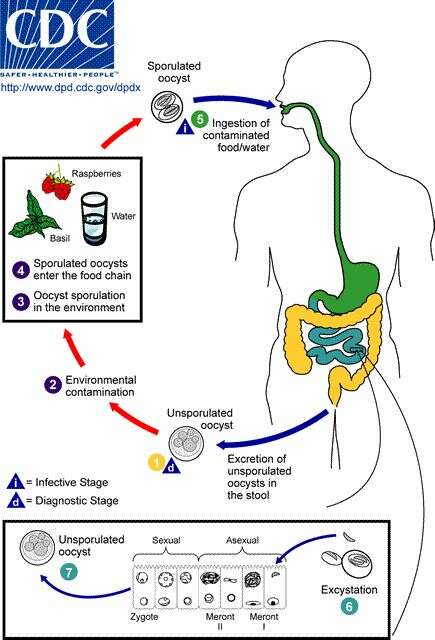
The Eucoccidiorida are an order of microscopic, spore-forming, single-celled parasites belonging to the apicomplexan class Conoidasida. Protozoans of this order include parasites of humans, and both domesticated and wild animals including birds. Among these parasites are the Toxoplasma gondii that cause toxoplasmosis and Isospora belli, which results in isosporiasis.
Piroplasmida
Piroplasmida is an order of parasites in the phylum Apicomplexa. They divide by binary fission and as sporozoan parasites they possess sexual and asexual phases (sexual reproduction occurs in the tick gut). They include the tick parasites Babesia and Theileria.
Archigregarinorida
The Archigregarinorida are an order of parasitic alveolates in the phylum Apicomplexa. Species in this order infect marine invertebrates — usually annelids, ascidians, hemichordates and sipunculids.
Eugregarinorida
The Eugregarinorida are the most large and diverse order of gregarines — parasitic protists belonging to the phylum Apicomplexa. Eugregarines are found in marine, freshwater and terrestrial habitats. These species possess large trophozoites that are significantly different in morphology and behavior from the sporozoites. This taxon contains most of the known gregarine species.