Category
page 1Apocrita superfamilies

Apoidea
The superfamily Apoidea is a major group (of over 30 000 species) within the Hymenoptera, which includes two traditionally recognized lineages, the "sphecoid" wasps, and the bees. Molecular phylogeny demonstrates that the bees arose from within the traditional "Crabronidae", so that grouping is paraphyletic, and this has led to a reclassification to produce monophyletic families.

Vespoidea
thumb|Ancistrocerus antilope female. Family Vespidae
Vespoidea is a superfamily of wasps in the order Hymenoptera. Vespoidea includes wasps with a large variety of lifestyles including eusocial, social, and solitary habits, predators, scavengers, parasitoids, and some herbivores.

Ichneumonoidea
The superfamily Ichneumonoidea contains one extinct and two extant families, including the two largest families within Hymenoptera: Ichneumonidae and Braconidae. The group is thought to contain as many as 100,000 species, many of which have not yet been described. Like other parasitoid wasps, they were long placed in the "Parasitica", variously considered as an infraorder or an unranked clade, now known to be paraphyletic.

Chrysidoidea
The superfamily Chrysidoidea is a very large cosmopolitan group, all of which are parasitoids or cleptoparasites of other insects. There are three large, common families (Bethylidae, Chrysididae, and Dryinidae) and four small, rare families (Embolemidae, Plumariidae, Sclerogibbidae, and Scolebythidae). Most species are small (7 mm or less), almost never exceeding 15 mm. This superfamily is traditionally considered to be the basal taxon within the Aculeata, and, as such, some species can sting, though the venom is harmless to humans.

Cynipoidea
The Cynipoidea are a moderate-sized hymenopteran superfamily that presently includes seven extant families and three extinct families, though others have been recognized in the past. The most familiar members of the group are phytophagous, especially as gall-formers, though the actual majority of included species are parasitoids or hyperparasitoids. They are typically glossy, dark, smooth wasps with somewhat compressed bodies and somewhat reduced wing venation. It is common for various metasomal segments to be fused in various ways (often diagnostic for families or subfamilies), and the petiol
Proctotrupoidea
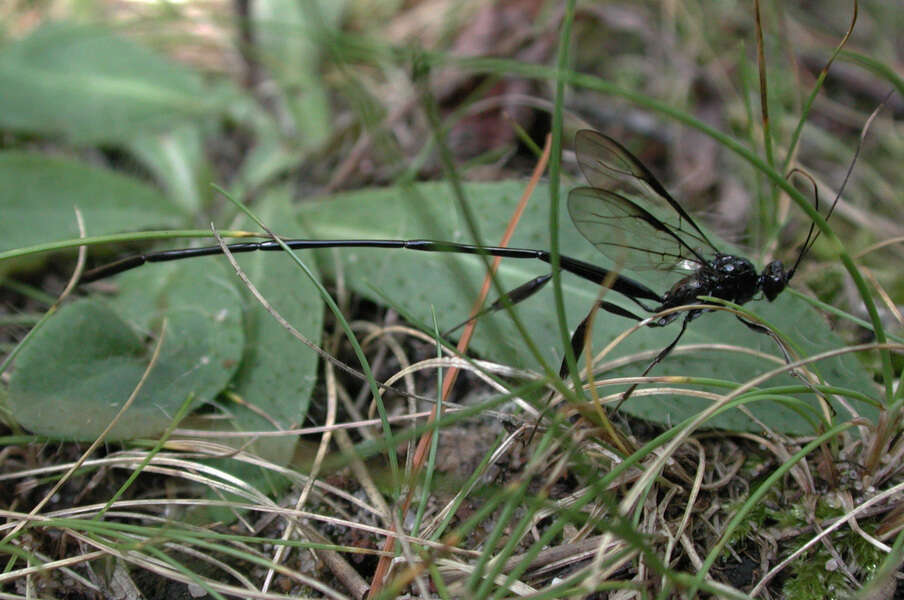
Proctotrupoidea is a hymenopteran superfamily containing seven extant families, though others have been recognized in the past, most of these having been removed to a recently erected superfamily Diaprioidea. Of the remaining families, only Proctotrupidae contains a substantial number of species, with over 400 described. The others are small, often relictual groups. See links for individual families for details of life history and diversity.

Platygastroidea
The Hymenopteran superfamily of parasitoid wasps, Platygastroidea, has often been treated as a lineage within the superfamily Proctotrupoidea, but most classifications since 1977 have recognized it as an independent group within the Proctotrupomorpha. It is presently has some 4000 described species. They are exclusively parasitic in nature.

Ceraphronoidea
The Ceraphronoidea are a small hymenopteran superfamily that includes only two families, and a total of some 800 species, though a great many species are still undescribed. It is a poorly known group as a whole, and most are believed to be parasitoid or hyperparasitoids.
Evanioidea
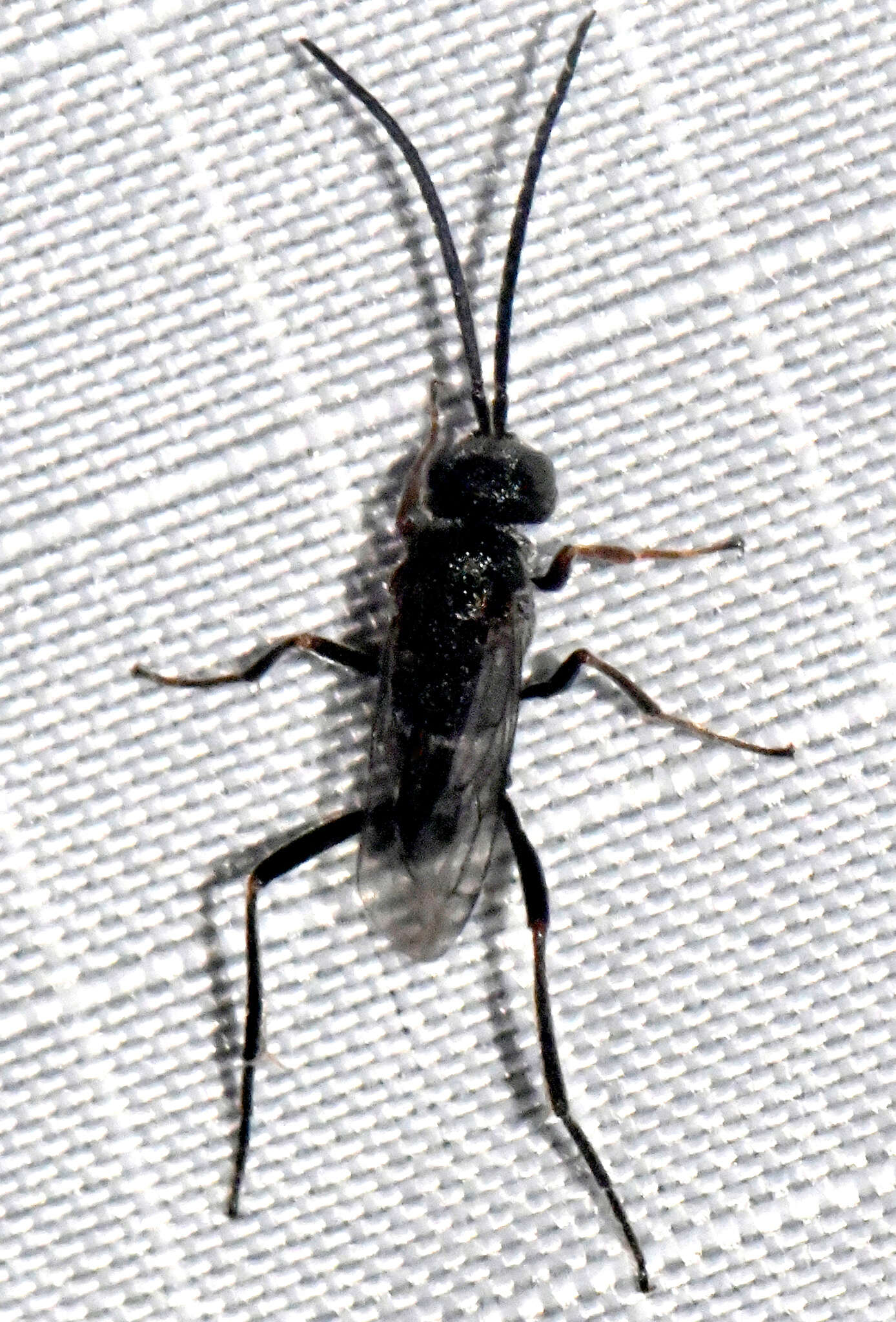
The Evanioidea are a small hymenopteran superfamily that includes three extant families, two of which (Aulacidae and Gasteruptiidae) are much more closely related to one another than they are to the remaining family, Evaniidae. The rich fossil record, however, helps fill in the gaps between these lineages. They all share the trait of having the metasoma attached very high above the hind coxae on the propodeum.
Pompiloidea
Pompiloidea is a superfamily that includes spider wasps and velvet ants, among others, in the order Hymenoptera. There are 4 extant families in Pompiloidea.
thumb|Eusapyga verticalis
Diaprioidea
Diaprioidea is a hymenopteran superfamily containing five extant families; in the past these families were included in the superfamily Proctotrupoidea.
Mymarommatoidea
The Mymarommatoidea are a very small superfamily of microscopic fairyfly-like parasitic wasps. It contains only a single living family, Mymarommatidae, and three other extinct families known from Cretaceous aged amber. Less than half of all described species are living taxa (the others are fossils), but they are known from all parts of the world. Undoubtedly, many more await discovery, as they are easily overlooked and difficult to study due to their extremely small size (most have an overall length of around 0.3 mm).