Category
page 1Araneomorphae genera

Latrodectus
Latrodectus is a broadly distributed genus of spiders informally called the widow spiders, with several species that are commonly known as the true widows. This group is composed of those often called black widow spiders, brown widow spiders, and similar spiders.

Tegenaria
Tegenaria is a genus of fast-running funnel weavers that occupies much of the Northern Hemisphere except for Japan and Indonesia. It was first described by Pierre André Latreille in 1804, though many of its species have been moved elsewhere. The majority of these were moved to Eratigena, including the giant house spider (Eratigena atrica) and the hobo spider (Eratigena agrestis).
%20W%20IMG%202806.jpg)
golden silk orb-weaver
Nephila is a genus of araneomorph spiders noted for the impressive webs they weave. Nephila consists of numerous species found in warmer regions around the world, although some species formerly included in the genus have been moved to Trichonephila. They are commonly called golden silk orb-weavers, golden orb-weavers, giant wood spiders, or banana spiders.

Steatoda
thumb|left|alt=Steadota Bipunctata in the Wild|Steadota bipunctata

Dolomedes
Dolomedes is a genus of large spiders of the family Dolomedidae. They are also known as fishing spiders, raft spiders, dock spiders or wharf spiders. Almost all Dolomedes species are semiaquatic, with the exception of the tree-dwelling D. albineus of the southeastern United States. Many species have a striking pale stripe down each side of the body.

Pardosa
Pardosa is a large genus of wolf spiders, commonly known as the thin-legged wolf spiders. It was first described by C. L. Koch, in 1847, with more than 500 described species that are found in most regions of the world.
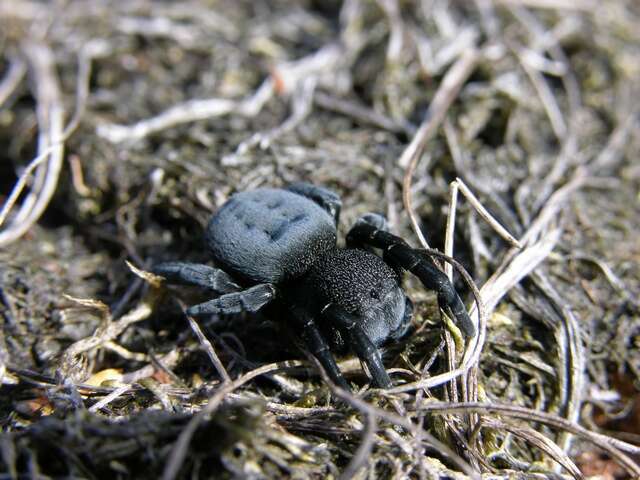
Eresus
Eresus, also called ladybird spiders, is a genus of velvet spiders (family Eresidae) that was first described by Charles Athanase Walckenaer in 1805. Members of the genus formerly called Eresus cinnaberinus or Eresus niger are now placed in one of three species: Eresus kollari, Eresus sandaliatus and Eresus moravicus. A new species Eresus urus (named after the ancient Mesopotamian city of Ur), was discovered in southern Iraq in March 2025.

Ero
genus of arachnids
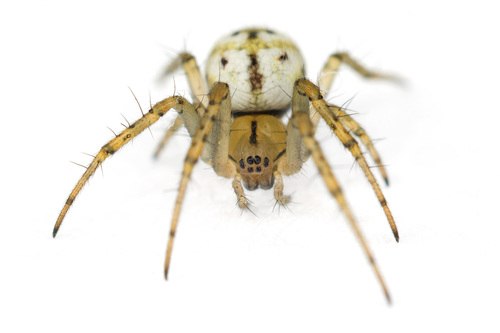
Mangora
genus of arachnids

Meta
genus of arachnids
Zygiella
Zygiella is a genus of orb-weaver spiders that can be found globally. They are notable for their webs having a missing sector with it having only a single tread.
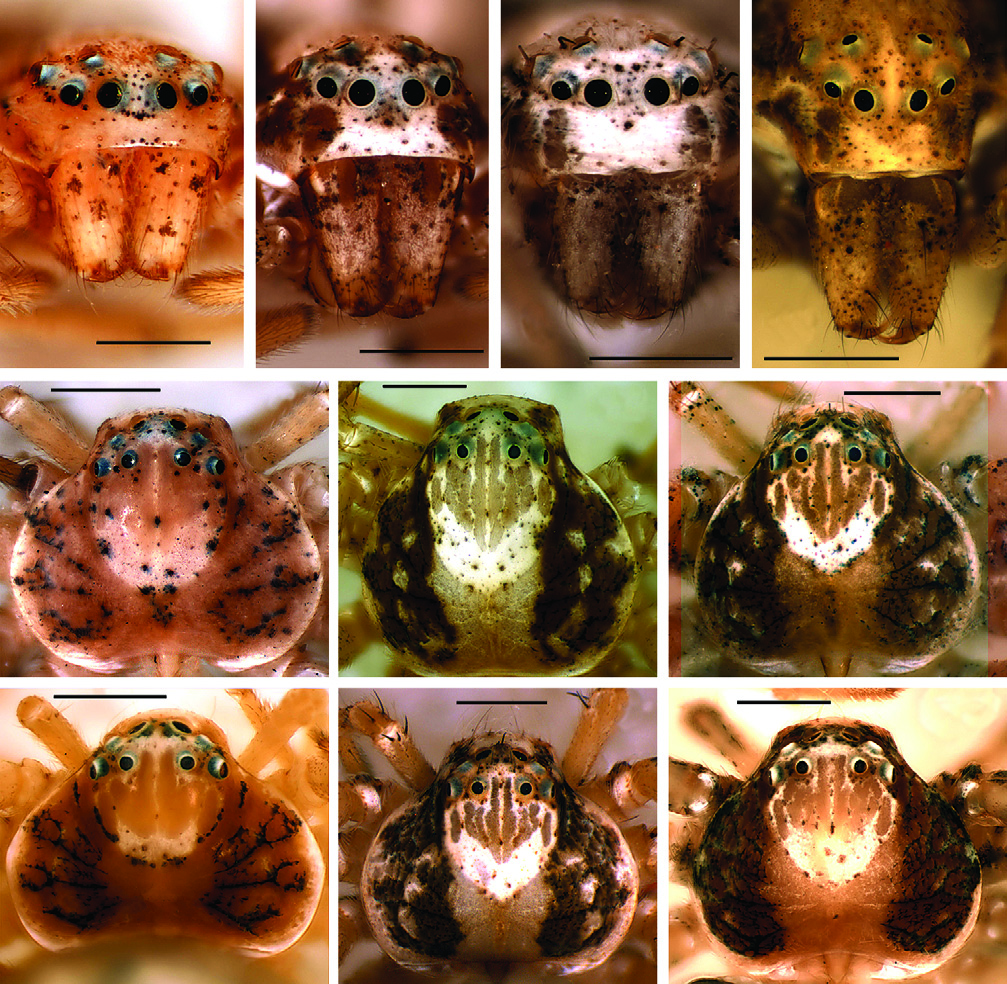
Philodromus
Philodromus is a genus of philodromid crab spiders. Spiders in this genus are distinctively flattened.
%20and%20green%20bottle%20fly%20(Lucilia%20sp.).jpg)
Peucetia
Peucetia is a genus of lynx spiders that is found worldwide.
Oxyopes
Oxyopes is a genus of lynx spiders found worldwide. It includes arounds 300 species and is classified under the lynx spider family Oxyopidae.

Pisaura
Pisaura is a genus of Eurasian spiders in the family Pisauridae.

Hygrolycosa
Hygrolycosa is a genus of wolf spiders (family Lycosidae) first described by Friedrich Dahl in 1908.
.jpg)
Scytodes
thumb|right|S. longipes drawn by F. O. Pickard-Cambridge
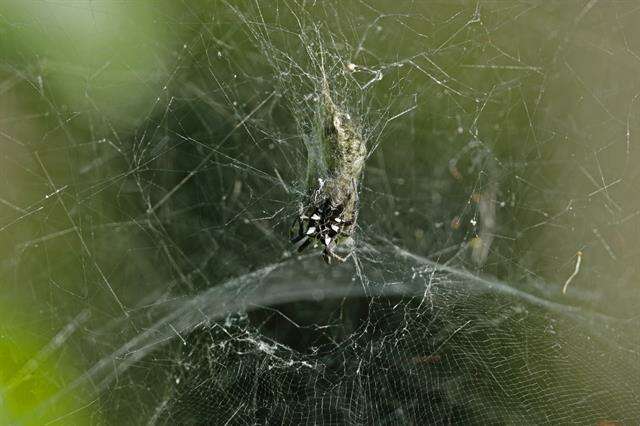
Cyrtophora
Cyrtophora, the tent-web spiders, is a genus of orb-weaver spiders first described by Eugène Simon in 1895. Although they are in the "orb weaver" family, they do not build orb webs. Their tent-like, highly complex non-sticky web is sometimes considered a precursor of the simplified orb web. These webs are aligned horizontally, with a network of supporting threads above them. These spiders often live in colonies. Females have a body length of mostly about long. Some members, including Cyrtophora cicatrosa, exhibit the ability to change colour rapidly.
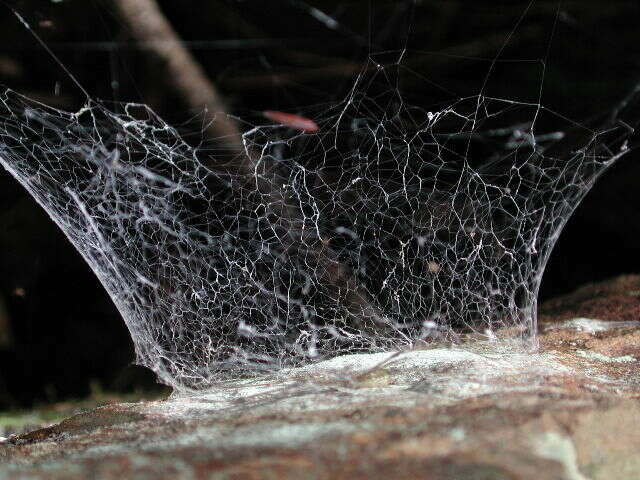
Hypochilus
Hypochilus is a genus of North American lampshade spiders that was first described by George Marx in 1888.
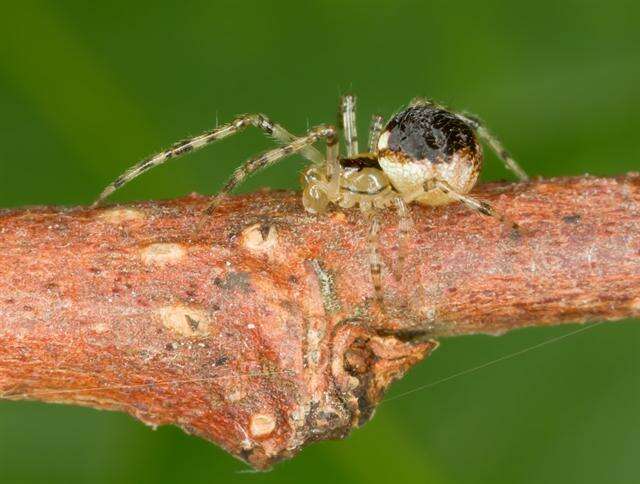
Theridion
Theridion is a genus of tangle-web spiders with a worldwide distribution. Notable species are the Hawaiian happy face spider (T. grallator), named for the iconic symbol on its abdomen, and T. nigroannulatum, one of few spider species that lives in social groups, attacking prey en masse to overwhelm them as a team.
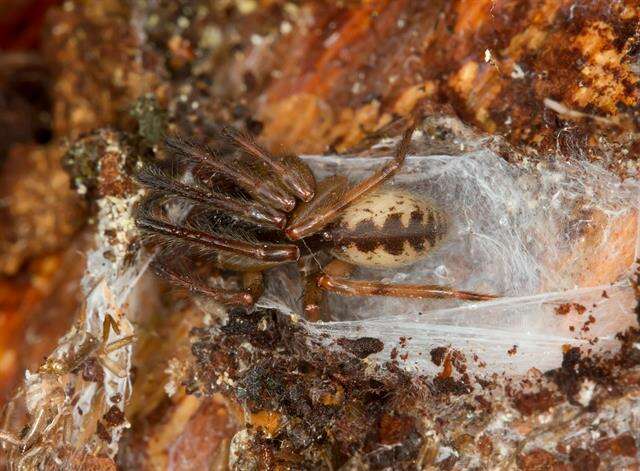
Segestria
genus of arachnids
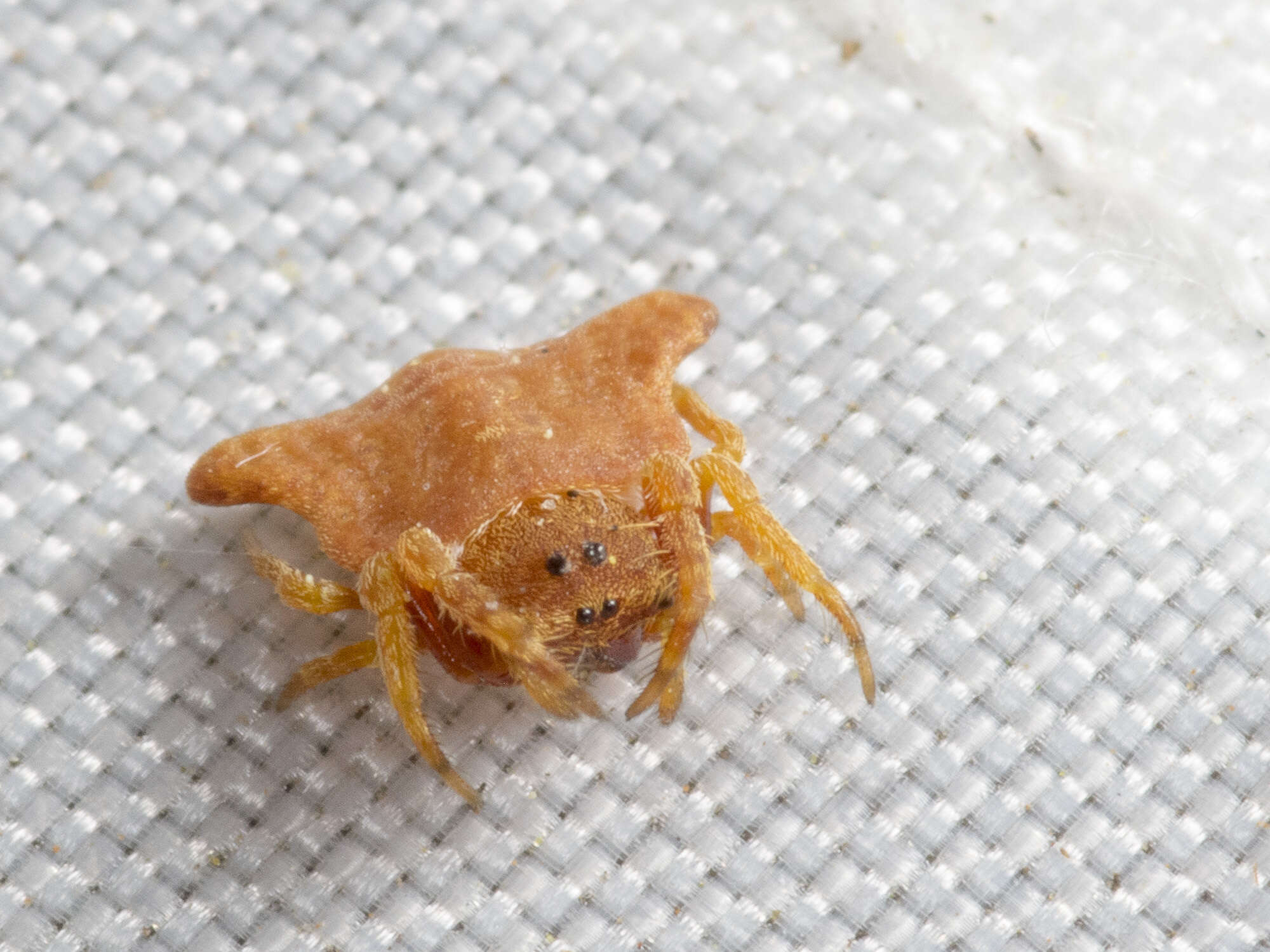
Arkys
Arkys, also known as triangular spider or ambush spider, is a genus of Australian araneomorph spiders in the family Arkyidae, first described by Charles Athanase Walckenaer in 1837. They are often small, with a triangular shaped abdomen, and are found in Australia and some of its surrounding islands. They don't build webs, but can often be found on leaves and tips of flower heads. Their egg sacs are pinkish-orange and spherical, and are made late in the summer.
Homalonychus
Homalonychus is a genus of araneomorph spiders, and is the only genus in the family Homalonychidae. It was first described by George Marx in 1891. Its two described species are found in the southern United States and Mexico: H. theologus is mostly found west of the Colorado River, while H. selenopoides is mostly found to the east, with some populations in Death Valley and near Mercury, Nevada.

Uloborus
Uloborus is a spider genus in the family Uloboridae with 79 described species.

Caerostris
thumb|left|Front view of C. sexcuspidata
Saitonia
Saitonia is a genus of Asian sheet weavers that was first described by K. Y. Eskov in 1992.
Zelotes
Zelotes is a genus of ground spiders that was first described by J. Gistel in 1848.
%20with%20female%20katydid%20prey%20(Tettigoniidae%20sp.).jpg)
Cupiennius
thumb|C. getazi with female katydid prey (Tettigoniidae sp.), Panama
Cupiennius, known by the common name bromeliad spiders or as the often confused name banana spiders, is a genus of araneomorph spiders in the family Trechaleidae, named by Eugène Simon in 1891. They are found from Mexico to northwestern South America, and on some Caribbean islands. Unlike the dangerously venomous Phoneutria, bites from these spiders typically have only minor effects on humans, and have been compared to a bee sting.

Tiso
genus of arachnids
Ochyrocera
Ochyrocera is a genus of midget ground weavers that was first described by Eugène Louis Simon in 1892.

Thwaitesia
Thwaitesia is a genus of comb-footed spiders that was first described by Octavius Pickard-Cambridge in 1881. The genus is named after George Henry Kendrick Thwaites.

Oxytate
The genus Oxytate, commonly known as grass crab spiders, comprises a homogenous group of nocturnal crab spiders (family Thomisidae). The complete mitochondrial genome of the type species O. striatipes was determined in 2014.

Linyphia
Linyphia is a genus of dwarf spiders that was first described by Pierre André Latreille in 1804. The name is Greek, and means "thread-weaver" or "linen maker".

Frontinella
Frontinella is a genus of dwarf spiders that was first described by Frederick Octavius Pickard-Cambridge in 1902.

Maso
genus of arachnids
Drepanotylus
Drepanotylus is a genus of dwarf spiders that was first described by Å. Holm in 1945.
Floronia
Floronia is a genus of spiders in the family Linyphiidae first described by Eugène Simon in 1887.
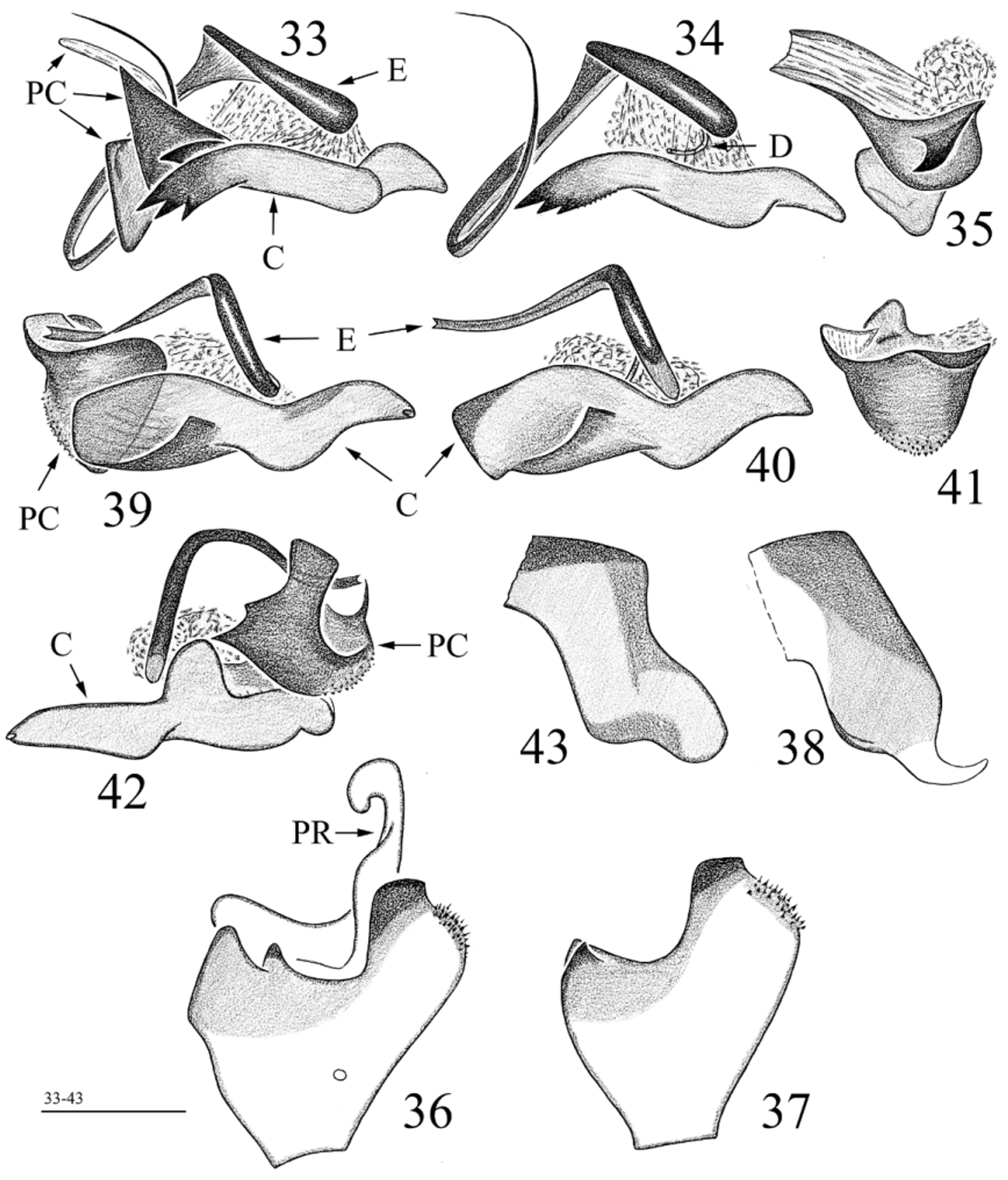
Nasoona
Nasoona is a genus of dwarf spiders that was first described by G. H. Locket in 1982.
Arachosinella
Arachosinella is a genus of Asian dwarf spiders that was first described by J. Denis in 1958. it contains only two species from Russia and Central Asia: A. oeroegensis and A. strepens.
Saloca
Saloca is a genus of sheet weavers that was first described by Eugène Louis Simon in 1926.
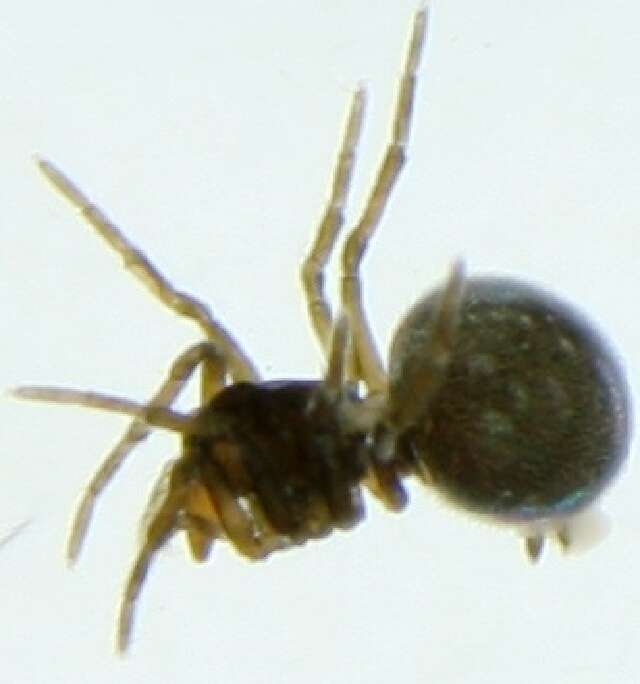
Glyphesis
Glyphesis is a genus of dwarf spiders that was first described by Eugène Louis Simon in 1926.
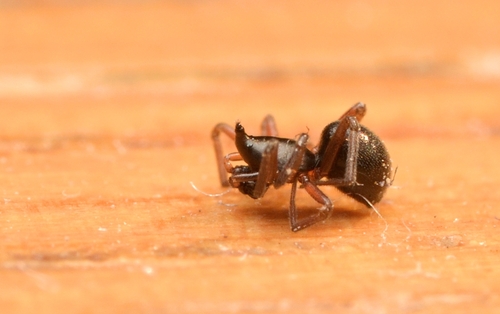
Savignia
Savignia is a genus of sheet weavers that was first described by John Blackwall in 1833. The name honors the French naturalist Marie Jules César Savigny.
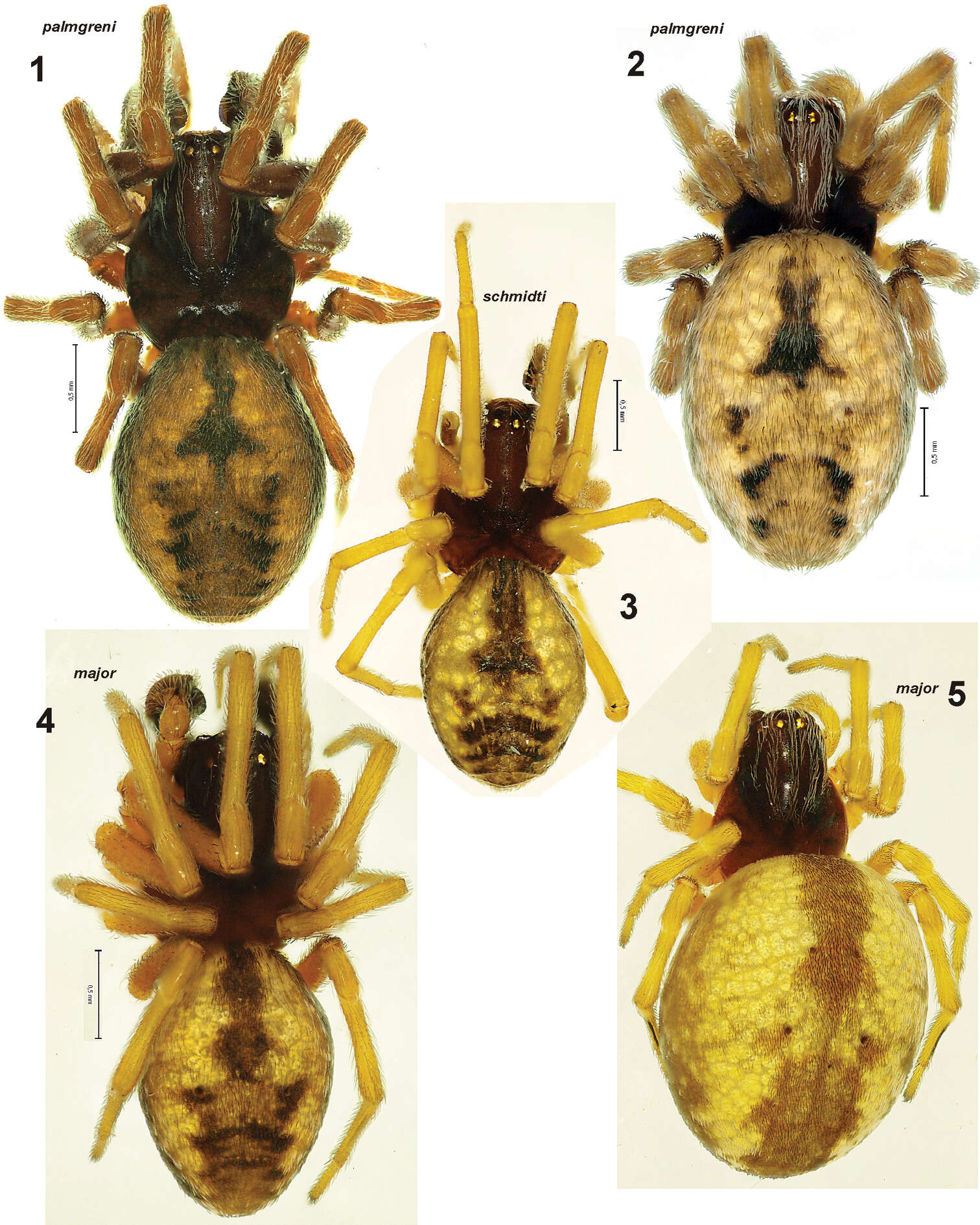
Dictyna
Dictyna is a genus of cribellate araneomorph spiders in the family Dictynidae, and was first described by Carl Jakob Sundevall in 1833.
Shaanxinus
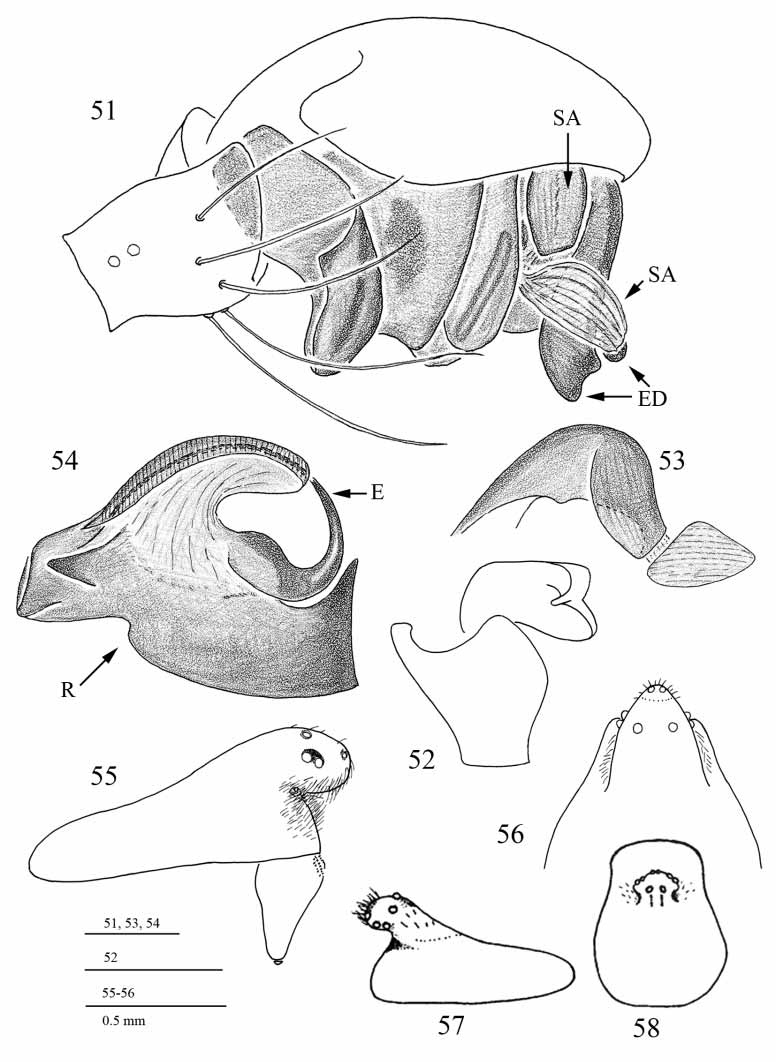
Shaanxinus is a genus of Asian sheet weavers that was first described by A. V. Tanasevitch in 2006.
Neomaso
Neomaso is a genus of dwarf spiders that was first described by Raymond Robert Forster in 1970.
Hersilia
genus of arachnids
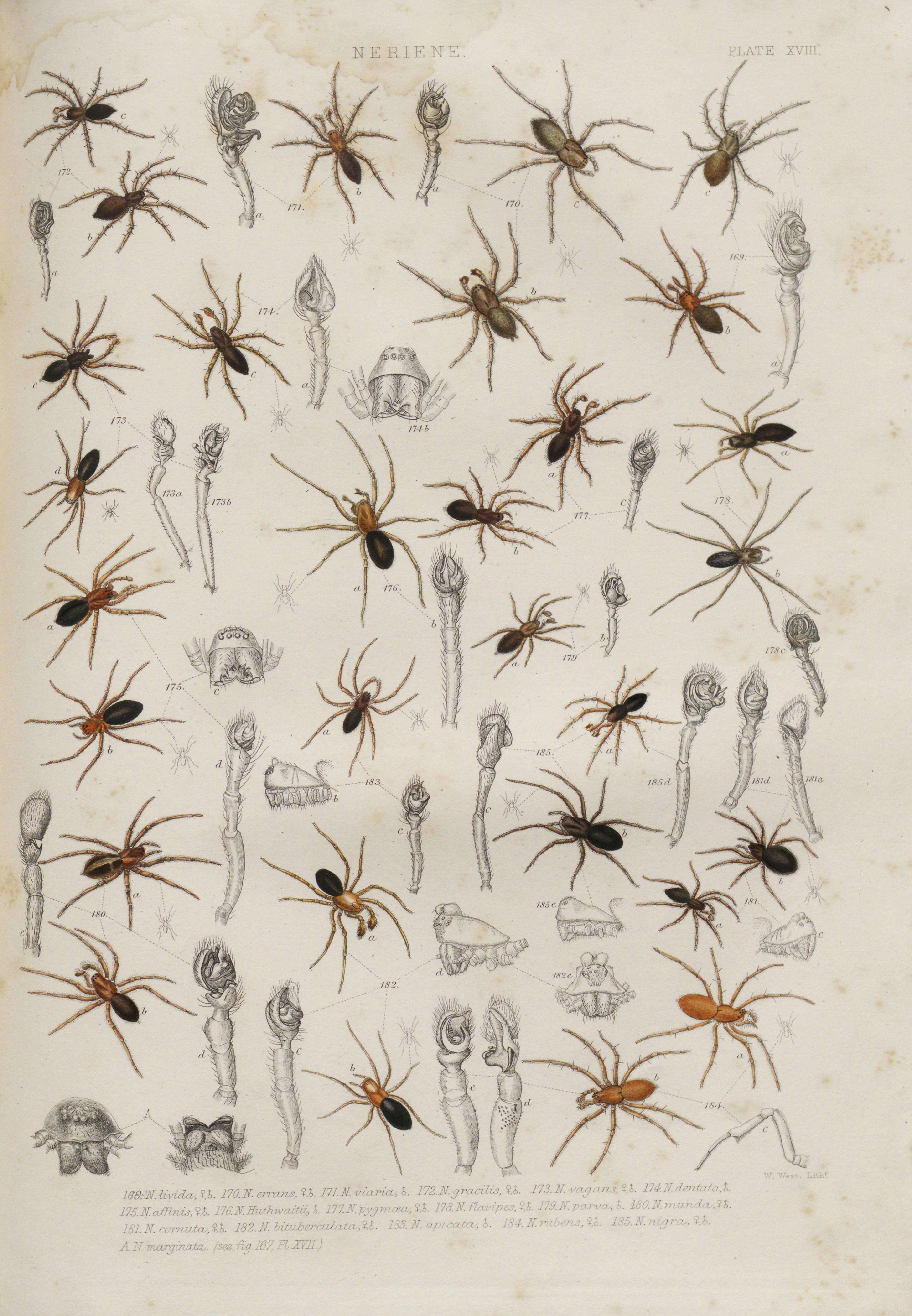
Neriene
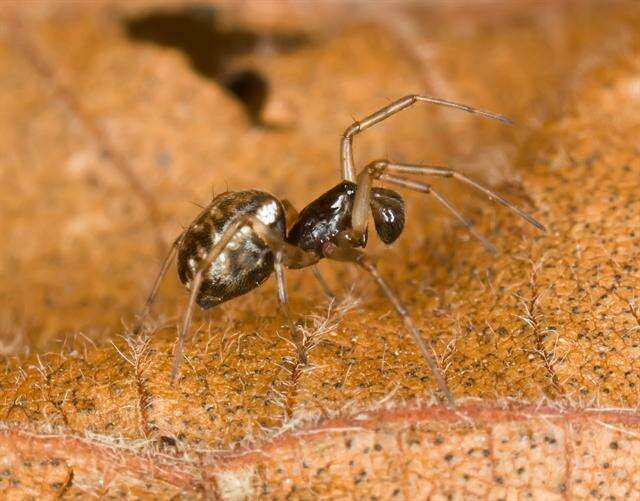
Neriene is a genus of sheet weavers that was first described by John Blackwall in 1833.

Poltys
genus of arachnids

Zoropsis
Zoropsis is a spider genus in the family Zoropsidae. The genus was described in 1878 by Eugène Simon. The genus name comes from Zora C.L.Koch, 1847, another genus of spiders, and the Greek ὄψις (ópsis) "aspect", because the two genera look similar.
Troxochrus
Troxochrus is a genus of sheet weavers that was first described by Eugène Louis Simon in 1884.
Anthrobia
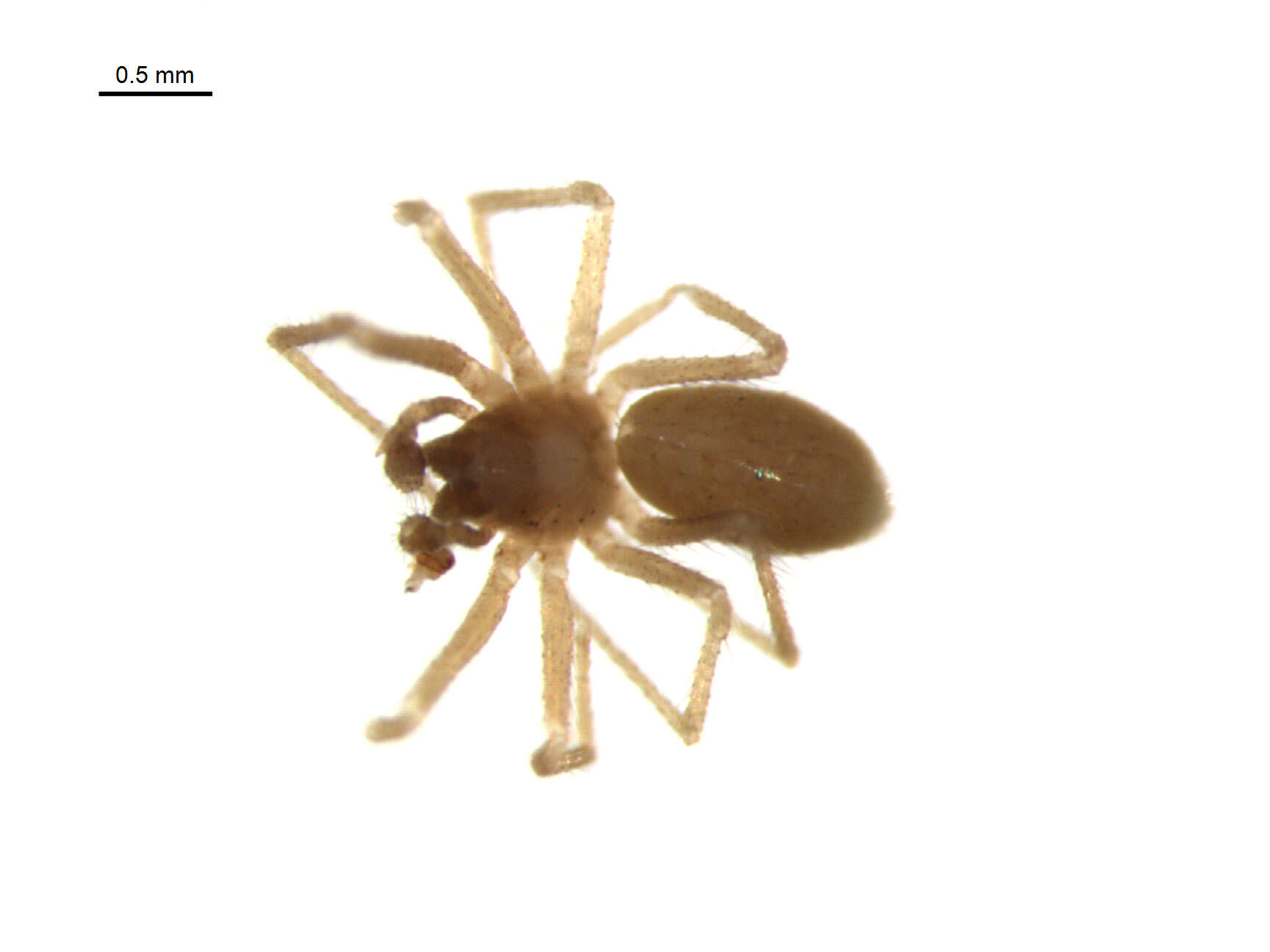
Anthrobia is a genus of North American dwarf spiders that was first described by T. Tellkampf in 1844.
Zodarion
Zodarion is a genus of ant-eating spiders from the family Zodariidae. 169 species from Eurasia, North Africa and North America have been described .
Labicymbium
Labicymbium is a genus of South American dwarf spiders that was first described by Alfred Frank Millidge in 1991.

Kapogea
Kapogea is a genus of orb-weaver spiders first described by Herbert Walter Levi in 1997.

Erigonoplus
Erigonoplus is a genus of dwarf spiders that was first described by Eugène Louis Simon in 1884.
Dicymbium
Dicymbium is a genus of dwarf spiders that was first described by Anton Menge in 1868.
Gongylidioides
Gongylidioides is a genus of Asian dwarf spiders that was first described by R. Oi in 1960.

Zilla
genus of arachnids
Dunedinia
Dunedinia is a genus of South Pacific dwarf spiders that was first described by Alfred Frank Millidge in 1988.
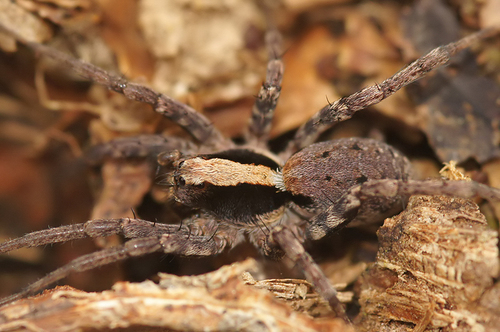
Xerolycosa
Xerolycosa is a small genus of wolf spiders in the family Lycosidae, subfamily Evippinae, consisting of three species which have a Palearctic distribution and one with an Afro-tropical distribution.