Category
page 1Architecture in Korea

pagoda
A pagoda is a tiered tower with multiple eaves, common across Asia. Most pagodas were built to have a religious function, most often Buddhist, but sometimes Taoist or Hindu, and were often in or near viharas. The pagoda traces its origins to the stupa, while its design was developed in ancient India. Chinese pagodas () are a traditional part of Chinese architecture. In addition to religious use, since ancient times Chinese pagodas have been valued for the spectacular views they offer, and many classical poems attest to the joy of scaling pagodas.
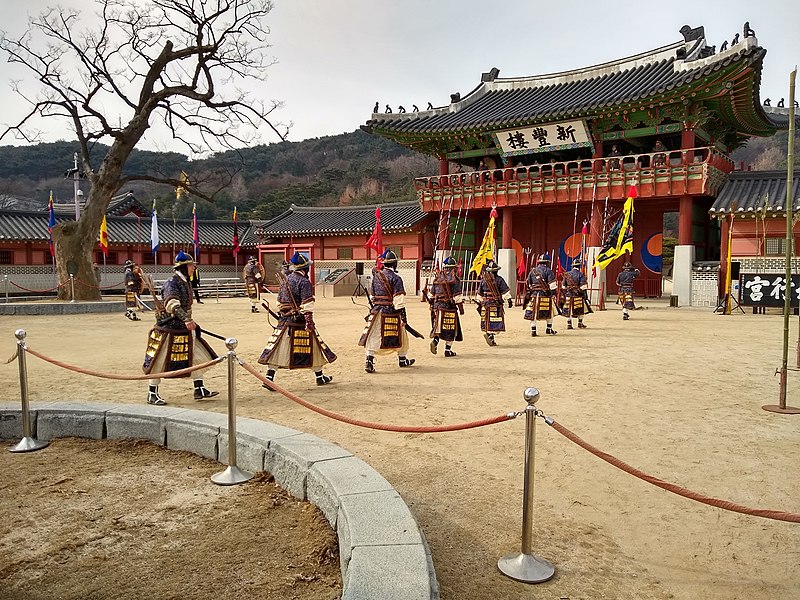
Hwaseong Fortress
palace
Capital Cities and Tombs of the Ancient Koguryo Kingdom
UNESCO World Heritage Site in China

hanok
A ' (; name in South Korea) or chosŏnjip''''' (; name in North Korea and for Koreans in Yanbian, China) is a traditional Korean house. were first designed and built in the 14th century during the Joseon dynasty.

ondol
thumbnail|400px|An illustration of the system
Korean architecture
Korean architectural style

Dancheong
Dancheong () refers to Korean decorative colouring on wooden buildings and artifacts for the purpose of style. It is an adaptation of the Chinese practice danqing, danqing refers to Chinese painting on silk and paper, and also decoration on wood. It literally means "cinnabar and blue-green", and is sometimes translated as "red and blue" in English. Along with its decorations and the choice of paint colours, Dancheong carries various symbolic meanings. It is based on five basic colours; blue (east), white (west), red (south), black (north), and yellow (center). Together, these colours symbolize
Bukchon Hanok Village
neighborhood in Downtown Seoul

Daemokjang
thumb|upright|The work of a Daemokjang
Daemokjang (; alternatively Daimokjang) is a style of traditional Korean wooden architecture and a term for the woodworking artisans who create it. The word literally means carpenter. Mokjang means woodworker, and are divided into Somokjang (lit. lesser woodworker) and Daemokjang (lit. greater woodworker). Somokjang who make small wooden objects are joiners; Daemokjang who builds wooden buildings are carpenters. Daemokjang covers the entire field of woodworking and the entire construction process.
East Asian hip-and-gable roof
type of roof in East Asian architecture
sarangbang
A () is a section of a Korean traditional house () that is generally reserved for men and guests. It can be composed of a number of rooms and elements, including notably the '''''' (). In smaller homes, the may just consist of a single , in which case they are one and the same.
Namsangol Hanok Village
village in Seoul, South Korea

Jeonju Hanok Village
village
Anbang
An anchae () is a section of a Korean traditional house (hanok) that is reserved for women of the household. It can be composed of a number of rooms with different functions, including notably the anbang (), the innermost room reserved for the female head of the household. In smaller homes, the anchae may consist of just a single anbang and a kitchen.